The growing popularity of the Indiana Fever has brought unprecedented attention to the franchise, but it has also highlighted a troubling reality facing professional athletes in the social media era.
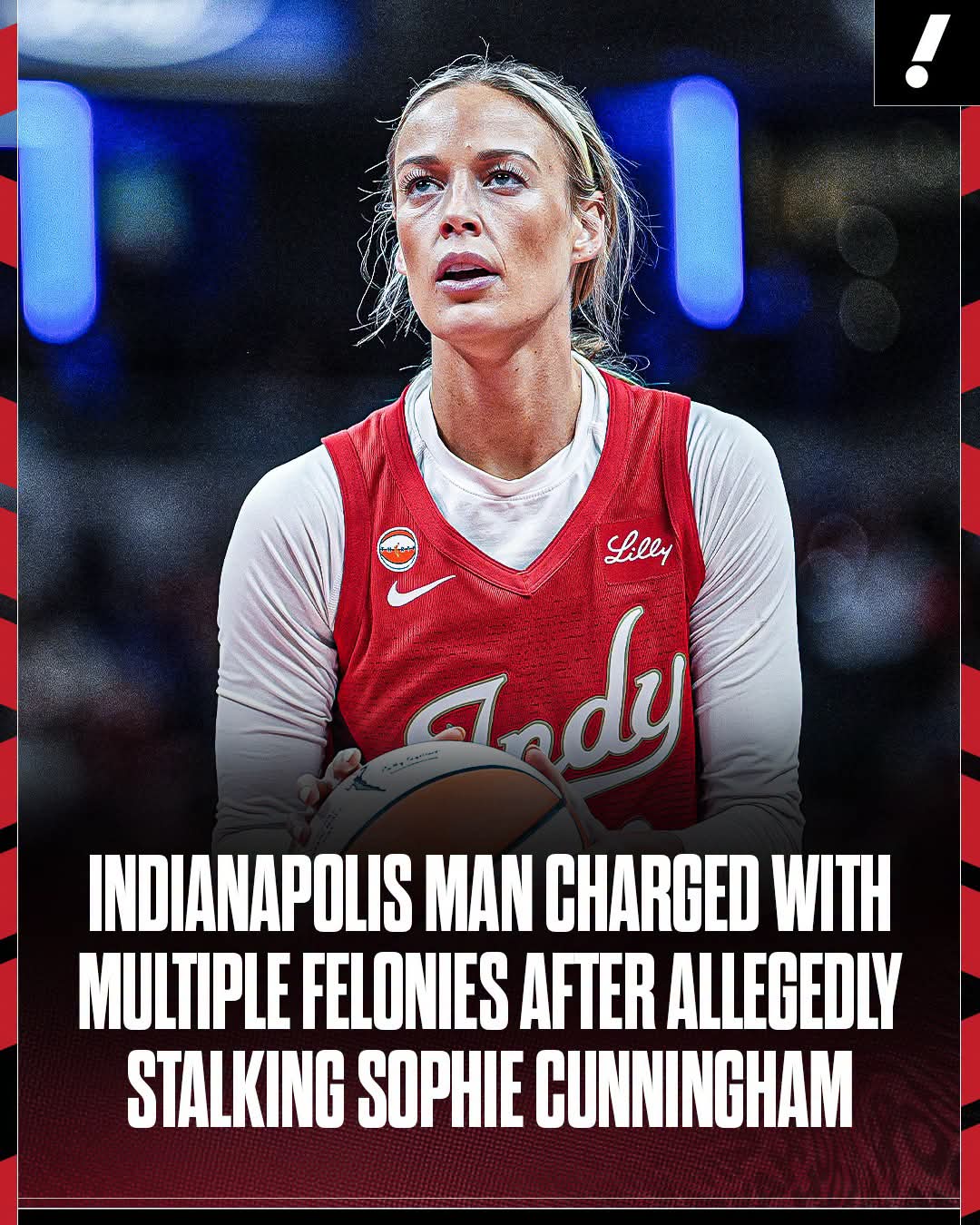
According to reports from WTHR, a 48-year-old Indianapolis man has been charged with stalking, intimidation, and harassment after allegedly sending increasingly threatening messages to Indiana Fever guard Sophie Cunningham through social media. The case marks the second time in recent years that an individual has faced stalking-related charges involving a Fever player, raising fresh questions about player safety both online and offline.
A DISTURBING PATTERN EMERGES
The allegations involving Cunningham arrive less than a year after another high-profile case involving Indiana Fever superstar Caitlin Clark. In that incident, a Texas man was arrested and later sentenced to prison after sending threatening and harassing messages to Clark through social media. Authorities said the messages escalated to the point where Clark feared for her safety and altered aspects of her daily routine.
While the circumstances surrounding the two cases differ, the similarities are impossible to ignore. Both involve alleged harassment conducted through online platforms, and both demonstrate how digital interactions can evolve into serious legal matters.
For athletes whose careers depend on public visibility, the line between fan engagement and personal security continues to become more complicated.
WHY THIS STORY MATTERS BEYOND SOPHIE CUNNINGHAM
Professional athletes have always attracted intense attention, but social media has fundamentally changed the relationship between players and fans.
Platforms that allow athletes to connect directly with supporters have also created opportunities for harassment, intimidation, and unwanted contact. Messages that might once have remained anonymous or isolated can now become persistent and deeply personal.
For Cunningham, the case is about more than a few inappropriate messages. Prosecutors allege the communications became increasingly threatening, which is why criminal charges were ultimately filed.
More broadly, the situation highlights the growing burden placed on athletes who must manage both elite-level competition and personal security concerns.
THE IMPACT ON THE INDIANA FEVER
The Indiana Fever have become one of the most visible teams in professional basketball.
With stars such as Caitlin Clark, Aliyah Boston, Kelsey Mitchell, and Sophie Cunningham drawing national attention, the organization has experienced a dramatic increase in media coverage, fan engagement, and public exposure.
While that visibility has fueled the franchise’s growth, it has also increased security challenges.
Every new incident forces teams to devote additional resources toward player protection, monitoring threats, coordinating with law enforcement, and ensuring athletes feel safe at games, practices, and public appearances.
Organizations across the WNBA are increasingly recognizing that security is no longer limited to arenas and team facilities. Online spaces have become an equally important battleground.
THE WNBA’S GROWING CHALLENGE
The WNBA is experiencing record levels of popularity, television ratings, and social media engagement.
That growth is overwhelmingly positive for the league, but it also creates new risks.
As player profiles rise, athletes become more vulnerable to harassment, obsessive behavior, and targeted abuse. League officials, teams, and law enforcement agencies have become more proactive in addressing threats before they escalate into physical encounters.
The Caitlin Clark case demonstrated that authorities are willing to pursue serious penalties when online behavior crosses legal boundaries. The latest charges involving Cunningham suggest that law enforcement remains committed to treating these allegations seriously.
WHAT HAPPENS NEXT?
The legal process will determine the outcome of the charges against the Indianapolis man accused of stalking and harassing Cunningham.
In the meantime, the case serves as another reminder that athletes are not immune from the dangers of online harassment. Public figures may perform in front of thousands of fans, but they are still entitled to privacy, security, and peace of mind.
Expect the Fever and the WNBA to continue strengthening security measures as the league’s popularity grows. Additional monitoring of online threats, stronger reporting systems, and closer cooperation with law enforcement could become standard practice throughout professional sports.
FINAL THOUGHTS
The allegations involving Sophie Cunningham are significant not only because they affect a key Indiana Fever player, but because they reflect a broader issue facing modern sports.
As the WNBA reaches new heights, protecting athletes must remain a top priority. Fans play a vital role in the success of the league, but admiration should never cross the line into intimidation or harassment.
The Fever’s recent experiences show that online threats can have real-world consequences. If there is one lesson from both the Cunningham and Clark cases, it is that player safety extends far beyond the basketball court.
As the investigation and legal proceedings move forward, the focus will remain on ensuring that athletes can compete, engage with fans, and represent their teams without fear for their personal safety.