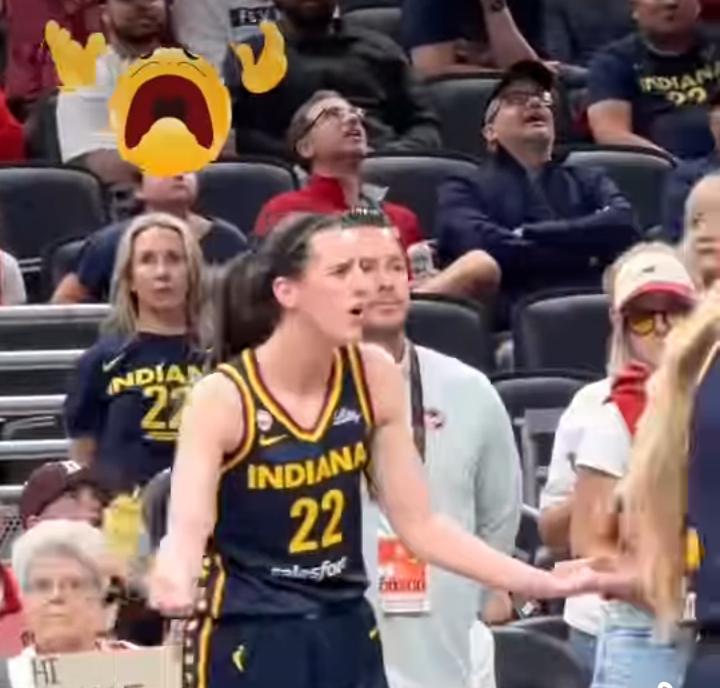
The WNBA’s decision to fine Indiana Fever guards Caitlin Clark and Sophie Cunningham following a heated altercation against the Phoenix Mercury has reignited a familiar debate across professional sports: where should the line be drawn between passion and unsportsmanlike conduct?
During a tense fourth-quarter sequence involving veteran Mercury forward DeWanna Bonner, emotions boiled over as players exchanged words and tempers flared. Officials assessed technical fouls to Clark and Cunningham, and the league later handed down financial penalties.
While the fines themselves were relatively minor, the reaction from fans has been anything but.
Many supporters immediately questioned whether the WNBA is becoming too strict when it comes to players showing emotion during competitive moments. Others argued that maintaining discipline and respect remains essential for the league’s continued growth.
The incident has once again placed Clark at the center of one of basketball’s biggest conversations.
WHY THIS INCIDENT RESONATES WITH FANS
Basketball has always been an emotional sport.
From trash talk and celebrations to intense rivalries and heated exchanges, some of the most memorable moments in basketball history have come from players competing with raw passion.
Fans don’t just watch sports for skill. They watch for emotion, drama, intensity, and personality.
That is particularly true in today’s social media era, where viral moments often generate as much attention as the final score.
When players like Caitlin Clark display visible emotion, it connects with fans because it reflects how much winning matters to them.
Supporters see competitiveness.
Critics sometimes see poor sportsmanship.
The challenge for leagues is finding the balance.
CAITLIN CLARK’S COMPETITIVE FIRE IS PART OF HER APPEAL
Since entering the WNBA, Clark has become one of the league’s most recognizable stars.
Her deep shooting range, playmaking ability, and confidence have helped attract record-breaking television audiences and increased attention to women’s basketball.
But Clark’s popularity extends beyond statistics.
Fans appreciate her willingness to compete fiercely every night.
Whether she’s celebrating a three-pointer, arguing a call, or standing up to opponents, Clark plays with visible intensity.
That competitive edge helped transform her into a college superstar and continues to fuel her success in the professional ranks.
Moments like the Mercury altercation remind everyone that Clark isn’t simply a marketing phenomenon—she’s a fierce competitor determined to win.
SOPHIE CUNNINGHAM BRINGS TOUGHNESS TO THE FEVER
While Clark often receives the headlines, Sophie Cunningham’s role in this story should not be overlooked.
Throughout her career, Cunningham has built a reputation as one of the league’s toughest and most outspoken competitors.
She brings energy, physicality, and leadership to every game.
For Indiana, that mentality has become increasingly valuable as the Fever attempt to establish themselves as legitimate championship contenders.
Teams that aspire to compete deep into the postseason often need players willing to embrace physical battles and emotional moments.
Cunningham embodies that mindset.
The fact that she was involved in the incident surprised very few longtime WNBA observers.
WHY THE WNBA FELT COMPELLED TO ACT
Despite fan criticism, the league’s reasoning is understandable.
Professional sports organizations generally want to discourage situations that could escalate into larger confrontations.
Technical fouls and fines serve as deterrents designed to keep games under control.
The WNBA’s leadership understands that player rivalries can be great for business, but outright hostility can quickly become problematic if left unchecked.
From the league’s perspective, consistency matters.
If technical fouls are assessed during a game, follow-up discipline often follows regardless of the player’s status or popularity.
That approach helps maintain credibility with teams, officials, and players across the league.
THE FEVER ARE DEVELOPING A CHAMPIONSHIP MENTALITY
One interesting takeaway from this situation is what it reveals about Indiana’s evolution.
In previous seasons, the Fever were viewed primarily as a rebuilding franchise.
Today, expectations are dramatically different.
With Clark leading the roster and veteran contributors surrounding her, every game carries greater significance.
Championship-caliber teams often develop an emotional edge.
They play with urgency.
They hold teammates accountable.
They refuse to back down from challenges.
The altercation against Phoenix may not have been ideal, but it demonstrated how invested Indiana’s players are in competing at the highest level.
That mentality could ultimately prove beneficial during playoff battles where intensity naturally increases.
WHAT THIS MEANS FOR CAITLIN CLARK MOVING FORWARD
Clark’s biggest challenge moving forward will be managing the balance between passion and composure.
Superstars often receive extra scrutiny.
Every reaction is analyzed.
Every interaction becomes a talking point.
As Clark’s profile continues to grow, opponents will likely test her emotionally just as much as they challenge her physically.
Learning when to engage and when to walk away is a skill every elite player eventually develops.
The good news for Indiana fans is that Clark’s competitive spirit remains one of her greatest strengths.
The goal isn’t eliminating that fire.
It’s channeling it effectively.
THE BIGGER QUESTION: ARE PLAYERS ALLOWED TO SHOW EMOTION ANYMORE?
The answer is yes—but within limits.
Fans generally want athletes to play with passion. Sports would be far less entertaining if every player acted like a robot.
At the same time, leagues must establish boundaries to prevent games from spiraling into chaos.
The debate surrounding Clark and Cunningham highlights the delicate balance modern sports organizations face.
Too much enforcement can make games feel sterile.
Too little enforcement can create unnecessary conflict.
Most fans probably fall somewhere in the middle.
They want emotion.
They want rivalries.
They want authenticity.
But they also want competition to remain respectful and under control.
FINAL THOUGHTS
The fines handed to Caitlin Clark and Sophie Cunningham are unlikely to have any lasting impact on Indiana’s season. If anything, the controversy may further energize the Fever and their fan base.
What matters most is the larger conversation the incident has sparked.
Passion has always been one of sports’ greatest attractions. The challenge for players and leagues alike is ensuring that passion enhances the game rather than detracts from it.
For Indiana Fever fans, one thing is clear: Clark and Cunningham care deeply about winning.
And in a league becoming more competitive with every season, that intensity may be exactly what helps Indiana take the next step toward championship contention.