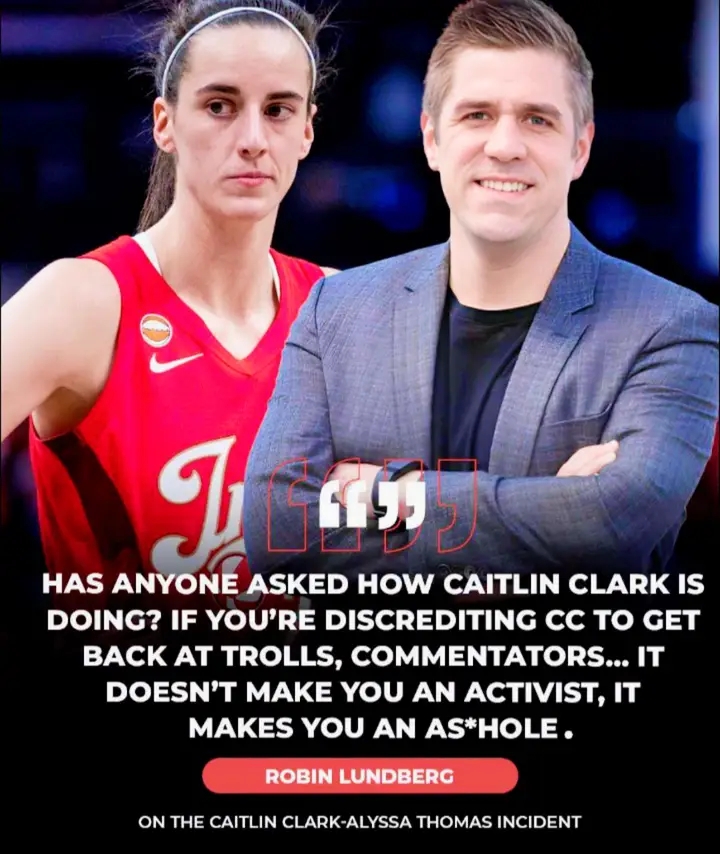
The debate surrounding physical play against Indiana Fever superstar Caitlin Clark has once again dominated WNBA headlines, and this time veteran sports broadcaster Robin Lundberg has become one of the loudest voices calling for accountability.
After Phoenix Mercury star Alyssa Thomas made controversial contact with Clark during a heated matchup against the Indiana Fever, Lundberg argued that the WNBA had no choice but to discipline Thomas. His stance reflected what many fans, analysts, and former players believed after replays showed contact to Clark’s throat that initially went unpenalized.
WHY THE INCIDENT BECAME SUCH A BIG STORY
The controversy wasn’t simply about one hard foul.
Indiana and Phoenix had already developed growing tension in previous meetings, making every physical exchange closely scrutinized. During the game, Thomas appeared to make forceful contact with Clark’s throat while battling for possession.
Officials did not immediately call a foul, but social media erupted almost instantly. Slow-motion replays spread across multiple platforms, with many questioning how the play escaped review.
Following widespread criticism, the WNBA reviewed the incident and ultimately suspended Thomas for one game, ruling that she had recklessly made contact with Clark’s throat area.
ROBIN LUNDBERG’S MESSAGE WAS DIRECT
Robin Lundberg wasted little time sharing his opinion.
He argued that the league needed to suspend Thomas, describing the play as dirty and emphasizing that protecting players should remain a priority regardless of their popularity.
Lundberg also pushed back against narratives suggesting that criticism of the incident was solely driven by Clark’s enormous fanbase. Instead, he maintained that dangerous plays deserve punishment no matter who is involved.
His comments resonated with many basketball observers who believe consistent officiating is essential for maintaining player safety.
WHY CAITLIN CLARK REMAINS AT THE CENTER OF EVERY DEBATE
Since entering the WNBA, Clark has transformed the league’s visibility.
Television ratings have climbed, attendance has surged, merchandise sales have exploded, and nearly every Fever game has become a national event. That popularity also means every hard foul against her generates intense discussion.
Supporters argue that opponents have become increasingly physical against Clark because of her influence and competitive style. Others counter that she simply receives the same treatment elite stars have always faced.
The truth likely lies somewhere in between. Clark is an aggressive competitor who constantly has the ball in her hands, naturally exposing her to more contact. At the same time, her status as the league’s biggest attraction means controversial plays involving her receive far greater attention than similar incidents involving other players.
THE WNBA FACED A DIFFICULT DECISION
The league found itself balancing two important priorities.
First, it had to protect player safety.
Second, it needed to demonstrate consistency in discipline.
By issuing a one-game suspension, the WNBA sent a message that dangerous contact—whether intentional or reckless—would not be ignored after review. While some believed the punishment was too harsh and others argued it wasn’t severe enough, the decision at least established that the incident warranted action.
WHAT THIS MEANS FOR THE INDIANA FEVER
For the Indiana Fever, the controversy serves as another reminder that Clark will continue to face aggressive defensive attention throughout her career.
That places additional responsibility on the team’s veterans and coaching staff to keep their star protected while maintaining composure during emotionally charged games.
The Fever cannot allow outside distractions to derail what has become one of the league’s most promising young teams. If anything, moments like these could strengthen team chemistry as players rally around one another.
THE BIGGER PICTURE FOR THE WNBA
The Clark-Thomas incident highlights a broader issue the league will continue to confront.
Fans love physical basketball, but they also expect clear standards for player safety.
When controversial plays go uncalled, confidence in officiating suffers. Conversely, consistent postgame reviews and transparent disciplinary decisions help reinforce trust in the league.
The WNBA’s growing popularity means every major incident now receives unprecedented attention. That increased scrutiny is both a challenge and a sign of how much women’s basketball has grown.
WHAT HAPPENS NEXT?
Expect future Fever-Mercury matchups to attract even more attention.
Opposing teams know slowing Clark is essential to beating Indiana, while the Fever will undoubtedly look to ensure their franchise player isn’t repeatedly subjected to unnecessary physical contact.
Meanwhile, analysts like Robin Lundberg will likely continue weighing in whenever controversial moments arise, ensuring discussions about officiating, player safety, and competitive balance remain front and center.
One thing is certain: as Caitlin Clark’s profile continues to grow, every high-profile collision will become another chapter in the evolving story of the WNBA’s biggest star—and how the league chooses to protect its players while preserving the intensity that makes professional basketball so compelling.