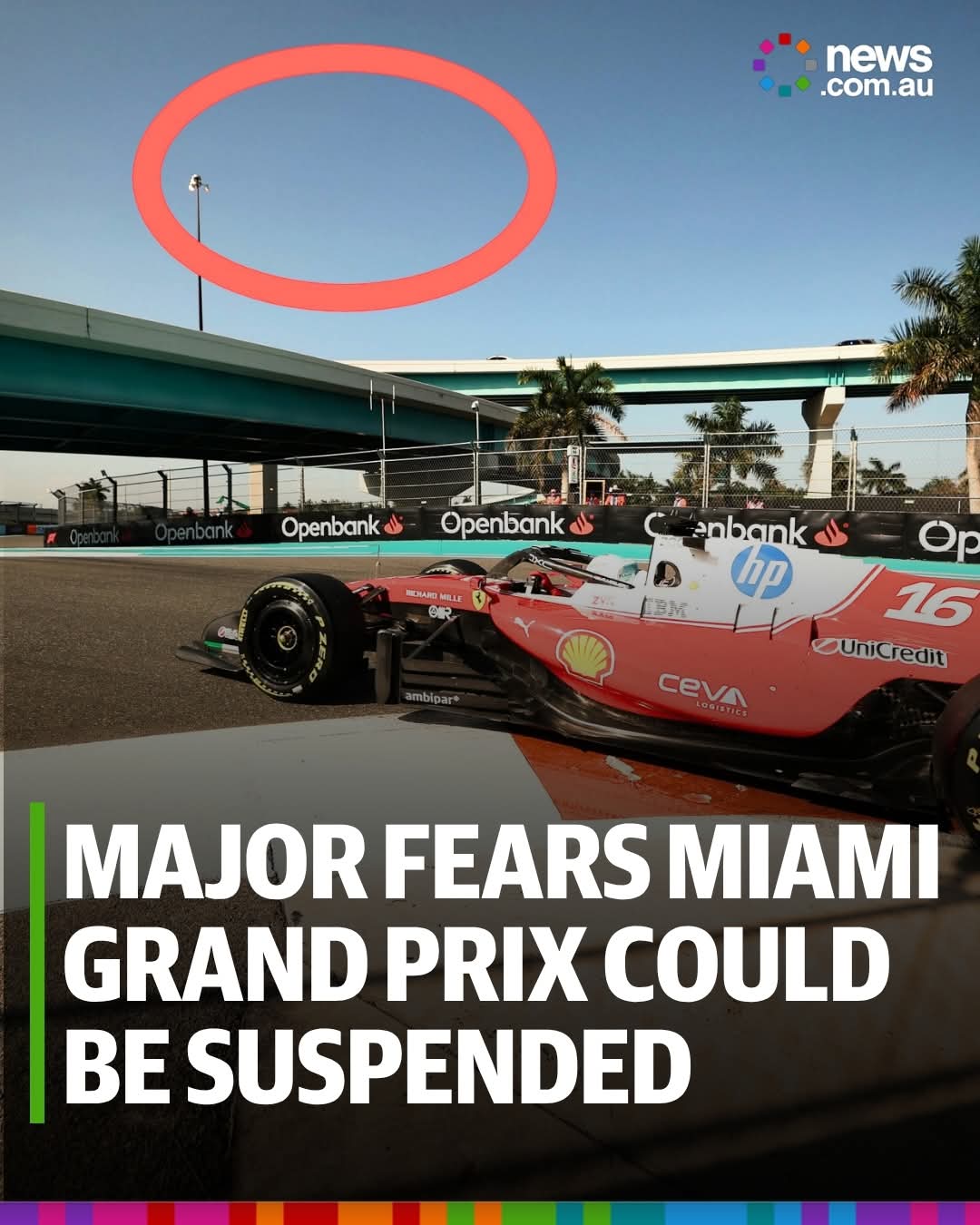
The 2026 Miami Grand Prix is facing fresh uncertainty, with fears emerging that the event could be suspended due to severe weather conditions forecast across race day. After Formula 1 finally resumed following a frustrating five-week hiatus, the prospect of another disruption has raised concerns among fans, teams, and organizers alike.
Momentum had just begun to build at the Miami International Autodrome, set around the iconic Hard Rock Stadium, where Lando Norris delivered a standout performance to secure sprint qualifying pole position for McLaren. He edged out championship leader Andrea Kimi Antonelli, signaling a potential shift in the competitive order. But just as the on-track narrative was heating up, attention quickly turned to the skies above Miami.
Forecasts indicate a high likelihood of heavy thunderstorms and lightning during the scheduled race window. Under FIA safety regulations, any lightning activity in the vicinity forces an immediate halt to proceedings, with fans evacuated from grandstands and a mandatory delay of at least 30 minutes after the last thunderclap. In extreme scenarios, this could lead to a full suspension or even postponement of the race—an outcome that would further frustrate fans already impacted by earlier cancellations in Bahrain and Saudi Arabia.
Despite the looming threat, the FIA has maintained a cautiously optimistic stance. Officials have confirmed that contingency plans are already in place, drawing from similar situations faced in previous Miami events. These measures are designed to minimize disruption and ensure safety without compromising the integrity of the race weekend. However, weather remains one variable no strategy can fully control.
From a competitive perspective, unpredictable conditions could dramatically reshape the outcome if the race does go ahead. Wet or interrupted races often favor opportunistic drivers and bold strategy calls, potentially opening the door for surprise results. With drivers like Max Verstappen still searching for consistency and Norris chasing momentum, a chaotic race could become a turning point in the championship battle.
Looking ahead, the situation highlights a growing challenge for Formula 1 as it expands into climates prone to extreme weather. Organizers may need to rethink scheduling flexibility or introduce more adaptive race windows in the future. For now, all eyes remain on Miami’s skies, as fans and teams brace for what could become one of the most unpredictable and weather-influenced race weekends of the 2026 season.