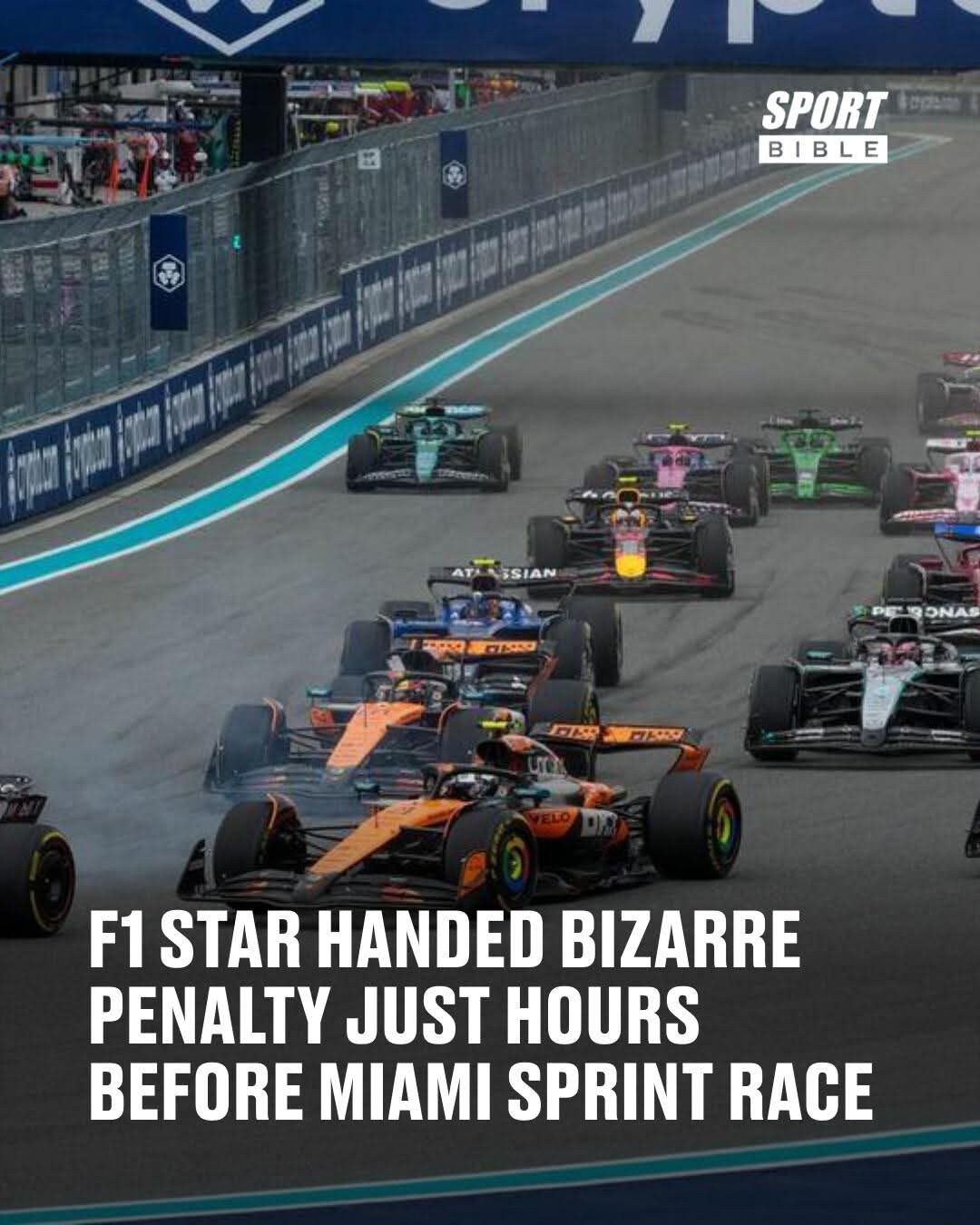
Formula 1 delivered yet another twist ahead of the sprint race at the Miami Grand Prix, as Alex Albon was handed a dramatic and unusual penalty following qualifying. The decision, issued just hours before lights out, has shaken up the starting grid and sparked debate over officiating consistency in one of the most competitive seasons in recent memory.
The drama unfolded at the Miami International Autodrome, located around the Hard Rock Stadium, where sprint qualifying initially saw Lando Norris secure pole position for McLaren. Andrea Kimi Antonelli followed in second for Mercedes, while Oscar Piastri and Charles Leclerc completed the top four. However, the spotlight quickly shifted away from the front-runners and onto a controversial stewarding decision further down the order.
Albon had originally finished 14th and believed he had narrowly missed out on progressing further. But the FIA later discovered that he had exceeded track limits during SQ1—a violation that went unnoticed in real time. By the time the incident was flagged, Albon had already taken part in SQ2, creating a highly unusual situation. In response, stewards invoked their authority to delete his lap time from SQ1 and all subsequent times from SQ2, ultimately dropping him to 19th on the grid and applying a five-place penalty.
This sequence of events raises serious questions about race control timing and procedural accuracy. In a knockout format like sprint qualifying, decisions delayed by even a few minutes can fundamentally alter outcomes—not just for the penalized driver, but for others like Liam Lawson, who missed out on advancing. Situations like this highlight a growing tension in Formula 1 between strict rule enforcement and real-time officiating limitations.
From a competitive standpoint, the penalty deals a heavy blow to Williams Racing. Starting near the back in a sprint race leaves minimal room for recovery, especially with limited laps and intense midfield battles. Meanwhile, drivers like Norris, Antonelli, and Max Verstappen now benefit from a reshuffled grid that could influence both sprint results and momentum heading into the main race qualifying.
Looking ahead, this incident could have wider implications for the sport. If similar officiating delays continue, pressure will mount on the FIA to refine its systems—possibly through enhanced track monitoring or quicker decision-making protocols. As for the race itself, unpredictability has only increased. With tensions rising and positions reshuffled, the Miami sprint now carries an added layer of intrigue that could ripple through the rest of the Grand Prix weekend.