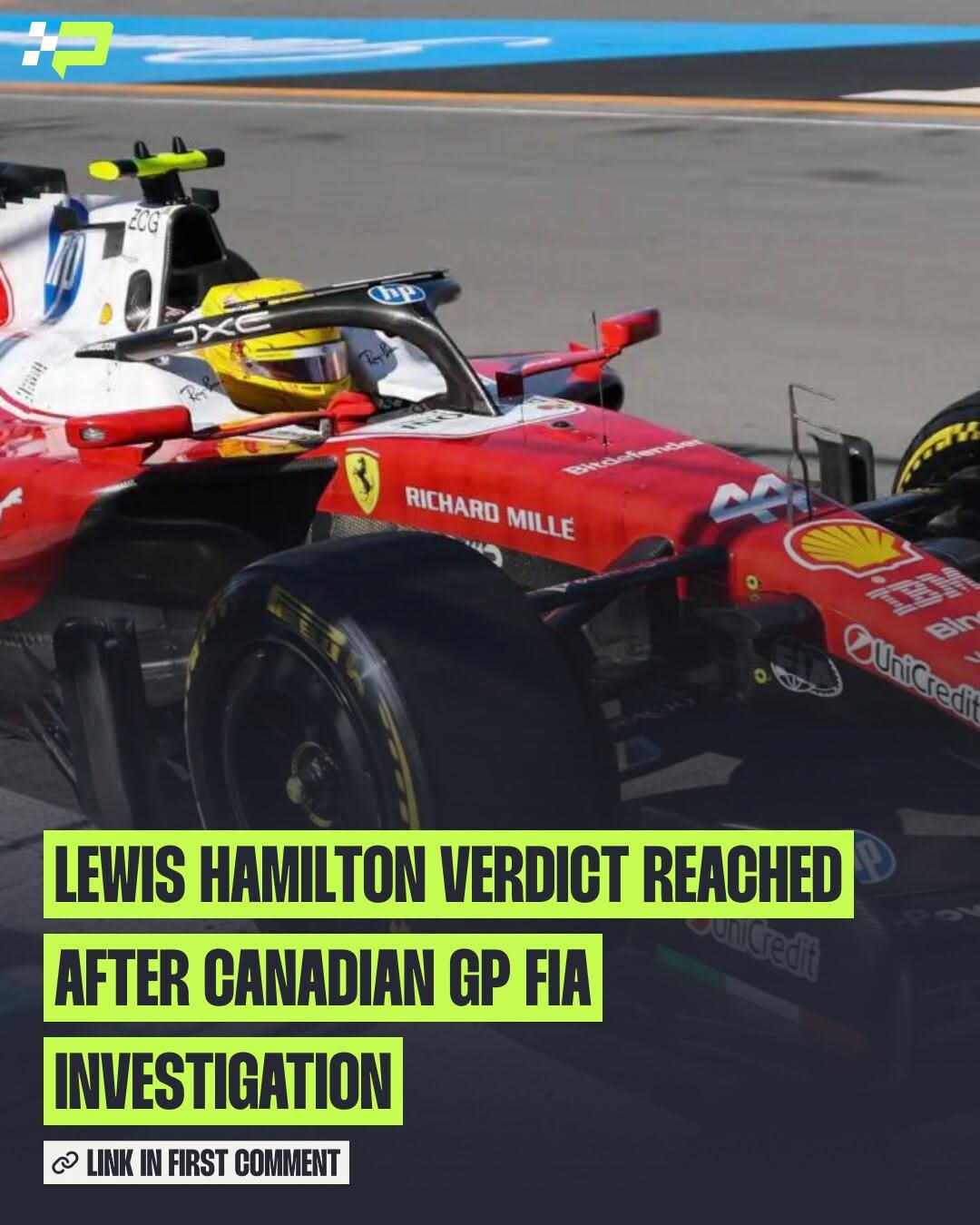
Lewis Hamilton has avoided a potentially costly penalty at the Canadian Grand Prix after FIA stewards decided not to take action against the Ferrari driver following an intense sprint battle involving Oscar Piastri and Charles Leclerc. The decision brought an end to one of the weekend’s most discussed investigations and also raised questions among fans about why Hamilton escaped punishment while Nico Hulkenberg was penalized in a seemingly similar incident. As Formula 1 enters a period where every point matters, even the smallest steward decisions are increasingly becoming headline material.
The incident unfolded during the closing stages of the Sprint race as Hamilton fought aggressively to hold onto fourth place. The seven-time world champion had spent much of the race keeping McLaren’s Oscar Piastri behind him while also managing pressure from Ferrari teammate Charles Leclerc. After surviving contact with Montreal’s famous Wall of Champions earlier in the race, Hamilton appeared set to secure a strong result. However, the final lap delivered chaos. Piastri launched an attack while Leclerc joined the fight, turning the battle into a three-way contest that dramatically reshaped the finishing order.
Hamilton was subsequently placed under investigation for allegedly leaving the circuit and gaining an advantage during the final chicane sequence. The concern centered around whether the Ferrari driver used the run-off area to maintain track position unfairly. Similar incidents in recent seasons have led to penalties, making many expect a difficult outcome for Hamilton. However, after reviewing data, onboard footage, timing systems and radio communications, FIA stewards determined that the circumstances did not warrant punishment.
According to the FIA’s explanation, Hamilton’s case differed significantly from the earlier Nico Hulkenberg incident. Hulkenberg had received a 10-second penalty after leaving the track while defending against Liam Lawson and benefiting from the move. In Hamilton’s situation, stewards concluded that Piastri was not in a genuine overtaking position when the Ferrari left the track. Because Hamilton was not actively defending against an established attack, officials ruled that he had not gained a lasting competitive advantage. That distinction became the deciding factor in the final judgment.
The decision highlights how modern Formula 1 rule enforcement increasingly depends on context rather than simply applying identical punishments across visually similar incidents. Fans often see two cars leaving the track and assume both situations deserve the same outcome, but FIA evaluations now involve several variables including relative positioning, racing intent, momentum and whether a driver maintained a meaningful advantage. While that approach allows flexibility, it also creates debate because interpretations can vary from race to race.
From Ferrari’s perspective, Hamilton escaping a penalty is valuable beyond just points. The team has experienced a turbulent start to the season and has spent much of the campaign chasing Mercedes and McLaren rather than controlling races. Any additional setbacks would have only intensified scrutiny surrounding both Hamilton and Ferrari’s overall performance. Avoiding sanctions allows the team to continue building momentum and focus attention on extracting more pace from its package rather than defending controversial steward decisions.
There is also a broader championship implication developing beneath the surface. Mercedes appear to have found another level with George Russell and Kimi Antonelli emerging as major threats, while McLaren continue to apply pressure through Norris and Piastri. Ferrari cannot afford wasted opportunities if they intend to remain involved in title conversations. Hamilton may not be dominating headlines through race wins yet, but preserving points during difficult weekends can ultimately define championship campaigns.
Looking ahead, this ruling could become an important reference point later in the season. Formula 1 teams constantly study previous steward decisions to understand where competitive boundaries exist. Drivers and engineers will undoubtedly analyze the Hamilton case closely because similar scenarios are almost guaranteed to emerge again. As margins continue shrinking across the grid, one interpretation from race control could influence not only a result, but potentially the direction of an entire championship fight.