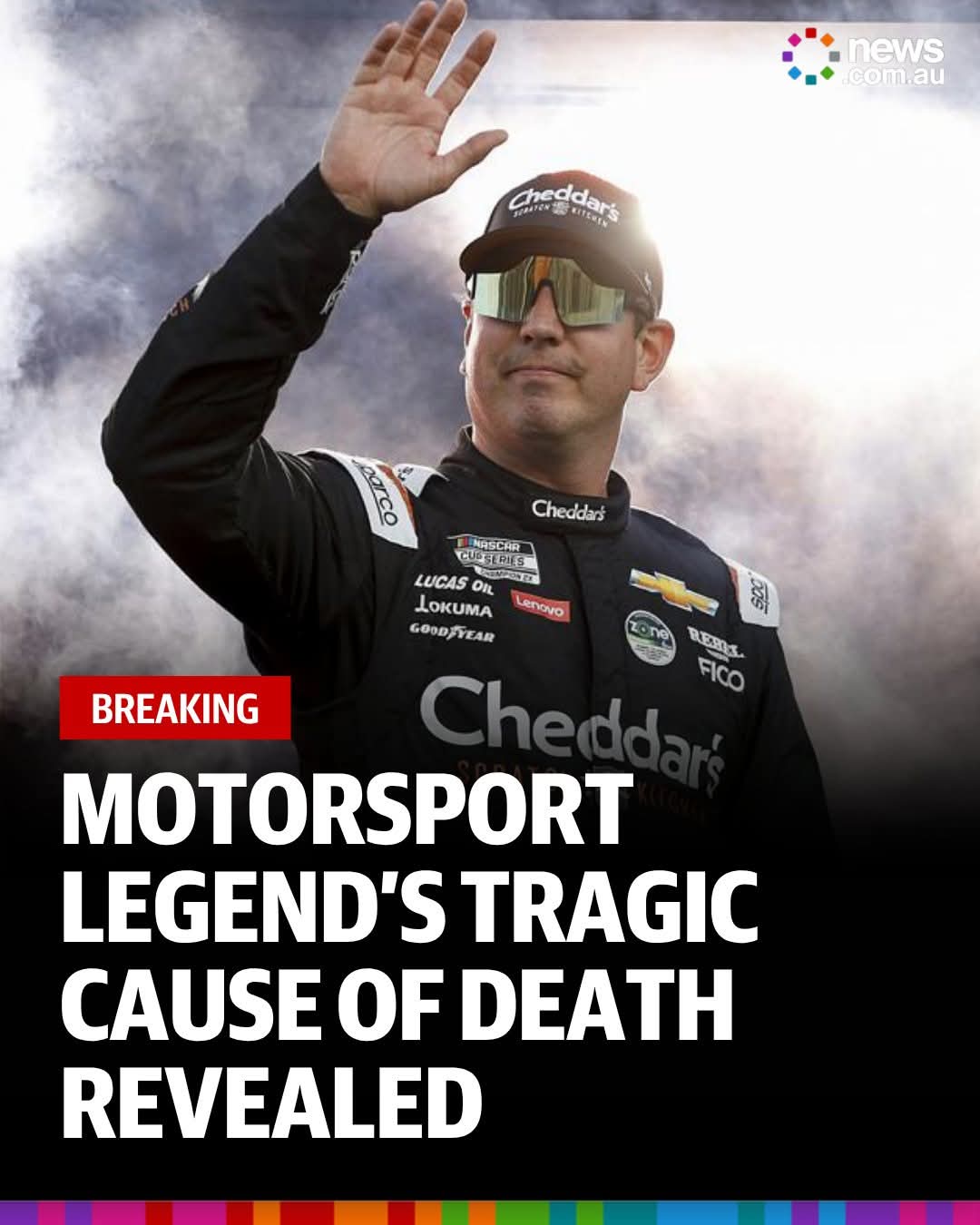
The motorsport world remains in shock following the sudden death of NASCAR icon Kyle Busch at the age of 41, a loss that has sent waves of grief throughout the racing community. According to a statement released by Busch’s family, the two-time NASCAR Cup Series champion died after severe pneumonia progressed into sepsis, causing rapid and overwhelming complications. The announcement brought painful clarity to a situation that had stunned fans, drivers, and teams across the sport.
Reports surrounding Busch’s final hours painted a deeply troubling picture. Emergency call details revealed concerns over severe symptoms including shortness of breath, overheating, and coughing up blood before he was transported for medical treatment. What initially appeared to be a serious illness escalated quickly into a life-threatening medical emergency. Sepsis remains one of the most dangerous complications associated with infection because it can progress rapidly and affect multiple organs within a short period of time.
For NASCAR, the tragedy feels almost impossible to process because Busch had remained active and competitive right up until the end. Just days earlier, he was still racing and adding to a legacy that already placed him among the greatest drivers in the sport’s history. His career stretched across more than two decades and included an extraordinary list of accomplishments, including two Cup Series championships and a record-setting number of victories across NASCAR’s top divisions.
What made Busch unique was not only his ability to win races but the intensity he brought every time he entered a car. Nicknamed “Rowdy,” he built a reputation as one of the fiercest competitors of his generation. Fans either loved his aggressive style or rooted passionately against him, but very few remained neutral. Drivers who competed alongside him consistently described him as one of the most naturally gifted talents to ever sit behind a steering wheel. Across motorsport, respect for his ability often outweighed rivalries.
From an analytical perspective, Busch’s passing creates an emotional void and a competitive one. NASCAR has experienced legendary losses before, but moments like these often redefine eras. Younger drivers entering the sport grew up watching Busch dominate races and shape the identity of modern stock-car competition. Many current competitors openly viewed him as both a benchmark and mentor.
The coming weeks will likely be filled with tributes, memorials, and emotional race weekends as teams and fans continue to process the loss. NASCAR has historically shown an ability to unite during difficult moments, and this situation will almost certainly bring the garage together once again. Drivers may compete fiercely on Sundays, but moments like these remind everyone that the sport extends beyond championships and trophies.
Kyle Busch’s legacy ultimately reaches far beyond statistics. The championships, victories, and records tell only part of the story. He represented passion, intensity, personality, and an unapologetic commitment to racing. Future generations will study his achievements, but fans who watched him race will remember something more difficult to measure: the feeling that whenever Kyle Busch was on track, something unforgettable could happen.