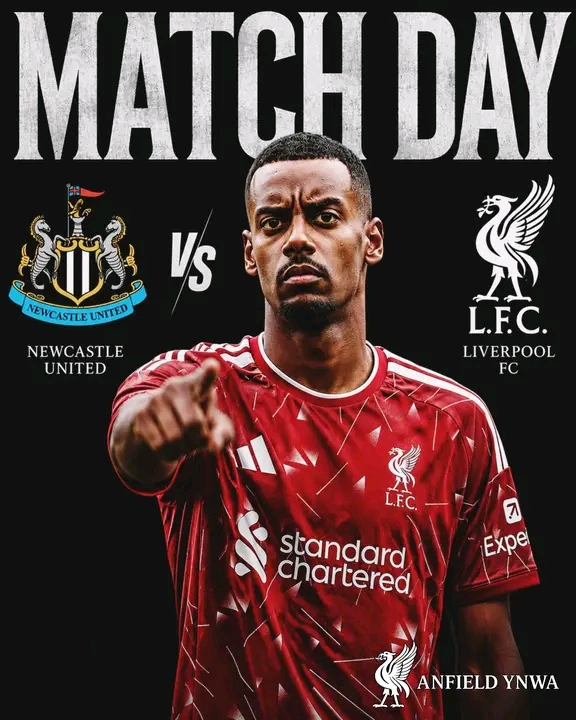
# ARE YOU READY? 🔥
There is a particular kind of silence that falls over Anfield in the hour before a new season begins, and if you have ever stood on the Kop in that window between the warm-up drills finishing and the teams re-emerging from the tunnel, you know it is not really silence at all. It is anticipation wearing silence as a disguise. Every rustle of a match programme, every scrape of a boot on concrete, every distant echo of “You’ll Never Walk Alone” being hummed under someone’s breath in the concourse feels louder than it should because of what it is building toward. That feeling is back. The pre-season friendlies are done, the transfer speculation has quieted into actual squad lists, and the only question left worth asking is the one printed in capital letters above this post. Are you ready? Because whether you are or not, it is happening anyway, and this club does not wait for anyone to catch their breath.
This is not a normal new season, and anyone who tells you otherwise either was not paying attention last year or is trying very hard to convince themselves that nothing has changed. Something has changed. Everything has changed, in the way that football clubs change when the results stop matching the standard everyone quietly agreed was the baseline. A club that lifted the league by a distance not long ago found itself grinding through a campaign that ended in fifth, with too many matches lost, too many goals conceded, and too much of the swagger that used to define this team replaced by something heavier and more hesitant. That is not a version of Liverpool anyone wanted to watch, and it is not a version anyone in the building was prepared to accept as the new normal. So the summer became about resetting, not just tweaking. A new head coach walked through the door, a whole coaching philosophy shifted underneath the club’s feet, and the squad that takes the pitch this season is being asked to relearn what it feels like to play with intent again.
Andoni Iraola is the name now stitched into the story of this club, and if you have watched football closely over the last few years, you already know why there was genuine excitement when his appointment was confirmed. This is a manager who built a reputation at Rayo Vallecano before turning Bournemouth into one of the most uncomfortable teams in the Premier League to play against, a side that pressed with a relentlessness that punched well above what their transfer budget suggested it should. That is the identity Liverpool have gone and bought into: high-intensity, aggressive, front-foot football that does not sit back and invite pressure but instead goes and creates chaos in the opposition’s own half. It has been compared, fairly or not, to the peak years of a certain German manager whose name still gets chanted in the away end, and there is a reason those comparisons keep surfacing. Fans do not want comfort right now. They want conviction. They want a team that runs itself into the ground for the shirt, that closes down passing lanes like their lives depend on it, that turns Anfield back into the kind of place visiting teams dread walking into rather than a stadium they can quietly pick apart.
Of course, transformations like this do not happen with the flick of a switch, and Iraola himself has been honest about how strange and uncertain the buildup to a season like this always feels. There is a particular discomfort that comes with an August spent not knowing exactly which of your players will still be there by the time the window slams shut, of trying to build cohesion and a defined structure while transfer business rumbles on in the background. It is the kind of month that managers privately dread even while publicly talking up the excitement of the unknown, because there really is something intoxicating about a first matchday when nobody outside the training ground actually knows what this version of the team is going to look like. The pre-season friendlies gave hints. Wins were banked, some tactical shapes were tested, young players were given long looks in matches that mattered enough to matter but not so much that a rough afternoon would define anyone’s season. Thirty-plus players cycled through those fixtures as the head coach searched for answers about fitness levels and readiness, because there is only so much that can be learned in a training ground before real match minutes start telling the truth.
And the truth this season starts on the road, at a stadium that has become one of the most difficult in the country to visit. Newcastle at home is no longer the fixture it once was for a team with title ambitions, and everyone connected to this club knows it. It is an early, uncomfortable examination of exactly how far along this rebuild already is, a chance to see whether the principles drilled into this squad over the summer can survive first contact with a genuinely hostile atmosphere and a physical, well-drilled opponent. There is something almost poetic about starting the new era there rather than in the comfort of Anfield, because if this team is going to mean anything this season, it needs to prove it can do the difficult things away from home just as readily as the easy things in front of its own crowd. A statement win there would not settle anything long-term, because one match never does, but it would tell everyone watching that the identity this club is chasing is not just a preseason talking point. It would tell them it is real.
The squad walking into this season carries some familiar faces and some conspicuous absences, and it would be dishonest to write about this new chapter without acknowledging both. Virgil van Dijk remains the captain, the emotional and defensive spine of this team, and he has spent the summer speaking with the kind of clarity that only comes from someone who has genuinely sat with disappointment and decided he refuses to repeat it. He has been open about how personally unacceptable last season felt to him, not as an excuse for anyone else but as a marker for what this group owes the supporters going forward. That kind of leadership matters more in a transition season than in almost any other, because young players and new faces need something stable to orient themselves around, and few figures in this dressing room carry more weight than the man wearing the armband. Alongside him, Alisson remains the last line, a goalkeeper whose calm under pressure has bailed this team out more times than most fans could count, and whose continued excellence gives every outfield player license to press aggressively knowing there is a safety net behind them if things go wrong.
But this is also a season defined by absence, and the biggest one is impossible to ignore. Mohamed Salah’s departure closes a chapter that stretched back nearly a decade, a run defined by goals, records, and a connection with the supporters that felt unshakeable for years before it visibly frayed. It ended in frustration rather than celebration, with a difficult season and public friction souring what should have been a triumphant final act. There is no pretending that does not leave a mark. A player of that stature does not simply get replaced by a single signing, and the club has been honest about that reality by choosing not to chase a direct like-for-like alternative. Instead there is a wider distribution of responsibility now, a front line that has to create and finish collectively rather than relying on one talisman to conjure something out of nothing on a bad night. Victor Munoz arrives as fresh legs and versatility across the front areas, still only in his early twenties but already carrying senior international experience, while academy graduates like Rio Ngumoha are being trusted with real minutes rather than token appearances. It is a changing of the guard, uncomfortable in the short term but potentially thrilling if the young talent coming through the pipeline delivers on its promise.
That youth movement deserves its own moment of attention, because it might end up being one of the most quietly important stories of this entire season. Names like Ngumoha, Koumas, and Morris are not just squad filler brought on to make up numbers in dead pre-season friendlies. They are genuine prospects being given real opportunities inside a first-team environment that, under the old hierarchy, might have kept them waiting years longer for a proper chance. A head coach who built his reputation partly on developing and improving individual players is exactly the kind of figure who can accelerate that kind of pathway, and there is a version of this season where the emergence of one or two of these academy products becomes the single most talked-about storyline by May. Football clubs live and die by their ability to keep producing the next generation, and there has always been something special about watching a local kid or a long-term academy product force their way into a matchday squad through pure performance rather than reputation. If this season delivers even one breakout story from that group, it will matter far beyond the individual player, because it will prove the pathway still works even during a period of upheaval at the top.
None of this is to pretend the questions hanging over this squad are small ones. Defensive fragility was one of the defining problems of last season, with too many goals conceded and too many matches lost in ways that suggested structural issues rather than simple bad luck. Depth remains a genuine concern in areas of the pitch where injuries could expose thin resources, particularly with a forward line still adjusting to life without its most reliable source of goals over the past several seasons. There is also the reality that transitions like this one rarely move in a straight line. Iraola’s own managerial history includes stretches of real struggle, extended winless runs that tested the patience of supporters who wanted instant results before the bigger picture had time to reveal itself. Anyone expecting an immediate return to the summit of English football by Christmas is setting themselves up for disappointment, and the smarter, more grounded view among the fanbase seems to understand that. This is a rebuild, not a quick fix, and rebuilds ask for patience that modern football rarely wants to give.
And yet patience has never been the emotion that defines a season opener, has it. Nobody sits in the stands on the first weekend of August thinking carefully about medium-term project timelines and squad depth charts. They think about that first whistle. They think about the badge on the chest and what it has always demanded of the people wearing it. They think about generations of supporters before them who stood in the same end, sang the same songs, and believed with the same stubborn, irrational conviction that this year, somehow, was going to be the one. That belief does not need statistics to justify itself. It exists because of everything this club has already proven it is capable of when it commits fully to an idea, when a manager and a squad and a fanbase all pull in exactly the same direction at exactly the same time. It has happened before at this club, more than once, more than most clubs in the world can claim, and there is no reason that lightning cannot strike again under different circumstances with different faces carrying the weight.
There is also a business dimension to this new season that supporters have watched unfold with a mixture of curiosity and cautious optimism, with reports of new investment potentially reshaping the ownership picture behind the scenes. Whatever shape that eventually takes, the on-pitch product remains the only thing that actually matters to anyone standing on the Kop on a Saturday afternoon. Ownership structures and boardroom decisions can shape resources and strategy over years, but they do not score goals, they do not make last-ditch tackles, and they certainly do not deliver that specific, electric feeling that rushes through a stadium when the ball hits the back of the net in the eighty-ninth minute against a rival. That feeling belongs entirely to the players on the pitch and the supporters willing them on, and no amount of financial engineering changes that basic truth about what this sport is actually for.
So here we are, on the edge of it all again. A new manager with a clear and aggressive footballing philosophy. A squad reshaped by departures that stung and arrivals that intrigue. A fixture list that opens with genuine difficulty rather than a gentle introduction. Young players waiting for their moment and senior leaders determined not to repeat last season’s collapse. Every single ingredient is in place for either a genuinely thrilling year or another difficult one, and the honest answer is that nobody outside that dressing room actually knows which version is coming. That uncertainty used to be terrifying for supporters who prefer guarantees. At this club, right now, it feels different. It feels like possibility. It feels like the start of something rather than the continuation of something that had already gone stale.
Think about what it actually means to support a club like this one, through decades of triumph and heartbreak in roughly equal measure, through European nights that will be talked about for generations and domestic campaigns that ended in nothing but bruised pride. The badge does not change. The anthem does not change. The bond between the people in the stands and the eleven on the pitch, whoever those eleven happen to be in any given year, does not change. What changes is the story being written right now, this season, starting with whatever happens on that opening day away from home. Every great chapter in this club’s history started with exactly this kind of uncertain, nervous, hopeful moment, a group of players and a manager nobody was entirely sure about yet, standing at the very beginning of something that would only make sense in hindsight.
That is what makes today matter. Not because the destination is guaranteed, but because the beginning always is the most honest part of any journey. Nobody knows the ending yet. Nobody gets to skip ahead. All anyone gets is this moment, right here, right now, with a new era genuinely beginning and a full season of matches stretching out ahead full of possibility that has not yet been narrowed down by results or injuries or bad luck. That is the gift of a season opener. It is the one time all year when literally anything still feels possible, when every supporter regardless of how the last campaign ended gets to reset their hopes back to zero and start believing all over again.
So put the kit on. Get to the pub, get to the stadium, get in front of whatever screen you are watching this on, wherever in the world you happen to be doing it from, because this club has fans on every continent who all feel exactly the same pull on a day like this. Sing the songs. Trust the process even when it gets uncomfortable, because it will get uncomfortable at some point this season, and that discomfort is not a sign that something has gone wrong. It is a normal, necessary part of building something that lasts. Believe in the badge, believe in the manager who has been brought in specifically to build something better, believe in the young players who are about to get their chance, and believe in the senior leaders who have already told you, in their own words, exactly how determined they are to make sure last season never happens again.
The whistle is about to go. The story is about to start writing itself. And the only real question left, the one that actually matters more than any preview, any prediction, or any transfer rumor, is the same one it always is at the start of every new season for every generation of supporter who has ever stood behind this club through everything.
Are you ready?