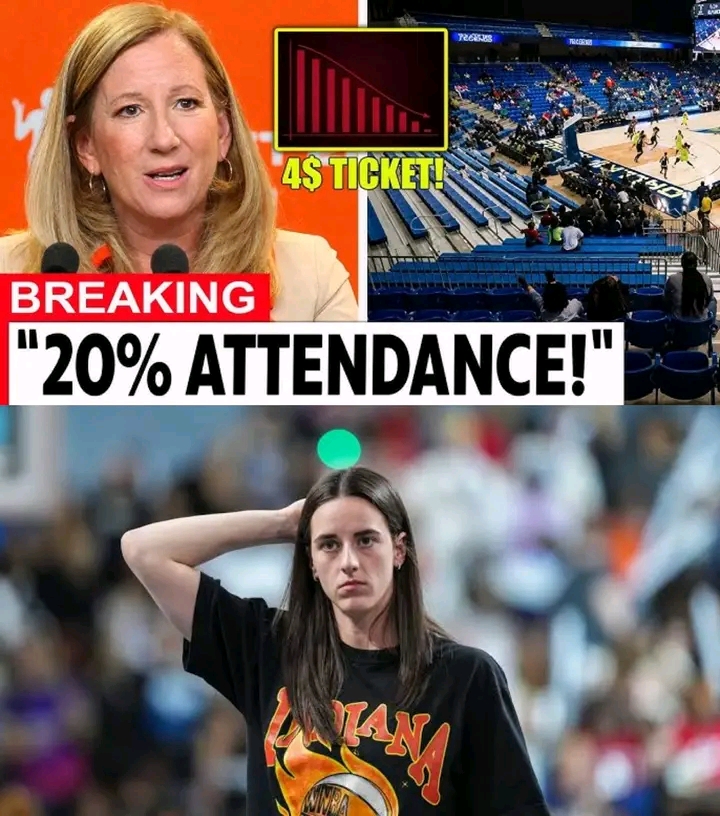
The WNBA is reeling from a sharp financial and cultural backlash after star rookie Caitlin Clark was sidelined with a significant injury, triggering widespread fan boycotts and a dramatic plunge in viewership and ticket sales. What league executives once hailed as a burgeoning era of organic growth now stands exposed as heavily dependent on one transcendent talent.
Clark, the 22-year-old phenom whose arrival shattered records in attendance, television ratings, and merchandise sales, suffered a back injury during a recent matchup against the Phoenix Mercury. The injury has kept her out of key games, including Saturday’s contest, leaving fans furious and prompting organized boycotts of Fever and league-wide broadcasts. Social media has been flooded with calls to withhold support until Clark returns and the league addresses concerns over player safety and officiating.
For months, WNBA leadership promoted the narrative that the league’s surging popularity reflected the depth of its entire roster. Yet data consistently told a different story: Clark’s games routinely drew massive audiences—often doubling or tripling viewership for non-Clark matchups. Fever home games averaged over 17,000 fans, rivaling NBA crowds in some markets, while her jersey sales and endorsement deals fueled unprecedented revenue streams. Without her on the floor, early indicators show ratings collapsing by as much as 50% in some broadcasts, with ticket prices and secondary market demand dropping sharply.
Critics argue the league commodified Clark’s generational appeal while failing to adequately protect her. Repeated physical incidents, including uncalled hard fouls that many viewed as targeted, have fueled accusations of inconsistent officiating. Fever coach Stephanie White publicly described some plays as “egregious cheap shots,” amplifying fan frustration.
“This isn’t just about one player,” said one prominent fan voice in boycott discussions. “It’s about whether the league values the star driving its renaissance or continues treating her as expendable while expecting everyone else to carry the load.”
League executives now find themselves in damage control. Sponsors and broadcasters, drawn by Clark’s meteoric rise, are watching closely as engagement metrics tumble. The All-Star Game format changes and ongoing debates about protection for high-profile players have only deepened divisions.
The market has delivered a swift verdict. Clark’s absence reveals the fragility of a business model overly reliant on a single draw. As fans stay away in protest, the WNBA confronts an uncomfortable truth: you cannot harness a cultural phenomenon and then act surprised when her temporary absence triggers a reckoning. Recovery hinges not just on Clark’s return, but on genuine reforms in safety, officiating, and acknowledgment of what—or who—built this moment.
The coming weeks will test whether the league can sustain its gains or if the boom was always tethered to one extraordinary rookie. For now, silence from arenas and screens speaks volumes.