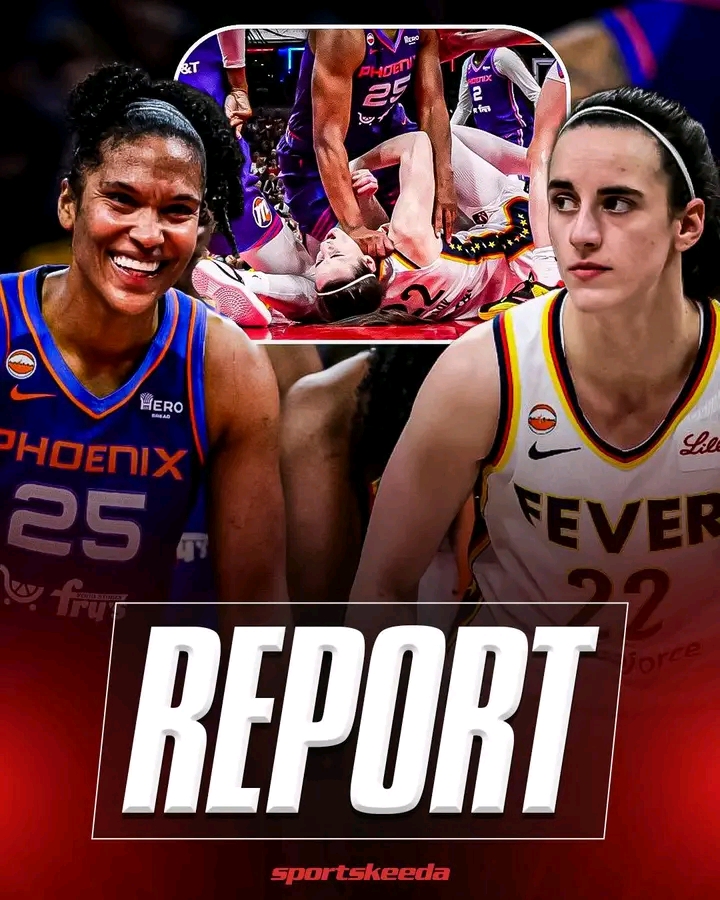
In a decisive move underscoring player safety and league integrity, the WNBA has issued Phoenix Mercury forward Alyssa Thomas a Flagrant 2 foul and a five-game suspension for recklessly making contact with her fist to the throat area of Indiana Fever star Caitlin Clark. The incident, which occurred during Wednesday night’s heated matchup at Gainbridge Fieldhouse, has ignited widespread debate about physical play, officiating standards, and the protection of the league’s most high-profile talents.
The play unfolded in the first half as Clark drove to the basket and fell to the floor while battling for a loose ball. Video footage shows Thomas pressing her fist into Clark’s neck and throat region during the scramble, an action many described as unnecessary and excessive. No foul was called in real time, despite Clark’s visible discomfort. Clark later exited the game with a back injury after additional physical sequences, including what fans and analysts perceived as further unchecked contact. The Fever ultimately fell 111-109 to the Mercury.
League officials reviewed the play post-game and acted swiftly. In an official statement, the WNBA emphasized that Thomas’s actions violated standards of sportsmanship. “Player safety remains paramount,” the statement read. “Reckless contact to the head and neck area will not be tolerated, regardless of intent or game situation.” The suspension begins immediately, sidelining Thomas for five contests and marking one of the longer penalties handed out in recent seasons for on-court conduct.
This marks another chapter in the intense rivalry between the Fever and Mercury. Monday’s game featured multiple technical fouls and ejections, highlighting growing physicality surrounding Clark, the league’s transformative rookie-turned-superstar whose popularity has drawn record audiences.
Thomas, a veteran known for her tenacity and leadership, has not yet commented publicly. She joins a short list of players disciplined retrospectively this season. Supporters argue the no-call reflected inconsistent officiating, while critics of the suspension claim it was a basketball play in a physical sport. However, the league’s response aligns with precedents set in past flagrant incidents involving neck or head contact.
For the Fever, the news offers some vindication amid frustration. Coach Stephanie White voiced strong concerns postgame about “cheap shots” and inadequate protection for her players. Clark, who has elevated the WNBA’s visibility dramatically, has faced heightened physical attention throughout her career. Her ability to bounce back will be key as Indiana navigates the suspension period without facing Thomas.
The decision sends a clear signal: as the league grows, so does accountability. Fans and analysts alike will watch closely to see how this affects on-court dynamics, referee training, and the broader narrative around star treatment. With Thomas unavailable, the Mercury must adjust their frontcourt rotation, while the Fever aims to capitalize on the momentum.
This suspension underscores the WNBA’s commitment to evolving its standards in a new era of heightened scrutiny and global interest. Whether it deters future incidents remains to be seen, but one thing is certain—player welfare is now firmly in the sport