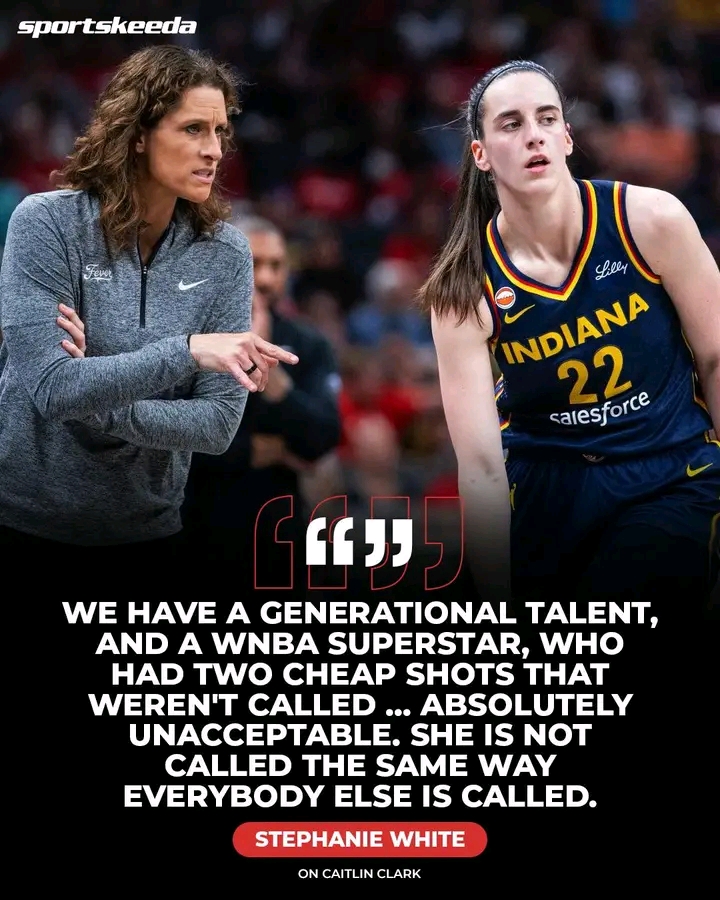
The Indiana Fever may be winning games, but one issue continues to dominate conversations around the WNBA: the physical treatment of Caitlin Clark.
Following another heated contest involving the Fever, head coach Stephanie White once again found herself discussing officiating, player safety, and the increasingly physical style of defense opponents are using against the league’s biggest star. While White stopped short of making excuses, her comments highlighted a growing concern that many Fever fans, analysts, and even neutral observers have noticed throughout the season.
As the Fever push toward championship contention, the debate surrounding Clark’s treatment on the court could become one of the defining storylines of the year.
WHY THE CAITLIN CLARK OFFICIATING DEBATE ISN’T GOING AWAY
Few players in professional basketball generate as much attention as Caitlin Clark. Every game she plays attracts national headlines, massive television audiences, and intense scrutiny from fans and media.
That spotlight also means every hard foul, every missed call, and every technical foul receives far more attention than it otherwise would.
The latest controversy emerged after Clark received another technical foul during a tense matchup against the Phoenix Mercury. Clark openly criticized the decision afterward, calling it “ridiculous,” while White acknowledged Clark’s competitive nature but also stressed the importance of maintaining composure. Reports indicate the WNBA decided not to rescind the technical, leaving Clark closer to a suspension threshold.
However, the technical foul itself is only part of the larger conversation.
Many around the Fever believe Clark is consistently facing an extraordinary level of physical defense. Opposing teams understand that disrupting her rhythm is often the key to slowing Indiana’s offense. As a result, Clark frequently encounters aggressive traps, hard screens, body contact, and constant pressure from defenders.
STEPHANIE WHITE’S CONCERNS GO BEYOND A SINGLE CALL
White’s comments reflect a broader frustration rather than anger over one isolated officiating decision.
From a coaching perspective, the concern centers on consistency. Coaches can live with tough calls if those calls are applied equally throughout a game. Problems arise when players, teams, and fans struggle to understand what constitutes a foul from one possession to the next.
White has repeatedly emphasized that Clark’s competitiveness is one of her greatest strengths. Yet she also understands that constant physical battles can create emotional reactions, especially when players feel they are not receiving protection from officials.
The challenge for Indiana is balancing emotion and discipline. Clark’s fiery personality fuels her success, but technical fouls and unnecessary confrontations can become costly during a playoff race.
THE “CAITLIN CLARK EFFECT” IS CHANGING HOW TEAMS DEFEND
One of the most fascinating aspects of Clark’s professional career is how opponents have adjusted specifically for her.
Few players in league history have entered the WNBA with such immediate star power. Defenses regularly design game plans focused on making Clark uncomfortable from the opening tip.
That means:
- Picking her up further from the basket.
- Applying constant ball pressure.
- Sending double teams.
- Increasing physicality in half-court situations.
- Forcing officials to make difficult judgment calls throughout the game.
The result is a style of play that often feels more intense whenever Indiana takes the floor.
While some fans interpret this as unfair targeting, others argue it is simply the reality of being a superstar. Great players throughout basketball history have faced similar treatment because opponents know they must make life difficult for elite scorers and playmakers.
WHY THIS MATTERS FOR INDIANA’S CHAMPIONSHIP HOPES
The Fever’s long-term success depends heavily on Clark’s ability to stay healthy, productive, and available.
Every technical foul matters.
Every physical confrontation matters.
Every game where emotions boil over matters.
Indiana has positioned itself as a legitimate contender, and championship teams typically thrive under pressure rather than allowing frustration to dictate outcomes.
White understands this reality. Her public comments often walk a careful line between defending her players and encouraging accountability.
If Clark can continue producing at an elite level while avoiding unnecessary technical fouls, the Fever become significantly more dangerous. Recent performances have shown that she remains one of the league’s most impactful offensive players despite constant defensive attention.
THE WNBA’S BIGGER CHALLENGE
The league faces a difficult balancing act.
Fans want physical competition.
Players want fairness and consistency.
Officials must make split-second decisions in high-pressure situations.
Research into basketball officiating has shown that refereeing is inherently challenging because judgments often occur in fractions of a second. Maintaining consistency across an entire season is one of the toughest tasks in professional sports.
For the WNBA, the stakes are even higher because Clark’s games frequently draw the largest audiences. Every controversial call becomes a national talking point.
That increased attention can be both a blessing and a burden for the league.
WHAT HAPPENS NEXT
Expect this storyline to continue throughout the remainder of the season.
Opponents are unlikely to reduce their physical approach against Clark because it remains one of the few ways to limit her offensive impact.
White will continue advocating for her players.
Clark will continue playing with passion and emotion.
And referees will remain under the microscope whenever Indiana takes the court.
The key question is whether the Fever can channel the frustration into motivation.
If they can, this controversy may ultimately strengthen the team’s championship mentality. If not, technical fouls, emotional reactions, and distractions could become obstacles during the most important stretch of the season.
FINAL THOUGHTS
Stephanie White’s concerns are about more than one technical foul or one controversial whistle. They reflect a larger conversation about how the WNBA’s biggest star is officiated and how physical the game has become around her.
Whether fans agree or disagree with White’s position, one thing is clear: Caitlin Clark remains the center of attention every time she steps on the floor.
As Indiana continues its pursuit of a WNBA title, the way officials manage those intense, physical matchups could have a major impact on the Fever’s postseason journey.
And if recent games are any indication, this debate is far from over.