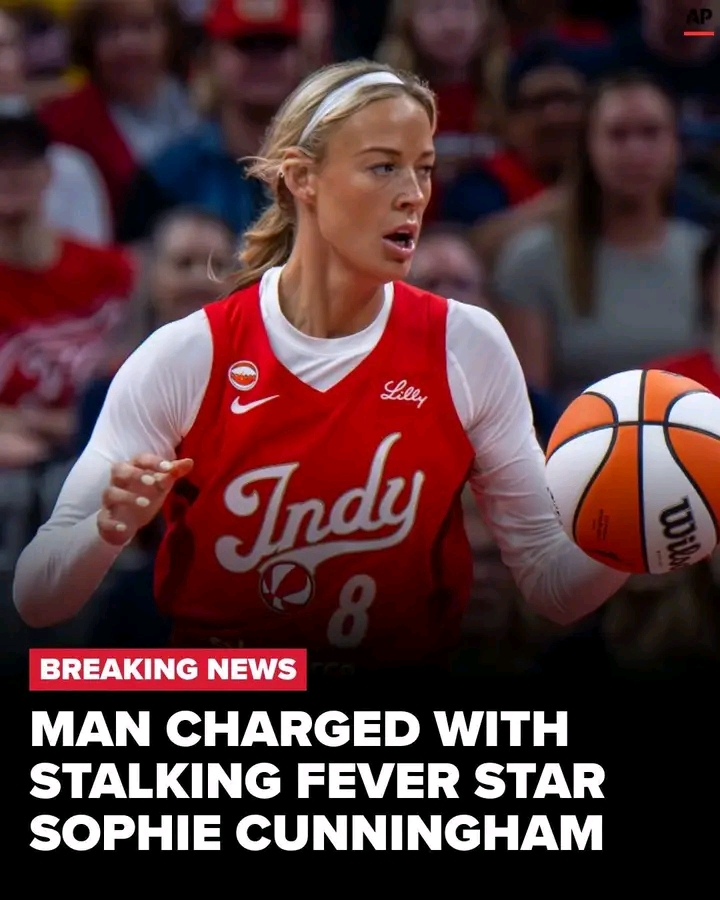
The rapid rise in popularity of the WNBA has brought unprecedented attention to the league’s stars. Increased visibility has translated into larger crowds, record-breaking television ratings, and growing fan engagement. However, it has also exposed players to a darker reality that professional athletes increasingly face in the digital age.
Indiana Fever guard Sophie Cunningham recently became the center of a disturbing stalking and harassment case that has raised serious concerns about player safety both online and offline.
Authorities have officially charged 48-year-old Kevin Singh with stalking, intimidation, and harassment after an alleged pattern of behavior directed toward Cunningham that reportedly escalated over several months.
DETAILS OF THE ALLEGED HARASSMENT
According to prosecutors, Singh allegedly hand-delivered a package addressed to Cunningham at Gainbridge Fieldhouse, home of the Indiana Fever.
Investigators say Singh initially claimed the package was from his daughter. However, court documents reportedly indicate that the package contained a Guns N’ Roses T-shirt sprayed with men’s cologne, along with a personal letter addressed to the Fever guard.
The package was only one aspect of the alleged behavior.
Authorities say Singh repeatedly contacted Cunningham through social media platform X, sending messages that included declarations of love and comments described as sexual in nature. The messages reportedly referred to Cunningham as a “naughty girl” and included other inappropriate remarks.
The situation eventually became serious enough that security personnel alerted Cunningham and advised her to remain vigilant.
HOW THE INCIDENT IMPACTED CUNNINGHAM
While professional athletes often deal with criticism and unwanted attention, Cunningham reportedly initially viewed the messages as another example of inappropriate online behavior.
However, as the situation developed, the emotional toll became more significant.
According to statements provided to investigators, Cunningham said she had never met Singh, never responded to any of his messages, and wanted the online contact to stop.
She also revealed that the ongoing situation had affected her personal life. Cunningham reportedly told police that she had begun spending more time at home and had experienced nightmares as a result of the harassment.
Those comments highlight an important reality that is sometimes overlooked when discussing athletes. Despite their public profiles, players are still individuals whose sense of security can be deeply affected by threatening or obsessive behavior.
THE ROLE OF TEAM AND LEAGUE SECURITY
One of the most important aspects of this case is the role played by security officials.
According to reports, Indiana Fever security personnel informed Cunningham about the messages and package in February, advising her to be cautious about her surroundings.
That proactive response demonstrates how seriously professional sports organizations now take threats directed at players.
As leagues continue to grow, security operations have evolved far beyond game-day crowd management. Teams now monitor online activity, assess potential threats, coordinate with law enforcement, and develop protection strategies for athletes.
The Fever’s response may ultimately serve as an example of how organizations can intervene before potentially dangerous situations escalate further.
A TROUBLING HISTORY RAISES ADDITIONAL QUESTIONS
The case became even more concerning after investigators reportedly discovered Singh had a previous history involving stalking-related behavior.
Officials found that Singh was already on probation from a separate case in Hendricks County.
While details surrounding that previous matter have drawn attention, the revelation raises broader questions about monitoring repeat offenders and preventing recurring patterns of harassment.
For athletes, public figures, and everyday citizens alike, cases involving repeated stalking behavior often highlight the challenges law enforcement faces when balancing legal protections with public safety concerns.
WHY THIS STORY MATTERS BEYOND SOPHIE CUNNINGHAM
Although this case centers on Cunningham, its significance extends well beyond one player.
The WNBA is experiencing a period of extraordinary growth. Increased media coverage, social media engagement, and fan interest have elevated players into household names at a level rarely seen before in league history.
With that visibility comes increased exposure.
Athletes now interact with fans through social media platforms on a daily basis, creating opportunities for positive engagement. Unfortunately, those same platforms can also provide direct access for individuals who cross personal boundaries.
The challenge facing leagues is maintaining meaningful fan interaction while ensuring players remain protected from harassment, stalking, and intimidation.
THE BROADER ISSUE OF ONLINE HARASSMENT IN SPORTS
Professional athletes across every major sport have reported increases in online abuse in recent years.
The rise of social media has fundamentally changed the relationship between fans and athletes. What once required physical proximity can now happen instantly through direct messages, comments, and posts.
For many athletes, social media serves as a valuable marketing tool and a way to connect with supporters. However, incidents like this demonstrate how quickly online interactions can become dangerous when boundaries are ignored.
Leagues increasingly face pressure to collaborate with social media companies, security experts, and law enforcement agencies to identify threats before they evolve into real-world encounters.
WHAT THIS MEANS FOR THE INDIANA FEVER
From a basketball perspective, the Fever will undoubtedly want to ensure Cunningham feels fully supported throughout the legal process.
The team has emerged as one of the WNBA’s most closely watched franchises, attracting national attention and massive fan interest.
Maintaining a secure environment for players is critical not only for performance on the court but also for overall organizational stability.
Players who feel safe and supported are better positioned to focus on basketball rather than external distractions.
The Fever’s handling of this situation may further strengthen trust between players and the organization as the franchise continues its pursuit of championship contention.
LOOKING AHEAD
As the legal process moves forward, the case serves as another reminder that athlete safety remains an increasingly important issue in modern sports.
The WNBA’s growth has created exciting opportunities for players, teams, and fans. Yet that growth also requires continued investment in security measures designed to protect athletes from harassment and stalking.
For Sophie Cunningham, the immediate focus will likely be regaining peace of mind and continuing her contributions on the court. For the Indiana Fever and the WNBA, the incident reinforces the need for ongoing vigilance as the league’s popularity continues to reach new heights.
Ultimately, this story is about more than a criminal case. It is about ensuring that professional athletes can pursue their careers without fear, intimidation, or threats to their personal safety—a goal that should remain a priority for every sports organization moving forward.