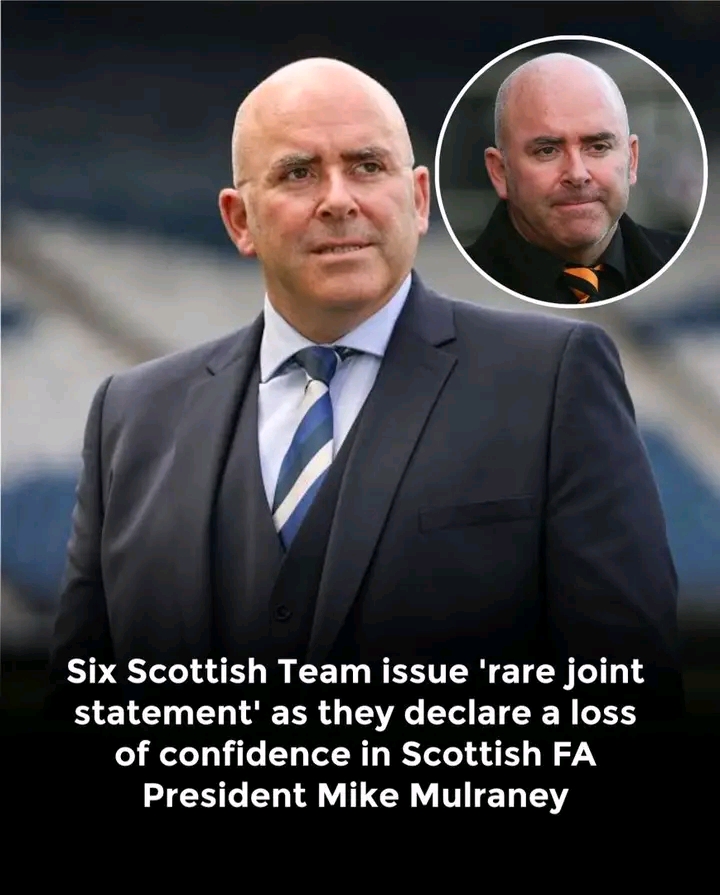
Scottish football is no stranger to drama, but the latest development represents an unprecedented breakdown in trust between the governing body and its member clubs. In a move rarely seen at the top level of the domestic game, six Scottish teams have united to issue a blistering joint statement declaring a complete loss of confidence in Scottish Football Association President Mike Mulraney. This unexpected show of unity highlights a deep-seated frustration with leadership at the very top, signaling that the ongoing friction between decision-makers and clubs has finally reached a boiling point.
The decision for multiple clubs to collaborate on such a drastic public stance speaks volumes about the severity of their grievances. While internal disagreements over governance, officiating, VAR implementation, and financial distribution are common in modern football, issuing a formal collective vote of no confidence takes the conflict to an entirely new level. It indicates that private discussions and standard governance channels have broken down, leaving the clubs feeling that public intervention is the only remaining avenue to force meaningful accountability and reform within Hampden Park.
At the center of this storm is Mike Mulraney, whose leadership style and administrative oversight are now under intense scrutiny. A loss of support from six key members creates an immense political challenge, rendering his position increasingly precarious. Governance in football relies heavily on mutual consent and cooperation, and when a significant coalition of clubs publicly rejects a sitting president, steering the sport forward becomes nearly impossible without addressing their core demands head-on.
As the Scottish FA attempts to navigate this unfolding crisis, the broader footballing community is watching closely to see how leadership responds. Whether this unprecedented revolt triggers administrative reforms, leadership changes, or further escalation remains to be seen. What is clear, however, is that the balance of power in Scottish football is being actively challenged, and the rift between the governing body and its member clubs will require major structural resolution before stability can be restored.