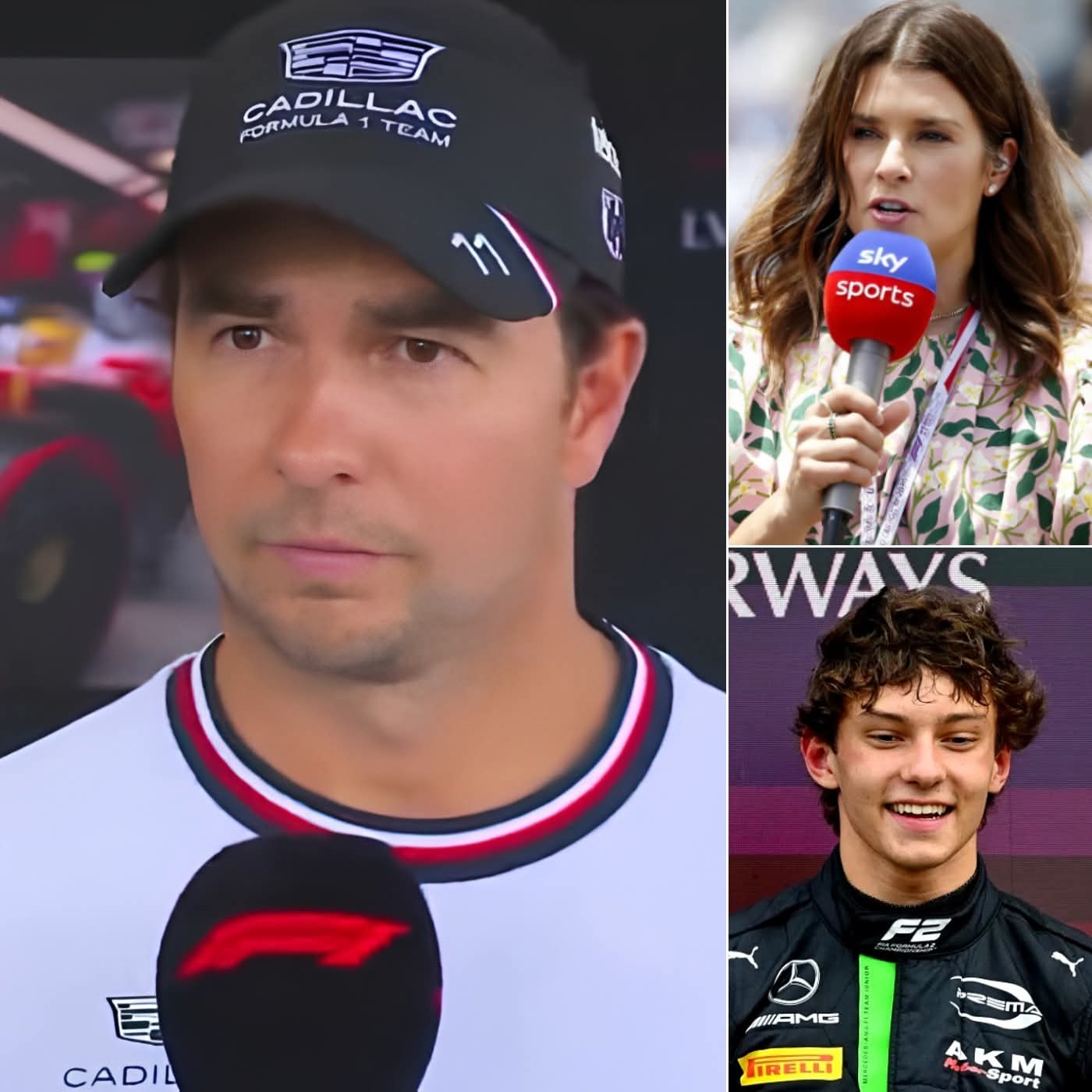
The Formula 1 paddock has found itself at the center of another major debate after Sergio Pérez reportedly stepped forward to defend rising star Kimi Antonelli following criticism directed at the young Italian talent. As Formula 1 continues to evolve and welcome a new generation of drivers, discussions surrounding young prospects have become increasingly intense, and Antonelli’s rapid rise has now become one of the sport’s most closely watched stories.
The controversy emerged after skepticism surrounding Antonelli’s readiness for Formula 1 generated reactions across the racing world. Questions over whether young drivers are being promoted too quickly have become a recurring topic in modern motorsport, especially as teams search for the next generational superstar. While constructive criticism has always existed in Formula 1, many within the sport believe there is a fine line between analysis and creating narratives that place unnecessary pressure on developing talent.
Pérez’s response appears rooted in something he understands better than most: surviving Formula 1’s unforgiving environment. Across his long career, the Mexican driver has faced periods of intense criticism, uncertain futures, and constant pressure to justify his place on the grid. That experience gives weight to his perspective. Drivers who have spent years competing at the highest level often recognize that talent cannot be judged solely by isolated weekends or headline moments.
Antonelli’s journey through junior categories has already created enormous expectations around his career. The young Italian has been viewed for years as one of motorsport’s brightest prospects, earning praise for his speed, adaptability, and maturity despite his age. His performances in development categories created the belief that he possesses the qualities necessary to eventually challenge for victories and championships at the highest level.
However, Formula 1 history shows that raw pace alone does not guarantee long-term success. Young drivers entering the sport face pressure unlike almost any other environment in global sport. Every radio message, every qualifying lap, and every mistake becomes a talking point for millions of viewers around the world. Social media and constant news coverage have only amplified that pressure in recent years, making the transition into Formula 1 far more demanding than it was for previous generations.
The debate also raises a broader question about the role of modern media within Formula 1. Television analysis and commentary are designed to generate discussion and keep fans engaged, but teams often rely on data that viewers never see. A difficult session on television may hide technical limitations, setup compromises, or race strategy factors invisible to the public. Inside engineering meetings, performance evaluation often looks very different from what appears on broadcasts.
Pérez’s defense of Antonelli reflects a deeper culture that exists among drivers themselves. Despite fierce rivalries on race weekends, many drivers share an understanding of the sacrifices required to reach Formula 1. Competing against the fastest racers in the world creates mutual respect, especially when discussing young athletes trying to establish themselves under enormous expectations.
Looking ahead, the spotlight on Antonelli will likely grow even stronger. Public debates, criticism, and expectations are unlikely to disappear, particularly if he continues to show flashes of elite potential. The coming races could become crucial in shaping perceptions around his development. If he continues delivering strong performances under pressure, the current criticism may eventually become just another chapter in the early story of a future championship contender.
Formula 1 has repeatedly shown that greatness is rarely built through smooth and easy journeys. The sport’s biggest legends faced setbacks, scrutiny, and doubts before reaching the top. For Antonelli, the most powerful response will ultimately come where Formula 1 has always settled arguments — on the track, when the lights go out and performance becomes the only voice that matters.