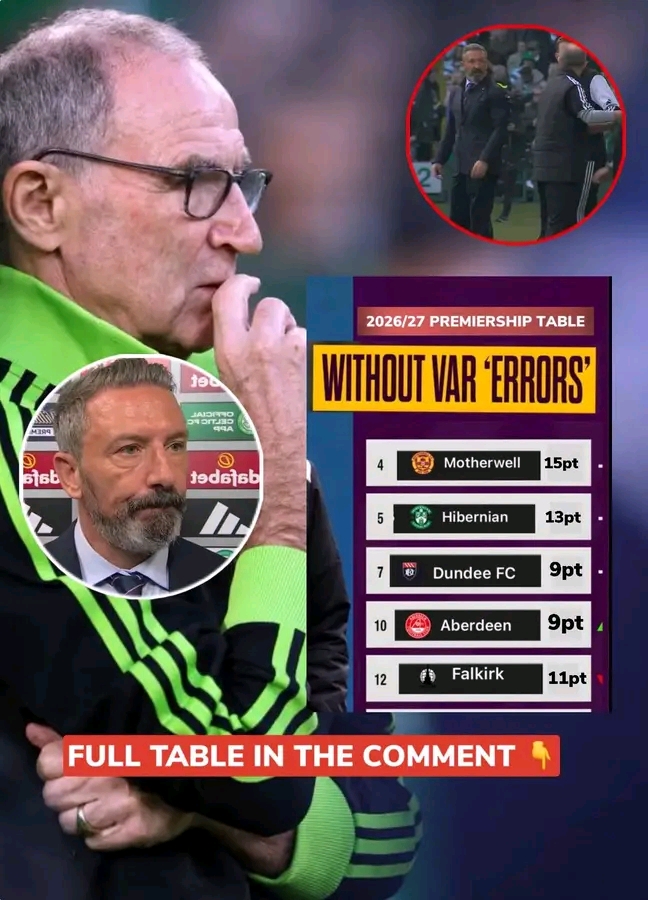
The debate surrounding video assistant referees in Scottish football has reached a fever pitch once again, following a string of controversial incidents that left supporters, pundits, and managers demanding answers. The technology was introduced to eradicate clear and obvious errors, but weeks of disputable penalty calls, phantom handballs, and drawn-out offside reviews have created the opposite effect. Fans across the nation have grown increasingly exhausted by the constant interruptions and subjective interpretations, leading independent statistical analysts to step in and answer the burning question: what would the Scottish Premiership table actually look like if VAR errors had not intervened?
The comprehensive data breakdown examined every Key Match Incident reviewed by independent officiating panels, calculating the adjusted points tallies by removing confirmed VAR miscalls. The findings have sent shockwaves through the league, completely altering the landscape at the top of the table. According to the analysis, Celtic FC has felt a profound impact from these erroneous decisions over the course of the campaign. Rather than holding their current standing, the adjusted metrics reveal that Celtic would actually sit significantly higher in the points total, carving out a far more comfortable cushion at the summit of Scottish football.
Crucially, the statistical modeling highlights multiple key fixtures where incorrect technology interventions directly stripped Celtic of earned points. Decisions ranging from wrongfully disallowed goals due to marginal, pre-incident infringements to missed penalty calls for clear defensive fouls inside the opposition box directly influenced match outcomes. When factoring in the expected goals and points lost from those specific refereeing errors, Celtic’s tally increases substantially, proving that the team’s relentless attacking output has consistently been dampened by technology failures rather than on-pitch performance.
The ripple effect of these VAR discrepancies extends far beyond Celtic Park, reshaping the entire title race and European qualification picture. For Celtic’s fierce domestic rivals, the hypothetical table paints a very different picture, narrowing or expanding gaps that previously seemed defined by slim margins. The analysis shows that while some clubs benefited from silent checks and overturned on-field calls, Celtic repeatedly found themselves on the wrong end of high-profile mistakes, creating a distorted reflection of the true competitive balance in the league.
As calls for systemic reform and clearer officiating standards grow louder within the Scottish FA, this latest analysis serves as a stark reminder of the massive stakes involved in every whistle blow. For Celtic FC, the numbers provide mathematical validation for what many inside the club had already suspected: without the string of VAR howlers, the Premiership table would show them sitting firmly, uncontested, and well clear at the top.