Rumors have been swirling across the wrestling world regarding alleged backstage tensions within TKO Group Holdings, particularly claims that the company has reservations about darker, more ominous character presentations. These whispers have specifically centered on the creative direction behind the mysterious Wyatt Sicks faction and the recent release of Aleister Black. However, a new wave of reports has emerged aiming to shut down these narratives, offering a more grounded perspective on what is really happening behind the scenes.
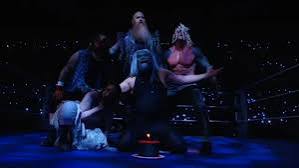 The Wyatt Sicks, an eerie and psychologically driven faction tied to the legacy of Bray Wyatt, have captured fan intrigue with their unsettling presence and layered storytelling. Given Wyatt’s history of pushing creative boundaries with supernatural and horror-inspired personas, it is no surprise that fans would question whether such concepts still align with the company’s broader vision under its new corporate structure.
Speculation intensified when some insiders suggested that TKO executives preferred more mainstream, sports-oriented content, potentially clashing with darker gimmicks. Critics of this theory pointed to the release of Aleister Black as supposed evidence, arguing that his brooding, occult-inspired character may have fallen out of favor in the evolving landscape of sports entertainment.
However, multiple sources have since clarified that these claims are largely unfounded. According to reports, WWE continues to embrace a wide variety of character styles, including supernatural and darker personas, as long as they resonate with audiences and fit into compelling storylines. The company’s history—from The Undertaker to Bray Wyatt—demonstrates that such characters can thrive when executed effectively.
In the case of Aleister Black, insiders indicate that his departure was not tied to any overarching ban or dislike of darker characters. Instead, it appears to have been influenced by a combination of creative direction, roster dynamics, and timing. Black, known for his intense in-ring style and enigmatic persona, had built a strong following, but like many talents, his trajectory depended heavily on alignment with ongoing creative plans.
Meanwhile, the Wyatt Sicks storyline is reportedly being handled with careful attention, particularly given the emotional weight attached to Bray Wyatt’s legacy. WWE is said to be committed to ensuring that any continuation of his vision is done respectfully, while still adapting to modern storytelling expectations and audience engagement metrics.
It’s also important to note that the wrestling industry has always evolved alongside broader entertainment trends. Under TKO, there may indeed be an increased emphasis on global appeal, sponsorship alignment, and crossover potential. However, that does not inherently exclude darker or more theatrical characters—it simply raises the bar for how they are presented and integrated into programming.
Fans have taken to social media to debate the issue, with many defending the value of unique, character-driven storytelling in an era that sometimes leans heavily on athletic competition. For many, the blend of sports and spectacle remains wrestling’s defining feature, and removing one side of that equation could risk alienating a significant portion of the audience.
Ultimately, the “rumour killer” narrative serves as a reminder that not all backstage speculation reflects reality. While corporate changes inevitably bring shifts in strategy, the essence of professional wrestling—larger-than-life characters, emotional storytelling, and creative risk-taking—remains intact. As WWE continues to navigate this new chapter under TKO, the success of concepts like Wyatt Sicks may well prove that there is still a place for the dark, the mysterious, and the unconventional in the squared circle.