VAR decision-making operates under a strict protocol set by the International Football Association Board designed around the principle of minimum interference for maximum benefit. It is not intended to re-referee every incident or guarantee perfect consistency on every subjective call. Instead the system exists only to correct clear and obvious errors or serious missed incidents in four limited categories: goal or no goal, penalty or no penalty, direct red cards, and mistaken identity. The on-field referee always makes the first decision, and that original call stands unless video evidence demonstrates it was clearly and obviously wrong. The video assistant referee can recommend a review, but only the referee on the pitch has the authority to change the decision, typically after viewing the incident on a pitchside monitor for judgement calls. Factual matters such as whether the ball was out of play, the exact location of an offence, or pure offside positioning can sometimes be corrected without an on-field review.
In practice the VAR team monitors multiple camera angles in real time. For potential penalty incidents the key questions centre on whether contact or holding meets the threshold for a foul and whether the on-field decision to allow play to continue was a clear error. Subjective elements including the intensity of contact, the presence of mutual holding, whether a player was primarily looking at the ball, and the actual impact on an opponent’s ability to play the ball remain matters of judgement. Guidance from both IFAB and UEFA emphasises that lengthy microscopic reviews usually indicate the original decision was not clearly wrong, so intervention should be limited. Recent statements from European refereeing chiefs have reiterated that VAR must only correct blatantly incorrect decisions and should avoid the kind of over-intervention that slows the game and generates fresh controversy.
Scottish football follows the same IFAB framework under the oversight of the Scottish FA. Officials receive regular guidance on interpretation and periodic public reviews examine key incidents. Communication inside the VAR room has been refined with more structured processes intended to keep observations concrete rather than speculative. Even so the system performs most reliably on objective facts such as offside lines, ball in or out of play, or clear handball trajectories. It struggles most with soft contact, mutual fouls inside the box, and holding or impeding at corners and free-kicks. These are precisely the areas where reasonable observers can disagree, and where intervention itself often becomes the main source of complaint.
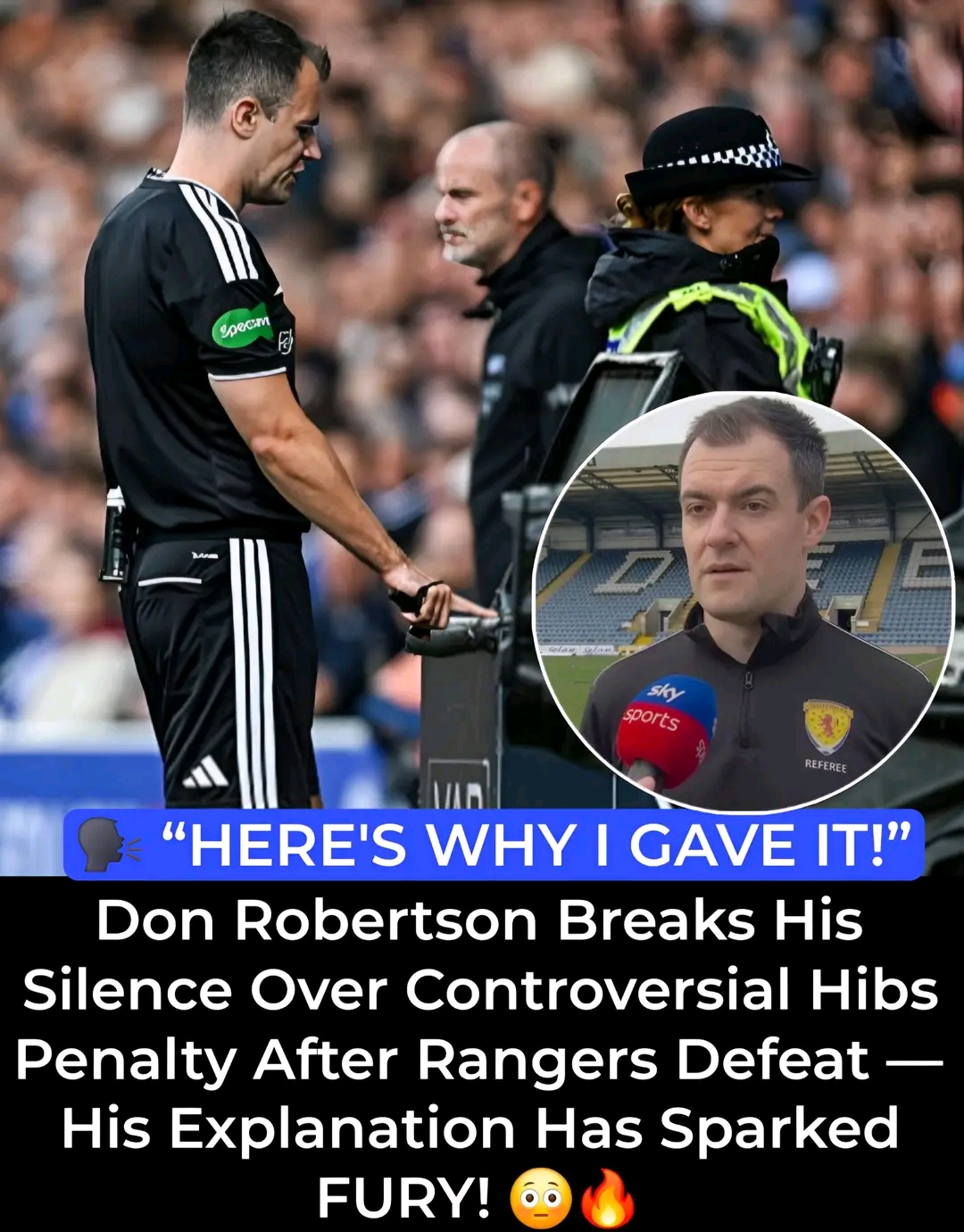
The recent Rangers against Hibernian match at Ibrox provides a typical illustration. Play continued after a corner involving contact between Vanja Dragojević and Jason Kerr. Strong immediate appeals were not apparent. The VAR recommended a review, the referee went to the monitor, and a penalty was awarded. Critics argued there was no clear and obvious error, pointing to mutual holding and the everyday nature of such jostling at set pieces. Others maintained that the defender’s actions impeded an opponent who was trying to attack the ball and therefore justified the intervention. Different camera angles highlighted different aspects of the same incident, which is common in these situations. Because the call was marginal rather than blatant, the decision to intervene itself became the controversy. This pattern recurs across leagues whenever VAR is asked to rule on soft or contested contact in the penalty area.
The broader limitation is structural. The protocol intentionally accepts that some incorrect on-field decisions will stand if they fall short of the clear and obvious threshold, prioritising the flow of the game and the authority of the referee over absolute accuracy. When VAR does intervene on borderline cases it frequently replaces one subjective judgement with another after a delay, amplifying frustration among players, coaches and supporters. Recent direction from UEFA and ongoing efforts within Scottish football have focused on reducing the frequency of such interventions and aligning decisions more closely with ordinary football expectation. Effective use of the system therefore depends on restraint. Intervention should remain rare and reserved for situations in which the video evidence leaves little room for reasonable disagreement. Cases involving holding at corners continue to test that boundary and reveal the persistent tension between the protocol’s ideals and the practical pressure to correct every debated call.