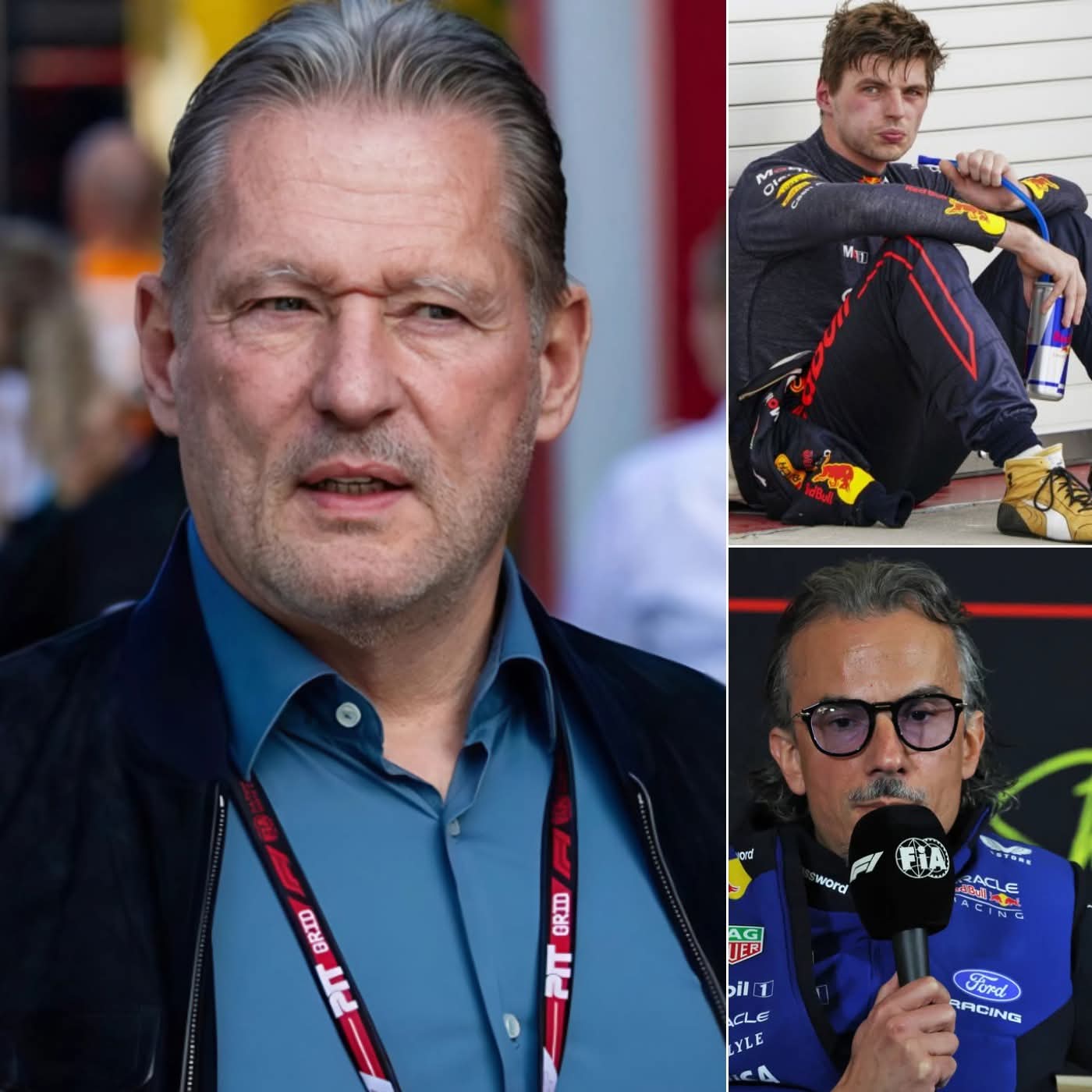
The pressure inside the Red Bull garage has reportedly reached a dangerous new level following a dramatic week in Miami that exposed growing cracks within one of Formula 1’s most dominant teams. What began as frustration over the RB22’s inconsistent performance has now escalated into a full-scale internal controversy after Jos Verstappen publicly demanded urgent action from Red Bull leadership. The father of reigning world champion Max Verstappen reportedly issued an ultimatum to the team, insisting that major technical and operational issues must be addressed immediately if the squad wants to remain competitive in the rapidly evolving 2026 Formula 1 season.
The Miami Grand Prix weekend became a major turning point for Red Bull. Despite flashes of pace, the RB22 struggled to maintain stability throughout crucial phases of the race weekend, leaving Verstappen visibly frustrated over team radio. Rivals such as Oscar Piastri, Lando Norris and Ferrari’s Charles Leclerc have steadily closed the gap, while Red Bull’s once untouchable dominance now appears vulnerable under the new regulations. According to growing speculation inside the paddock, Jos Verstappen believes deeper structural problems are affecting the team’s development direction, particularly regarding the RB22’s balance, aerodynamic sensitivity, and adaptability across varying track conditions.
The strongest concern reportedly centers around Red Bull’s inability to consistently unlock performance from the RB22 under the demanding 2026 power unit regulations. The car has shown signs of instability in low-speed corners while also struggling with tire degradation during long stints. These issues have become increasingly noticeable as teams like McLaren and Mercedes continue to refine their packages. Jos Verstappen’s public frustration signals that patience may be running thin within the Verstappen camp, especially as the championship fight becomes more unpredictable. For a driver accustomed to dominating weekends, even small weaknesses can quickly become major championship threats.
Adding even more fuel to the controversy was the reaction from Red Bull figure Laurent Mekies. His comments reportedly acknowledged concerns surrounding the organization’s internal stability and long-term direction, sending shockwaves across the Formula 1 paddock. Mekies’ response has been interpreted by many analysts as confirmation that tensions inside the Red Bull structure may be more serious than initially believed. While no official split or restructuring has been announced, speculation surrounding leadership disagreements, technical philosophy clashes, and uncertainty about the team’s future trajectory continues to intensify.
The timing of this controversy could not be worse for Red Bull. The 2026 season was already expected to be one of the most competitive campaigns in recent years due to sweeping regulation changes and tighter performance margins between top teams. Mercedes appears to be recovering strongly, Ferrari continues pushing aggressively with development updates, and McLaren has emerged as a genuine threat on multiple circuits. If Red Bull fails to solve the RB22’s inconsistencies quickly, the team risks losing control of both the Drivers’ and Constructors’ Championship battles far earlier than expected.
Another major factor behind the growing concern is the future of Verstappen himself. Rumors linking the Dutch superstar to possible frustrations with Formula 1’s current direction have intensified throughout the season. Verstappen has openly criticized aspects of the 2026 regulations, comparing modern racing to overly complicated energy-management systems rather than pure racing. If internal instability at Red Bull continues alongside technical struggles, rival teams could begin closely monitoring the situation for any opportunity to lure the four-time world champion away from Milton Keynes in the future.
From a technical standpoint, Red Bull now faces one of its toughest engineering challenges of the hybrid era. The RB22 still possesses immense raw speed, but Formula 1 championships are no longer won by peak pace alone. Reliability, adaptability, tire management, and development consistency have become equally critical under the new rules. Miami exposed vulnerabilities that competing teams will undoubtedly attempt to exploit in upcoming races, especially during the demanding European stretch of the calendar where setup precision becomes even more important.
There is also a psychological element to this unfolding situation. Public criticism from Jos Verstappen carries enormous weight because of his close influence on Max Verstappen’s career decisions. Historically, when tensions become public within elite Formula 1 teams, it often signals deeper frustrations behind closed doors. Red Bull leadership must now balance technical recovery with maintaining harmony inside the organization. Failure to manage either side could create long-term instability that rivals would eagerly capitalize on.
Still, it would be premature to completely write off Red Bull’s title hopes. The team remains one of the strongest technical organizations in Formula 1 and has repeatedly proven capable of responding aggressively under pressure. Massive upgrade packages are expected during the upcoming races, and Verstappen’s driving ability alone keeps him firmly in championship contention. However, the Miami fallout has undeniably shifted the narrative around Red Bull. Instead of appearing invincible, the team suddenly looks vulnerable, pressured, and internally divided at a moment when unity is needed most.
Looking ahead, the next few Grand Prix weekends could define the entire direction of Red Bull’s season. If the RB22 receives effective upgrades and Verstappen returns to dominant form, this controversy may eventually be remembered as nothing more than a temporary storm. But if performances continue to fluctuate and internal tensions worsen, the fallout from Miami could become the beginning of one of the biggest power shifts Formula 1 has seen in years.