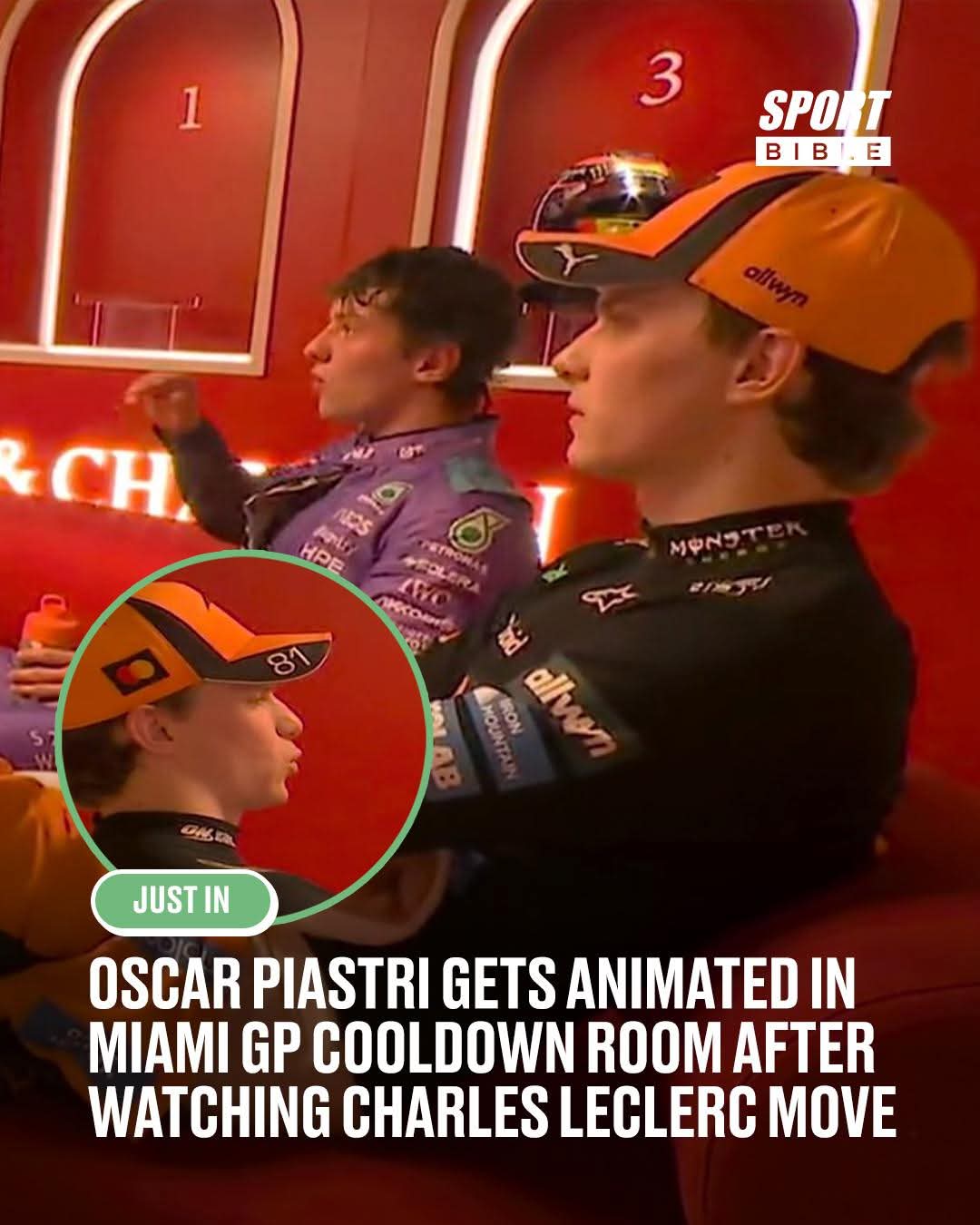
The Miami Grand Prix delivered high-stakes racing and raw emotion, with Oscar Piastri at the center of a tense post-race moment following a dramatic on-track duel with Charles Leclerc. Despite securing a strong third-place finish, the Australian made it clear he was far from satisfied after reviewing one key moment in the cooldown room.
Piastri’s race was anything but straightforward. He had to take immediate evasive action at Turn 1 to avoid a spinning Max Verstappen, before engaging in multiple wheel-to-wheel battles throughout the race. His fight with Leclerc became one of the defining sequences, culminating in a late-lap overtake that briefly put him ahead—only for the Ferrari driver to reclaim position almost instantly using superior battery deployment.
Watching the replay alongside Lando Norris and race winner Kimi Antonelli, Piastri didn’t hold back. His animated reaction captured the frustration many drivers feel under the current hybrid regulations. “You see, watch this… I overtake him, like, sweet, and then… yeah,” he remarked, pointing out how quickly Leclerc reversed the move. His conclusion was blunt: there was simply nothing he could do.
Leclerc later revealed the move was entirely strategic. He intentionally allowed Piastri through to recharge his battery and maximize overtaking power on the straight. It was a calculated gamble—one that initially worked to perfection. However, the Ferrari driver’s race took a sudden downturn when he lost control at Turn 3, damaging his front suspension and ultimately dropping positions before the finish. His candid admission of frustration highlighted the razor-thin margin between brilliance and costly error in Formula 1.
From an analytical standpoint, this exchange sheds light on a growing debate within the sport. The increasing reliance on battery deployment and energy management has transformed wheel-to-wheel racing into a tactical chess match. While it adds strategic depth, moments like this raise questions about whether overtakes are becoming too dependent on system advantages rather than pure driving skill—a concern echoed by several drivers throughout the season.
Looking ahead, this incident could have wider implications for the championship battle. Piastri’s pace suggests he is becoming a consistent podium contender, while Leclerc’s aggressive strategy shows Ferrari are willing to take risks to close the gap. Meanwhile, Antonelli’s continued dominance at the front reinforces Mercedes’ early-season advantage. If races continue to be shaped by fine margins and split-second decisions, fans can expect even more tension—and possibly controversy—as the season unfolds.