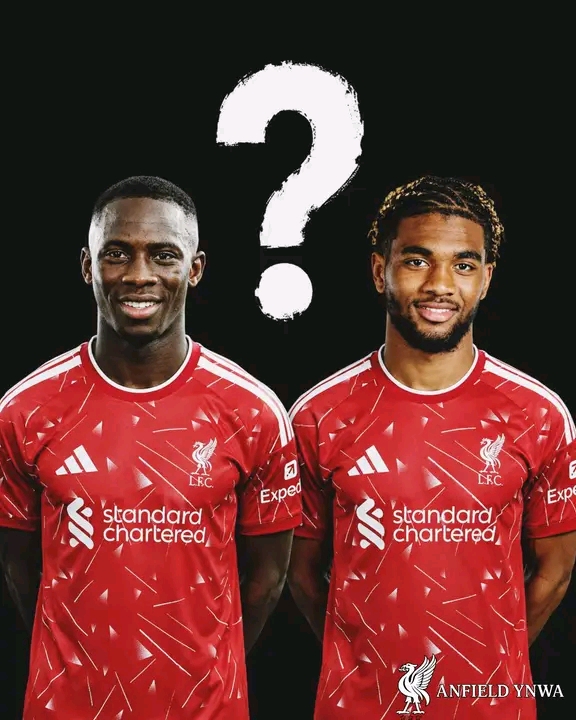
# Minteh Over Mbaye? Liverpool’s Wide Man Dilemma Explained
Liverpool’s summer of attacking reinvention has taken another twist, with reports now suggesting the club is weighing up Yankuba Minteh as a genuine alternative to Ibrahim Mbaye in the race to add pace and directness to Andoni Iraola’s forward line. For a supporter base still adjusting to life without Mohamed Salah, this is the kind of headline that instantly splits opinion. Do you go for the proven Premier League operator in Minteh, a player who has already scored against the traditional English giants and understands the physical demands of the division, or do you gamble on the extraordinary ceiling of Mbaye, an eighteen-year-old who was scoring against France at a World Cup before most fans had even settled on what his best position is? It’s a question that cuts to the heart of how Liverpool want to rebuild their attack this window, and it deserves more than a quick scroll past a tweet.
To understand why this debate exists at all, you have to go back to the start of the summer. Salah’s departure left a gaping hole not just in goals and assists but in identity. For the best part of a decade, Liverpool’s right flank was arguably the most feared attacking position in world football, and replacing that kind of output was never going to be a one-man job. Richard Hughes and the recruitment department appear to have accepted that reality early, which is why the list of names linked with Anfield this window reads like a who’s who of Europe’s most promising wide forwards. Yan Diomande was the early target before Real Madrid swooped in to snatch him away. Bradley Barcola has been the club’s most consistent priority for weeks, with personal terms already agreed even as the transfer fee remains a sticking point between Liverpool and Paris Saint-Germain. Iliman Ndiaye has been discussed internally, despite the near impossibility of Everton sanctioning a sale to a direct rival. Rayan at Bournemouth has been watched closely too, in part because of his existing relationship with Iraola from their time together on the south coast. Against that backdrop, the emergence of both Minteh and Mbaye as serious, developed targets rather than fanciful long shots tells you just how determined this recruitment team is to leave no stone unturned before the window shuts on the first of September.
Start with Minteh, because his story is the more immediately relatable one for Premier League followers. He’s a name English football fans have already had two years to get used to. Newcastle originally plucked him from Danish side Odense for a relatively modest fee before immediately loaning him to Feyenoord, where he exploded onto the scene with ten league goals in a breakout Eredivisie campaign that had scouts across the continent taking notice. Brighton moved decisively to sign him for around thirty million pounds, seeing in him exactly the kind of high-upside, sellable asset that has become their trademark under David Weir’s recruitment philosophy. Since then Minteh has done more or less everything Brighton could have hoped, becoming a regular contributor on the south coast, scoring a memorable goal against Manchester United at Old Trafford, and building a reputation as one of the most explosive one-on-one dribblers outside the traditional elite. He’s the youngest Gambian to ever appear in the Premier League, the youngest to score in the Champions League for his country’s footballing history, and by the numbers he sits in elite percentiles for progressive carries and successful take-ons. This is not projection or potential in the abstract sense; this is a twenty-two-year-old who has already proven he can physically survive and thrive in England’s most demanding league.
That matters enormously for a Liverpool side that, in Iraola’s own words, still feels relatively thin in key areas heading into the business end of the window. There is no adjustment period required with Minteh. He already understands Premier League pressing schemes, he already knows what it feels like to be man-marked by defenders who have studied his tendencies for two full seasons, and he already has the physicality to compete with centre-backs who are bigger and stronger than most of what he faced in the Eredivisie. For a club that has been searching for immediate attacking reinforcement rather than a long-term development project, that experience carries real weight. The complication, and it is a significant one, is fitness. Minteh picked up a leg injury during Brighton’s pre-season friendly against Roma in early August, and current expectations are that he could be sidelined until as late as November. That means any club signing him this summer would essentially be investing in a player they cannot immediately call upon, which is a strange position to be in when the entire rationale for the move was to add attacking impact before September. It also raises a subtler question about whether Liverpool would be paying a premium fee for a player who, for the first two or three months of his Anfield career, would be watching from the sidelines rather than contributing on the pitch.
Then there’s the financial picture, which has become a story in its own right. Liverpool’s opening approach of around fifty million pounds was swiftly knocked back by Brighton, a club with a well-earned reputation for holding firm on valuations and refusing to be rushed into selling their best young players. A second bid, reportedly closer to sixty million, was also turned down, before reports emerged of an even more substantial offer worth as much as seventy million euros, which Brighton have again resisted. The suggestion from well-connected reporters covering the Seagulls is that something in the region of eighty million pounds could finally unlock a deal, which would represent an extraordinary return on the roughly thirty million Brighton paid Newcastle for him little more than two years ago. It also underlines just how aggressively Brighton negotiate even when a player is clearly interested in leaving; personal terms are reportedly already in place between Minteh and Liverpool, and the sense from within the corridors covering Brighton’s business is that this transfer will “probably” happen eventually, even if it takes one more incremental increase in Liverpool’s offer to get there. For a club that has already spent the summer negotiating hard over Barcola’s price with PSG, the prospect of a second protracted, expensive negotiation for a similar profile of player is not without risk, both financially and in terms of how much patience the fanbase has left for transfer sagas that drag into the closing days of the window.
Now turn to Mbaye, and the calculation looks completely different. Where Minteh offers proven Premier League pedigree, Mbaye offers almost pure ceiling. Born in Trappes just outside Paris, he joined the PSG academy at the age of ten and worked his way through every age group before bursting into first-team contention under Luis Enrique. He scored within minutes of his first pre-season appearance for the senior side, made his competitive debut at sixteen, and has since gone on to represent Senegal at full international level, memorably becoming the youngest African player ever to score at a World Cup when he found the net against France earlier this year. That is an eye-catching résumé for a player who is still a teenager and who, by his own club’s admission, has not yet nailed down a guaranteed starting role in Paris. His underlying numbers back up the hype in certain areas too, with data suggesting he ranks well above average among wide forwards for expected assists, open-play chance creation, and crosses delivered into the penalty area, even while his overall minutes remain relatively limited. He is comfortable operating on either flank, which fits neatly with what Iraola has repeatedly said he wants from his wide players this season, and there is a growing belief among those who watch him closely that his ceiling, if everything clicks, could be considerably higher than almost anyone else being considered by Liverpool this summer.
The trade-off, inevitably, is game time and readiness. Mbaye has made just over forty senior appearances across two seasons for PSG, with a significant chunk of those coming from the bench, and his direct output in terms of goals and assists remains modest by senior standards, sitting at three goals and two assists in his most productive Ligue 1 campaign so far. That is entirely understandable for a player of his age competing for minutes in one of the deepest attacking squads in world football, but it does mean Liverpool would be signing him more as a long-term investment and developmental project than as an immediate, guaranteed upgrade capable of stepping straight into Iraola’s starting eleven. There is also the question of price, which has become just as complicated as the Minteh saga. PSG’s valuation has been reported anywhere between roughly thirty-four million and over forty million pounds depending on the source, though some more recent reporting suggests Liverpool’s transfer committee sees that figure as steep for a player with only a single full senior season of real experience behind him. Complicating matters further is the fact that Mbaye’s situation is directly tied to Barcola’s in the eyes of PSG negotiators, with suggestions the French club would prefer to strike a package deal covering both players rather than negotiate each transfer separately. Reports have floated a combined figure approaching two hundred million pounds for signing both of PSG’s attacking prospects, a number Liverpool have reportedly made clear they are simply not willing to pay. That has left Mbaye’s move in a state of flux, caught between Liverpool’s genuine interest, competition from clubs including Bayer Leverkusen and a cluster of Bundesliga and Premier League suitors, and PSG’s determination to maximise value from a summer clearout of their attacking depth.
What makes this such a compelling debate for supporters is that it isn’t really a question of quality versus mediocrity; it’s a question of philosophy. Minteh represents the safer, more immediate solution, a player whose ability to survive and succeed in the Premier League is no longer theoretical. He offers searing pace in behind, a directness in one-on-one situations that very few wingers in world football can match, and the kind of physical durability that comes from two full seasons of English football under his belt. The injury complicates the picture, no doubt, but injuries heal, and a fully fit Minteh returning in November to a Liverpool side that has had time to integrate him tactically is not a bad outcome at all. Mbaye, on the other hand, represents the classic Liverpool recruitment gamble of years gone by, the kind of swoop for a precociously talented teenager that this club has pulled off successfully more than once in the past. There is a version of this signing where Mbaye becomes the long-term heir to the right wing throne in a way that feels genuinely exciting, a player who arrives young enough to be moulded entirely around Iraola’s specific demands and who could still be delivering peak performances for Liverpool a full decade from now. There is also a version where he simply needs more time than Liverpool’s current squad situation allows for, arriving as a squad player who takes a season or two to truly break through, which given the money potentially involved would represent a considerable risk.
It’s worth remembering, too, that this entire conversation is happening against the backdrop of a broader Liverpool strategy this summer that has been unusually patient by their recent standards. The club moved early and decisively to sign Victor Munoz by triggering his release clause at Osasuna, giving them a genuine option on the left flank without having to engage in a drawn-out negotiation. They agreed a deal for Rennes defender Jeremy Jacquet back in January, well ahead of the summer rush, and they’ve since added defensive reinforcement in the form of a loan move for Ronald Araujo from Barcelona, complete with an option to make the deal permanent. Compared to the frenetic spending of recent transfer windows, this summer has been notably deliberate, with Liverpool seemingly determined to get value and fit right rather than simply throwing money at every available name. That context matters when assessing the Minteh and Mbaye situation, because it suggests this is not a club panicking in the final days of the window, but one carefully weighing multiple genuine options and prepared to walk away from a deal if the numbers don’t add up, as they appear to have done at various points with both Brighton and PSG already.
There’s also a tactical dimension worth considering, because Iraola’s demands from his wide players are quite specific. He has spoken openly about wanting wingers capable of playing on either flank, encouraging positional flexibility so that his team’s shape doesn’t become predictable or symmetrical in a way opposition defenders can easily plan against. Both Minteh and Mbaye can technically operate on either side, though their more natural tendencies differ: Minteh has typically been used on the right at Brighton, cutting inside onto his stronger left foot in the mould of a classic inverted winger, while Mbaye, despite being predominantly labelled a right-sided player himself, has actually spent significant time on the left for PSG and is comfortable making underlapping and overlapping runs from either flank. In a squad that already features a young talent like Rio Ngumoha getting minutes on both sides, Liverpool’s front line is trending toward a more interchangeable, fluid model rather than fixed wide roles, and both potential signings would slot into that vision reasonably well, just with different timelines for when they’d be able to contribute at full capacity.
So where does that leave the actual question posed to fans: Minteh or Mbaye? There isn’t a clean, universally correct answer, and that’s precisely why it makes for such good debate fodder among supporters. If your priority is closing the gap on Arsenal and Manchester City in the title race this season, and you want someone who can walk into matchday squads and make an instant difference the moment their fitness allows, the case for Minteh is compelling, injury notwithstanding. His combination of proven Premier League output, blistering pace, and a track record of scoring against big clubs gives Liverpool a tangible, known quantity to plan around. If instead you’re thinking three, four, or five years down the line, imagining who could become the next genuine superstar wearing the number that Salah once made iconic, then Mbaye’s ceiling and his World Cup pedigree make him almost impossible to ignore, even with the understanding that patience would be required before he becomes a guaranteed starter. Perhaps the most likely outcome, and one hinted at by several of the reports circulating this week, is that Liverpool don’t actually have to choose at all. With Barcola’s situation still unresolved and the club reportedly still exploring alternatives in case that move collapses, there remains a real possibility that Liverpool end this window having added not one but two new attacking options, reshaping their forward line for both the immediate future and the years beyond. Whichever way it goes, Anfield’s faithful have plenty to debate between now and deadline day, and this Minteh versus Mbaye conversation is only just getting started.