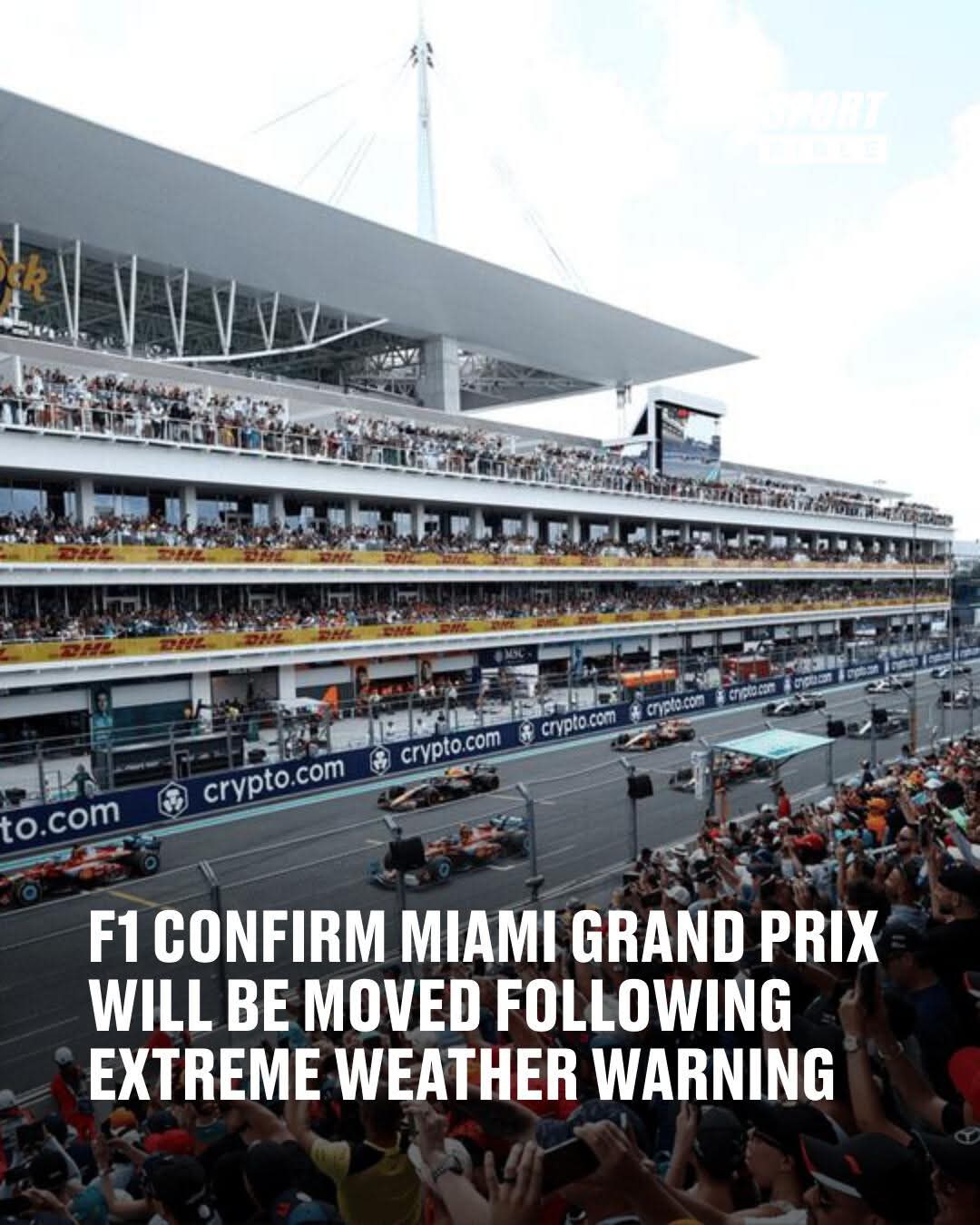
Formula 1 has officially confirmed a major schedule change ahead of the Miami Grand Prix, with the race start time moved forward by three hours due to escalating concerns over severe weather conditions expected later in the day. The decision follows urgent discussions between FIA, Formula One Management, and local race promoters.
Originally scheduled for a 16:00 local start, the race will now begin at 13:00 local time, giving organizers a larger safety window before forecasted thunderstorms and heavy rain hit the Miami area. The adjustment reflects Formula 1’s increasing focus on safety, especially in regions like Florida where lightning protocols require immediate suspension of outdoor events and a mandatory 30-minute delay after the last thunder event.
This development highlights just how seriously F1 is treating the weather threat. With a maximum race duration of two hours under green-flag conditions, officials needed to ensure enough time to complete the full 57-lap race without interruption. Moving the race earlier is not just precautionary—it’s strategic. It minimizes the risk of delays, red flags, or even a potential cancellation, all of which could have disrupted the championship momentum after a five-week hiatus.
On the competitive front, the timing shift could significantly impact race dynamics. Teams have already been granted flexibility to adjust their setups following the FIA’s declaration of a rain hazard, allowing changes to aerodynamic configurations and power unit settings. This could favor teams that adapt quickly to evolving conditions, particularly Mercedes, who secured pole position through Andrea Kimi Antonelli. However, challengers like Max Verstappen, Charles Leclerc, and Lando Norris remain well-positioned to capitalize if conditions become unpredictable.
Historically, weather-affected races have delivered some of the most dramatic moments in Formula 1, and Miami could be no different. A damp or interrupted race often neutralizes outright pace advantages, placing greater emphasis on driver skill, tire strategy, and split-second decision-making. For midfield teams, it presents a rare opportunity to disrupt the established order.
Looking ahead, this schedule change could prove decisive not just for the race outcome, but for the broader championship battle. If the weather still plays a role despite the earlier start, it may produce unexpected results that reshape the standings. One thing is certain—Formula 1 has acted decisively to protect the event, but the unpredictable nature of racing means the real drama may just be getting started.