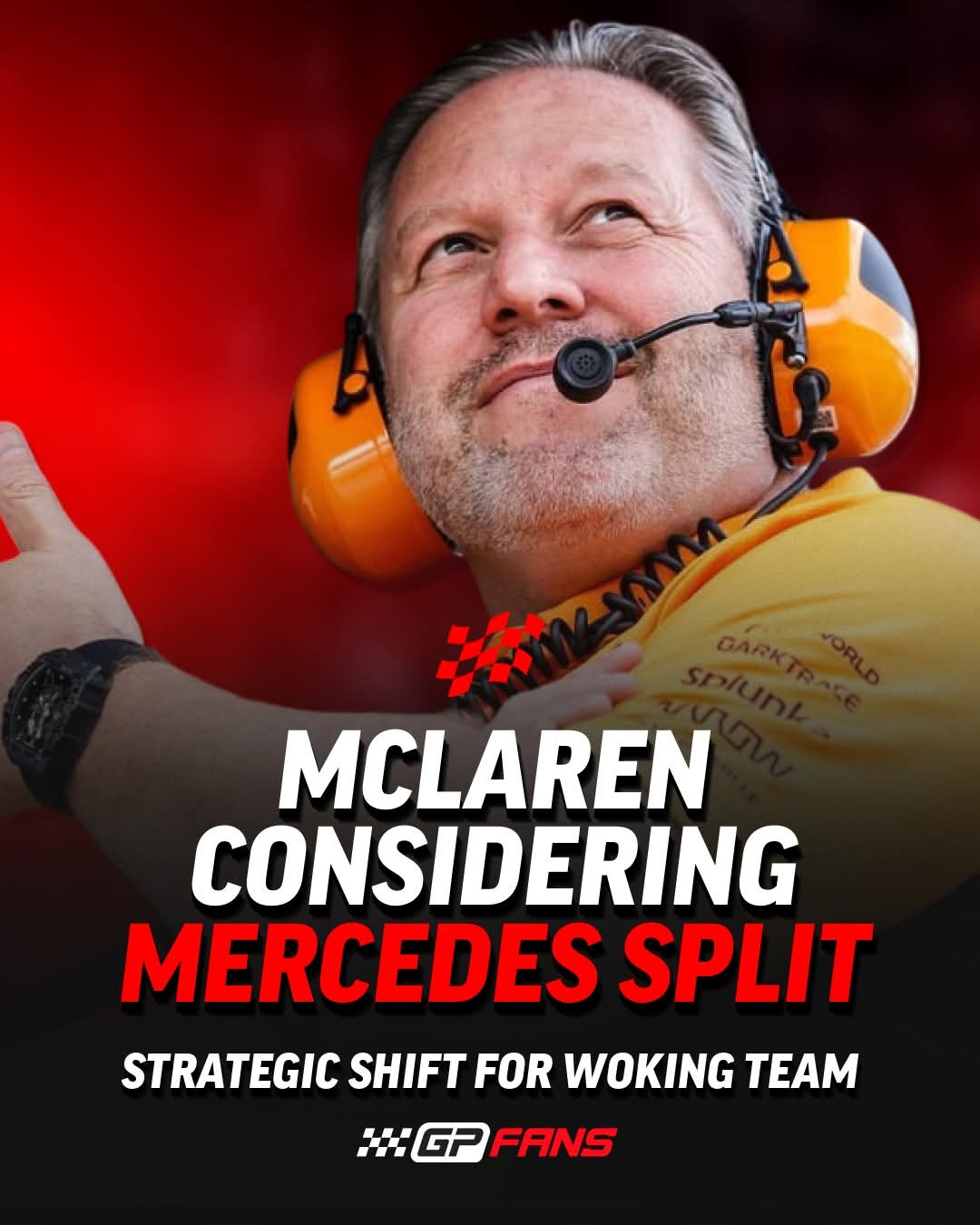
McLaren Racing CEO Zak Brown has openly admitted that the team could eventually part ways with Mercedes and develop its own Formula 1 power unit, a revelation that could have major implications for the sport’s long-term future.
While McLaren remains one of Mercedes’ most successful customer teams, Brown’s comments suggest the Woking-based outfit is already considering what comes next as Formula 1 continues to debate the future direction of engine regulations. With discussions surrounding a potential return to V8 engines powered by sustainable fuels gaining momentum, McLaren may be preparing for opportunities that were previously considered unrealistic.
McLaren Happy With Mercedes—For Now
At present, McLaren’s partnership with Mercedes remains one of the strongest customer-supplier relationships on the grid. The current agreement runs until at least 2030, giving McLaren access to one of the most competitive power units in Formula 1.
However, Brown made it clear that loyalty alone will not determine McLaren’s future strategy.
Speaking about the possibility of developing an in-house engine program, Brown explained that McLaren would seriously evaluate such an option if Formula 1 introduced a financially sustainable engine formula. According to him, the key factor is cost-effectiveness rather than a desire to immediately move away from Mercedes.
That statement is significant because it marks one of the strongest indications yet that McLaren sees itself as a potential future works team rather than a permanent customer operation.
Why Becoming a Works Team Matters
Formula 1 history consistently shows that works teams often possess a competitive advantage over customer outfits.
Although McLaren has enjoyed recent success, including challenging for championships, customer teams frequently face limitations when compared to manufacturers that design both the chassis and power unit under one roof.
Mercedes, Ferrari, Audi, Red Bull Powertrains-Ford, Honda-backed projects, and Cadillac all have varying levels of factory integration. McLaren remains dependent on an external supplier.
Brown’s comments suggest that if future regulations reduce development costs and complexity, McLaren could see value in controlling every aspect of its performance package.
The challenge, however, is enormous.
Building a Formula 1 engine operation requires billions in long-term investment, world-class engineering facilities, and years of research and development. Even major manufacturers have struggled to succeed in that environment.
The Growing Frustration With Current Hybrid Engines
The discussion comes amid increasing criticism of Formula 1’s current power-unit regulations.
Several teams, drivers, and industry figures have questioned the complexity of modern hybrid systems, arguing that they place excessive emphasis on energy management rather than pure racing.
The current regulations introduced in 2026 have generated mixed reactions. While the technology is highly advanced and aligns with sustainability goals, critics believe the balance between electrical deployment and combustion power has become too complicated.
As a result, discussions have already begun regarding a potential shift toward a simpler and louder V8 engine formula powered by sustainable fuels around 2031.
Such a move would dramatically alter the sport’s landscape and could make engine development significantly more attractive to independent teams like McLaren.
Why the 2031 Regulations Could Change Everything
According to ongoing discussions within Formula 1, manufacturers are exploring future engine concepts that would reduce complexity while maintaining environmental responsibility.
A V8 engine powered by sustainable fuel could potentially lower costs, improve reliability, and create a more exciting spectacle for fans.
For McLaren, that scenario could represent the perfect opportunity.
Rather than attempting to enter the highly complex hybrid era as a manufacturer, McLaren could wait for a simpler formula that offers a more realistic pathway toward becoming a works team.
The timing would also align with the expiration of key commercial agreements and the next major phase of Formula 1’s evolution.
McLaren’s Championship Ambitions Remain the Priority
Despite the speculation, Brown stressed that McLaren remains fully committed to its current Mercedes partnership.
The team currently sits third in the Constructors’ Championship and continues to focus on challenging Mercedes and Ferrari at the front of the grid.
Any decision regarding a future engine project would likely depend on whether it strengthens McLaren’s championship aspirations rather than simply serving as a branding exercise.
For now, Mercedes continues to provide a highly competitive package, making any immediate split highly unlikely.
Analysis: A Strategic Warning to the Grid
Brown’s comments should not necessarily be viewed as a declaration of independence. Instead, they appear to be a strategic signal.
McLaren is positioning itself to take advantage of future opportunities while keeping pressure on Formula 1’s decision-makers regarding engine regulations.
By publicly expressing interest in becoming a manufacturer under the right conditions, McLaren is effectively telling the FIA and Formula 1 that there is demand for a simpler, more affordable engine formula.
That message could influence future discussions as the sport evaluates its long-term direction.
Prediction: McLaren Will Closely Monitor the 2031 Engine Revolution
A full McLaren power unit project before 2031 appears unlikely given the financial and technical challenges involved. However, if Formula 1 adopts a sustainable-fuel V8 formula with lower development costs, McLaren could become one of the strongest candidates to transition from customer team to full works operation.
Until then, Mercedes remains McLaren’s best route to championship success.
The bigger story is that Formula 1’s engine future remains far from settled, and Zak Brown has made it clear that McLaren intends to be part of that conversation when the next era of the sport arrives.