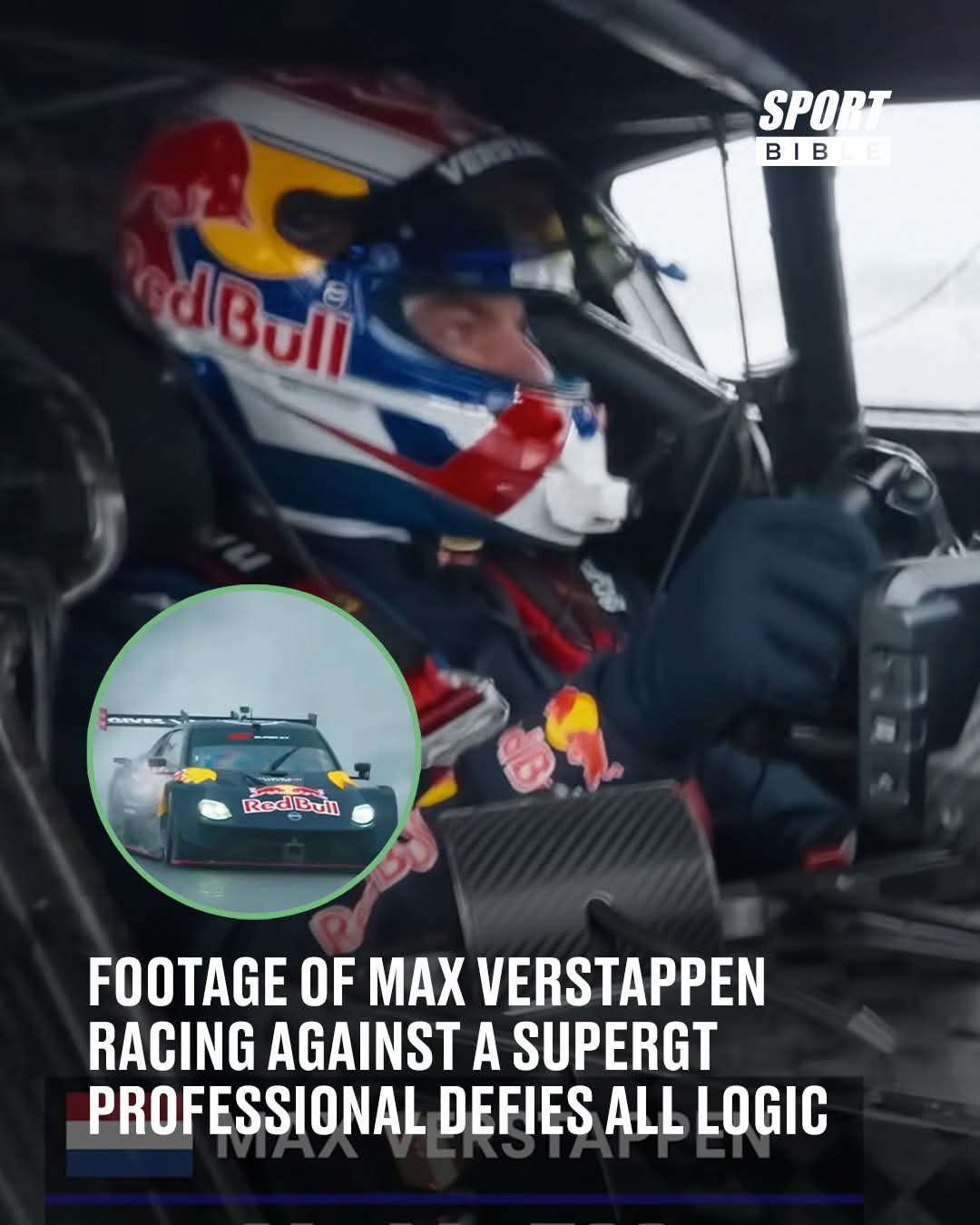
Few crossover racing moments have sparked as much fascination as the recent footage of four-time Formula 1 world champion Max Verstappen taking on a professional Super GT driver in Japan. The challenge, filmed in extreme wet conditions at Fuji Speedway, has quickly gone viral because of how unexpectedly competitive the entire session became—even for someone of Verstappen’s elite calibre.
The event saw Verstappen go head-to-head with Japanese Super GT race winner Atsushi Miyake, a highly respected driver in the GT500 category. The test was not just a casual exhibition; it was a structured performance comparison designed to measure raw adaptability between Formula 1 precision and Super GT endurance-style racing. The cars used were part of the highly competitive Super GT ecosystem, a series known for its close racing and technical demands, governed under Super GT regulations.
Fuji Speedway itself added another layer of difficulty. The historic Japanese circuit—part of Formula 1’s past calendar and known for unpredictable weather—was heavily soaked before the session began. That meant both drivers were forced to push high-performance machinery on a surface that offered minimal grip, increasing the importance of throttle control, tyre management, and instinctive car handling. In such conditions, even experienced professionals can struggle to extract clean lap times.
Miyake initially set the benchmark with a 1:45.453 lap before improving to 1:44.075 as he adapted to the evolving track conditions. Verstappen, however, needed almost no time to find the limit in a completely unfamiliar Super GT-style car. After an early slide that highlighted just how different the machinery felt compared to his Red Bull Formula 1 car, he quickly recalibrated his approach. Despite losing time in the opening sector, he recovered dramatically in the middle section, closing the gap to just fractions of a second on his first proper push lap.
What followed is what stunned viewers and engineers alike. On his second attempt, Verstappen delivered a near-flawless lap of 1:42.290—significantly faster than Miyake’s best effort. The improvement wasn’t just about raw speed; it was about adaptation. Verstappen found time everywhere: aggressive entry speed in sector one, refined mid-corner balance in sector two, and precise exit traction in the final sector, even under worsening rain conditions.
Beyond the stopwatch, the reaction between both drivers added perspective to the performance gap. Miyake openly praised Verstappen’s ability to quickly understand a completely different racing platform, emphasizing how rare it is for even elite drivers to adapt so rapidly. Meanwhile, Verstappen remained characteristically analytical afterward, noting that his biggest challenge was simply trusting the tyres on a slippery surface while learning the car’s behaviour in real time.
This crossover appearance also fits into a broader pattern in Verstappen’s career trajectory. With ongoing discussions around new Formula 1 regulations and his occasional frustration with the direction of the sport under Red Bull Racing, he has increasingly explored endurance and GT-style racing. His participation in GT3 machinery and preparation for events like the Nürburgring 24 Hours suggests a long-term interest in expanding beyond Formula 1, not replacing it, but complementing it.
There is also wider context behind this move. Verstappen has previously ruled out rallying—unlike his father, Jos Verstappen—but endurance racing clearly appeals to his technical curiosity. With fellow Red Bull-linked drivers such as Yuki Tsunoda representing Japan in Formula 1, the brand’s ties to Japanese motorsport culture remain strong, making this Super GT experiment feel like more than just a one-off showcase.
From an analytical standpoint, the biggest takeaway is not simply Verstappen’s lap time advantage, but how quickly he achieved it. Drivers transitioning between categories typically require multiple sessions to reach competitive pace, especially in wet conditions. Verstappen, however, demonstrated near-instant adaptability, which reinforces why he is often regarded as one of the most naturally gifted drivers in modern motorsport.
Looking ahead, this kind of crossover testing could become more common as teams and manufacturers explore driver versatility across disciplines. If Verstappen continues participating in endurance racing while still competing at the highest level of Formula 1, it may reshape how modern champions are evaluated—not just on titles, but on adaptability across completely different racing ecosystems.
For now, the Fuji Speedway duel stands as a rare glimpse into how far elite driving skill can stretch when traditional boundaries between racing categories are removed—and why Verstappen continues to defy expectations every time he steps into an unfamiliar car.