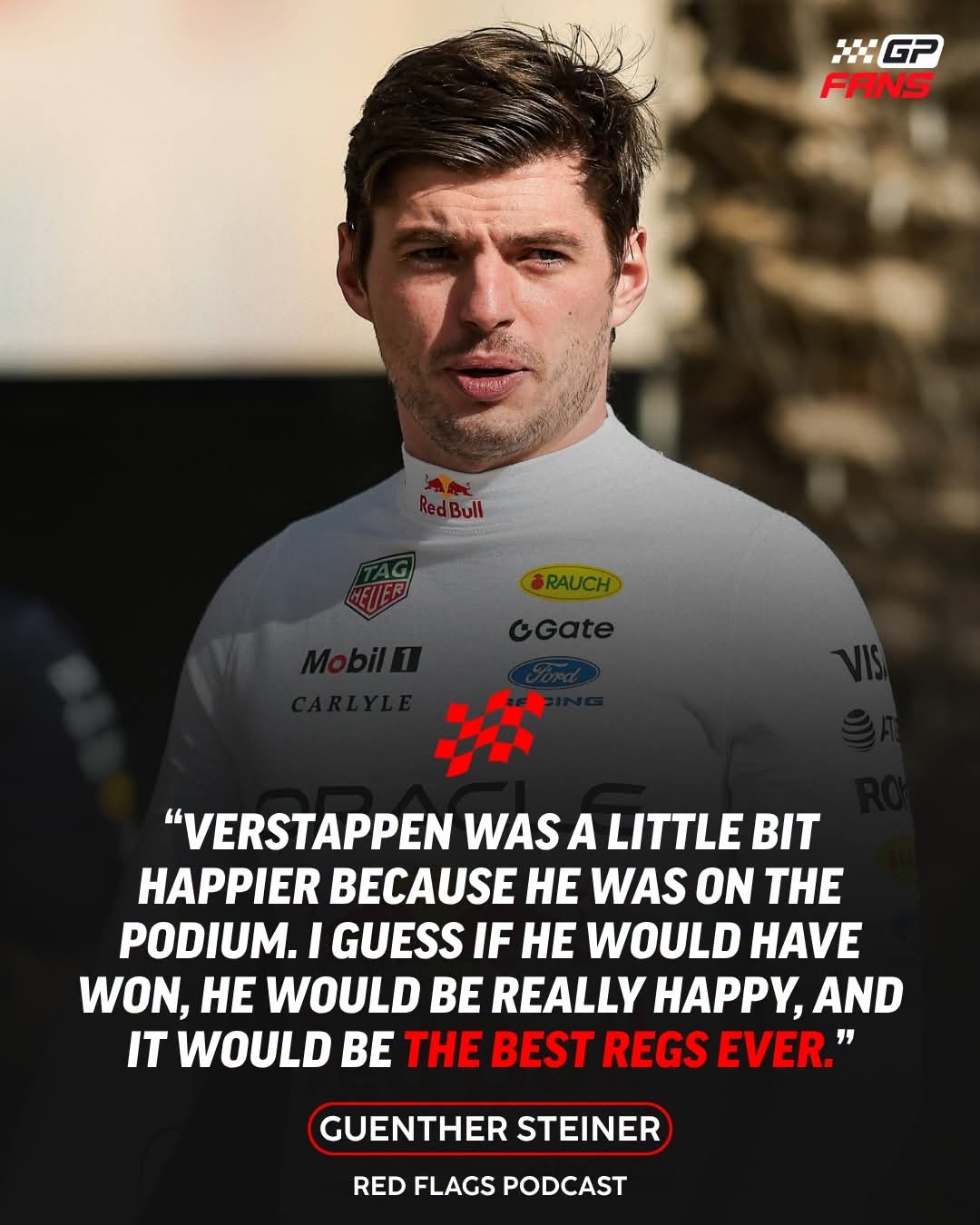
Max Verstappen’s ongoing criticism of Formula 1’s controversial 2026 regulations has sparked fresh debate after former Haas team principal Guenther Steiner suggested the four-time world champion may be sending mixed messages about the sport’s new era.
The introduction of Formula 1’s sweeping 2026 regulations has transformed the competitive landscape. New chassis designs, revised aerodynamics, and heavily reworked power units have created one of the most dramatic technical resets in modern F1 history. While some teams have adapted quickly, others have struggled to find answers. Red Bull Racing, a dominant force during the previous regulations cycle, has been among the organizations facing significant challenges, with Verstappen enduring a far more difficult campaign than many expected.
For much of the season, Verstappen has been one of the most vocal critics of the new rules package. The Dutchman has repeatedly expressed concerns about the driving experience, energy management systems, and the overall direction Formula 1 has chosen for its future. His comments have fueled speculation about his long-term commitment to the sport, with rumors even suggesting that retirement had crossed his mind during the difficult transition period.
However, the narrative became more complicated following the Canadian Grand Prix. Verstappen secured his first podium finish of the season in Montreal, delivering a much-needed boost for both himself and Red Bull. Despite achieving his strongest result of the year, he continued to voice concerns about the regulations afterward, stating that he hoped Formula 1 would move toward a “purer” version of racing in future seasons. Those comments caught the attention of Guenther Steiner, who questioned whether Verstappen’s position on the regulations is influenced as much by competitive performance as by genuine dissatisfaction.
According to Steiner, there is a possibility that Verstappen’s outlook changes depending on results. The former Haas boss suggested that if Red Bull were consistently winning races under the current regulations, the criticism might not be as intense. Steiner argued that drivers naturally view regulations more favorably when they are benefiting from them, and less favorably when they are struggling. It is a perspective that has become increasingly common throughout Formula 1 history, where technical debates are often intertwined with competitive interests.
The discussion extends beyond Verstappen himself. A major political battle is currently taking place behind the scenes regarding the future direction of Formula 1’s power unit regulations. Several manufacturers have differing opinions on how much emphasis should be placed on electric power versus traditional combustion engines. Current discussions surrounding a potential 60/40 power split have created divisions among teams and manufacturers, with some believing changes would improve racing while others fear such adjustments could disrupt competitive balance.
Steiner hinted that Verstappen’s comments could also reflect Red Bull’s broader interests in the ongoing power unit debate. As teams position themselves for future regulatory discussions, public statements from star drivers often carry significant influence. Verstappen’s criticisms may therefore serve a dual purpose: expressing legitimate concerns while simultaneously supporting Red Bull’s preferred direction for future engine development. Whether intentional or not, every comment from the reigning champion adds pressure to Formula 1’s governing bodies as they evaluate possible tweaks to the regulations.
Despite the criticism, there are signs that Red Bull may finally be making progress. The podium finish in Canada suggested the team is beginning to understand its package more effectively. While the gap to the front remains substantial, improved performance could help stabilize Verstappen’s outlook as the season progresses. If Red Bull continues to close the gap, the narrative surrounding both the team and the regulations could shift dramatically over the coming months.
Looking ahead, the Monaco Grand Prix and subsequent European races will provide a clearer picture of Red Bull’s true competitiveness. A strong run of results could reduce some of the pressure surrounding Verstappen’s future and potentially soften the criticism directed at the regulations. Conversely, if the team continues to struggle while rivals extend their advantage, calls for further rule adjustments are likely to grow louder.
What remains undeniable is Verstappen’s influence on Formula 1. Whether fans agree with his assessment or side with Steiner’s accusation of hypocrisy, the Dutchman remains one of the sport’s most powerful voices. As Formula 1 navigates one of the most controversial regulation eras in recent memory, every opinion from the reigning champion will continue to shape the conversation.
For now, the debate remains unresolved. Is Verstappen genuinely frustrated by the new generation of Formula 1 cars, or is his criticism amplified by Red Bull’s competitive struggles? The answer may become clearer as the season unfolds, but one thing is certain: the battle over Formula 1’s future is being fought both on the racetrack and behind closed doors.