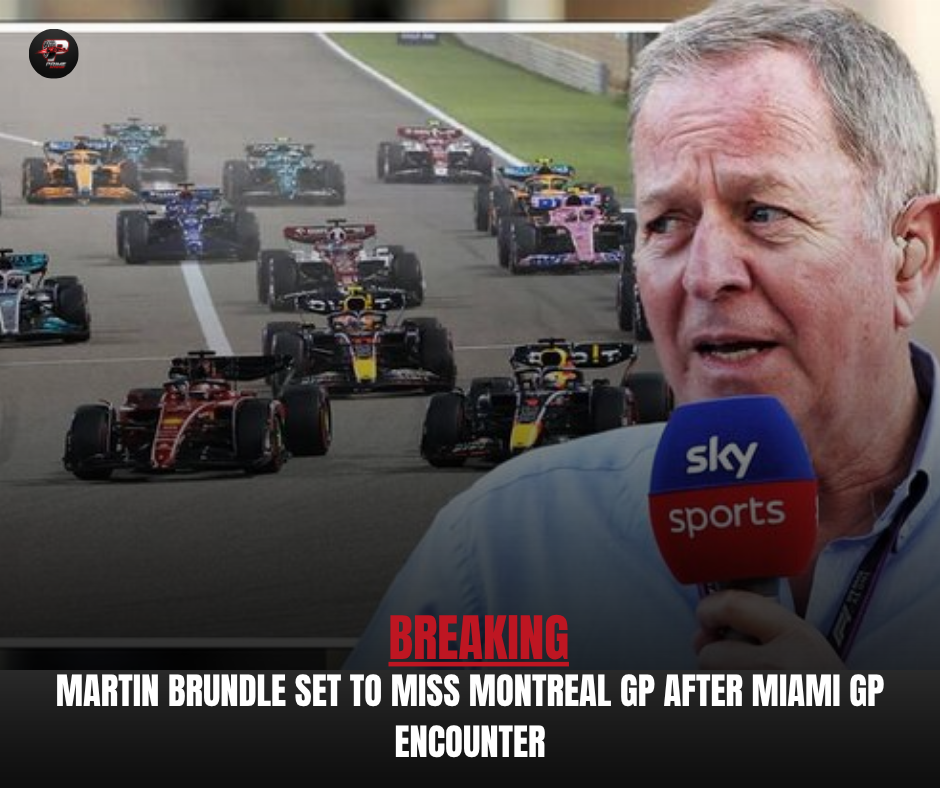
The Formula 1 paddock could be without one of its most recognizable voices at the Canadian Grand Prix, with veteran broadcaster Martin Brundle reportedly set to miss the Montreal weekend following an incident linked to the Miami Grand Prix.
Brundle, whose grid walks and sharp race analysis have become an essential part of modern Formula 1 coverage, has remained one of the sport’s most respected media figures for decades. News surrounding his possible absence has already triggered widespread discussion among fans, broadcasters, and paddock insiders ahead of one of the most unpredictable races on the calendar.
While details surrounding the situation remain limited, the growing speculation has placed renewed focus on the demanding nature of Formula 1’s relentless global schedule and the physical pressure experienced not only by drivers, but also by media personnel, engineers, and traveling broadcast teams.
Why Martin Brundle’s Potential Absence Matters to Formula 1
Few broadcasters are as closely associated with Formula 1 as Martin Brundle.
The former F1 driver has built a legendary reputation through his direct interviewing style, deep technical understanding of racing, and iconic pre-race grid walks. Over the years, Brundle has become one of the defining voices of the modern Formula 1 era, offering fans a rare combination of insider knowledge and genuine racing credibility.
Unlike many television analysts who rely heavily on scripted commentary, Brundle’s approach has always been rooted in firsthand experience. His ability to break down tire strategy, driver psychology, and technical performance in real time has made him a trusted figure among both hardcore fans and casual viewers.
That is why reports suggesting he could miss the Canadian Grand Prix have generated such strong reactions across the motorsport world.
The Miami GP Encounter That Triggered Speculation
The speculation surrounding Brundle’s potential absence appears to stem from events connected to the Miami Grand Prix weekend earlier this season.
Miami has quickly become one of Formula 1’s most commercially intense events, combining celebrity culture, sponsor obligations, and nonstop media commitments into one of the busiest weekends on the calendar. For broadcasters like Brundle, the demands can be exhausting.
During the event, viewers noticed several moments where the veteran commentator appeared visibly fatigued while navigating the chaotic pre-race atmosphere surrounding the grid walk — a segment that has become increasingly difficult as celebrity attendance and security restrictions continue to grow around Formula 1 events.
Although no official statement has confirmed the precise reason for the reported absence, the incident has reignited debate over the growing pressure placed on broadcast teams in modern Formula 1.
Formula 1’s Expanding Calendar Is Affecting Everyone
The 2026 Formula 1 season is already one of the most physically and logistically demanding in the history of the sport.
With an expanding calendar that stretches across multiple continents, constant long-haul travel, and back-to-back race weekends, the workload extends far beyond the drivers themselves.
Commentators, camera crews, engineers, hospitality staff, mechanics, and journalists now operate under conditions that often mirror the intensity experienced by professional athletes.
For someone like Brundle, who remains heavily involved throughout an entire race weekend — from practice analysis to qualifying coverage and race-day broadcasting — the schedule can become especially demanding.
Industry insiders have increasingly warned that Formula 1’s commercial growth is pushing personnel to their physical limits.
Why Fans Connect So Strongly With Martin Brundle
Part of Brundle’s popularity comes from his authenticity.
Unlike heavily polished television personalities, he has maintained the perspective of a racer throughout his broadcasting career. Fans trust his analysis because he speaks with the authority of someone who competed against legends during Formula 1’s most dangerous eras.
His famous grid walks have also become cultural moments within the sport.
Whether navigating through celebrities, team bosses, or world champions moments before lights out, Brundle consistently delivers unpredictable and memorable television. That spontaneity has become increasingly valuable in an era where much of modern sports broadcasting feels carefully managed.
Losing that presence, even temporarily, would noticeably change the atmosphere of a Formula 1 weekend.
The Growing Pressure on F1 Broadcasters
The modern Formula 1 media environment is dramatically different from what existed even a decade ago.
The sport’s global explosion in popularity — fueled heavily by streaming content, social media, and international expansion — has transformed every race weekend into a nonstop entertainment event.
Broadcasters are now expected to deliver live television coverage, digital interviews, social media appearances, sponsor obligations, podcast content, and behind-the-scenes analysis across multiple platforms simultaneously.
For experienced figures like Brundle, adapting to those increasing demands while maintaining high-level race analysis is an enormous challenge.
The situation also highlights a broader issue within Formula 1: the relentless pace of expansion may be placing unsustainable pressure on everyone involved in the sport.
Canadian Grand Prix Could Feel Different Without Brundle
The Canadian Grand Prix has traditionally been one of the most dramatic races on the Formula 1 calendar.
The Circuit Gilles Villeneuve is famous for unpredictable weather, aggressive overtaking zones, and the notorious Wall of Champions — a circuit where even elite drivers regularly make costly mistakes.
Brundle’s analytical style has often been perfectly suited to races in Montreal because of the track’s strategic complexity and chaotic nature.
His ability to explain changing tire strategies, safety car timing, and driver risk management has helped viewers understand why the Canadian GP regularly produces unexpected results.
If he is absent from coverage, many fans will undoubtedly feel that something important is missing from the broadcast experience.
Could Formula 1 Eventually Reduce The Media Workload?
The growing discussion surrounding Brundle’s reported absence may eventually encourage Formula 1 broadcasters and organizers to reconsider how race weekends are structured.
Some insiders have suggested rotating broadcast schedules, lighter travel commitments, or expanded analyst teams as possible long-term solutions. Others believe the sport’s commercial momentum makes such changes unlikely in the near future.
What is clear is that Formula 1’s rapid expansion has fundamentally changed the workload expectations placed on every member of the paddock ecosystem.
As the calendar continues to grow, balancing entertainment demands with personal well-being will become an increasingly important conversation throughout the industry.
Martin Brundle’s Legacy in Formula 1
Regardless of whether he ultimately misses the Canadian Grand Prix, Martin Brundle’s influence on Formula 1 broadcasting is already secure.
He helped redefine how modern racing analysis is presented to television audiences, blending technical expertise with personality-driven storytelling in a way few broadcasters have successfully replicated.
For many younger fans, Brundle is not simply a commentator — he is part of the Formula 1 experience itself.
His voice has narrated championship battles, controversial incidents, emotional victories, and some of the most memorable moments in recent motorsport history.
That connection explains why concerns over his possible absence have resonated so strongly across the paddock.
Final Thoughts
The reports surrounding Martin Brundle potentially missing the Canadian Grand Prix have sparked wider conversations about the demanding reality of modern Formula 1 life.
While the sport continues to grow globally at an extraordinary rate, the physical and mental toll associated with that growth is becoming harder to ignore.
For fans, Brundle represents more than just race commentary. He represents continuity, authenticity, and a direct connection to Formula 1’s rich history.
If he is absent in Montreal, it will serve as a reminder that the intense pressure of Formula 1 extends far beyond the drivers fighting on track.
And as the sport continues expanding into a nonstop global entertainment machine, protecting the people who help bring the spectacle to life may become one of Formula 1’s most important long-term challenges.