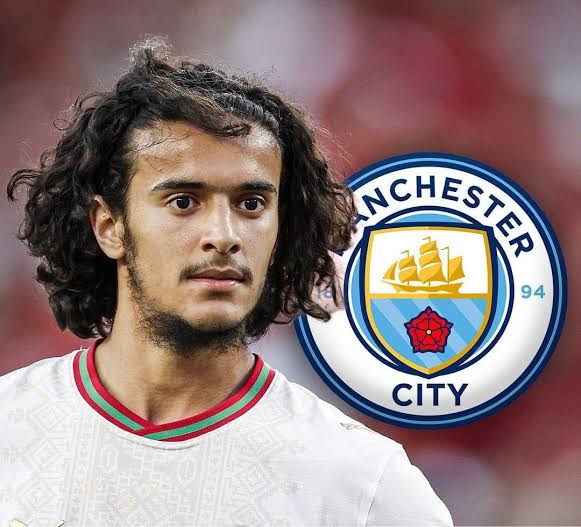
Manchester City are closing in on one of the defining signings of their summer, with the club now understood to be on the verge of completing an £85 million deal for Ayyoub Bouaddi, the eighteen-year-old Lille and Morocco midfielder who has spent the past few months turning himself from a promising Ligue 1 prospect into arguably the most sought-after teenager in world football. Negotiations with Lille have reportedly reached the point where only fine details remain to be settled, personal terms with the player have been all but agreed, and City appear to have won a race that, at various points over the summer, also involved Arsenal, Liverpool, Manchester United, Real Madrid and Paris Saint-Germain. That is not a list of also-rans. That is a list of some of the biggest, richest and most historically successful clubs in the sport, all of whom identified the same player as a priority and all of whom, if reports are to be believed, have now watched City edge ahead of them in the race. For a club to beat that level of competition for an eighteen-year-old says as much about the conviction inside the Etihad as it does about the player himself.
The scale of the fee tells its own story. Eighty-five million pounds, translating to roughly one hundred million euros, is an extraordinary amount of money for a teenager with barely two full senior seasons behind him, but it reflects exactly how quickly Bouaddi’s stock has risen. He was already regarded as one of the outstanding young midfielders in Ligue 1 before this summer, a technically composed, physically imposing presence who made more than thirty league and European starts for Lille last season and looked entirely unfazed by the step up from academy football to first-team responsibility at a club fighting for European qualification. What turned that reputation into something close to consensus across the continent was the World Cup. Bouaddi started every game for Morocco except one across their run to the quarter-finals, operating in the kind of high-pressure, high-stakes matches that either expose a young player’s limitations or confirm his readiness for the very top level. By the time Morocco’s tournament ended, there was little debate left among scouts and sporting directors about whether Bouaddi belonged in that conversation. The only debate left was which club would end up paying for him.
That City appear to have won that particular race is a significant statement of intent, but it becomes even more significant when you consider the timing and the reasoning behind it. This is not simply a case of a wealthy club hoovering up promising young talent for the sake of accumulating assets. City’s interest in Bouaddi is tied directly and unmistakably to the situation unfolding around Rodri, whose future at the club now looks increasingly likely to lie in Barcelona colours rather than sky blue. Rodri has been the defining figure of City’s midfield for several years, a player whose reading of the game, positional discipline and sheer footballing intelligence turned him into arguably the most influential deep-lying midfielder anywhere in Europe. Losing a player of that stature is never a small thing for any club, let alone one that has built so much of its recent success around the control he provides in front of the back four. But football clubs at the top level rarely allow sentiment to dictate squad planning for long, and City’s business over the summer suggests a club that has already begun preparing for a future that does not include him, even while negotiations with Barcelona continue to play out in the background.
The most interesting detail to emerge from City’s pursuit of Bouaddi is the plan for what happens immediately after the ink dries. There had been suggestions earlier in the window that the ideal pathway for a player this young might involve a season back on loan at Lille, allowing him to continue developing in a familiar environment before making the step up permanently in a year or two. That plan appears to have been abandoned. Both City and the player himself are now understood to want him involved with the first team straight away, with the thinking inside the club being that there is no better environment for his development than working directly alongside Rodri, learning the habits, the positioning and the decision-making of one of the finest holding midfielders of his generation before that education potentially comes to an end. It is a fascinating piece of squad planning when you think about it properly. City are essentially trying to engineer an apprenticeship in real time, bringing in the long-term heir to a position while the incumbent is still, for now, occupying it, hoping that enough of what makes Rodri so effective can be absorbed and internalized before he departs for Catalonia.
Whether that plan survives contact with reality is another question entirely, because integrating an eighteen-year-old into a Premier League title race, even one with the composure and physical maturity Bouaddi has already shown, is never entirely straightforward. The Premier League has chewed up talented teenagers before, players who looked the part in continental football or in international tournaments but struggled with the relentless physicality and weekly intensity of English football. City, to their credit, have a recent track record of integrating young midfielders reasonably successfully, and the presence of an experienced core around Bouaddi, even a core that may shortly lose its most important member, should help cushion that transition. There is also the question of how Enzo Maresca, now firmly established at the helm at the Etihad, wants his midfield to function. Maresca has built a reputation as a coach who demands specific technical qualities from his deepest midfielder, comfort in possession under pressure, the vision to switch play quickly, and the discipline to protect a back line without constantly diving into rash challenges. Everything reported about Bouaddi’s game, the composure on the ball, the range of passing, the physical presence to win the ball back and immediately use it constructively, suggests he fits that profile closely, which likely explains why City moved so aggressively and so early to secure personal terms once it became clear a deal could be reached with Lille.
Financially, the structure of this business is worth paying attention to as well, because City rarely spend at this level without a clear sense of how the wider squad and the wider balance sheet absorb the impact. Reports throughout the summer have suggested the club can recoup a significant portion of the fee for Bouaddi through the departure of another attacking player to Tottenham, a sale in the region of sixty million pounds that has been described in some reports as close to inevitable. That kind of self-funding approach has become increasingly typical of how the biggest clubs operate under modern financial regulations, balancing marquee incoming fees against outgoing sales rather than simply layering spending on top of spending without regard for the books. It also reflects a broader summer of activity at the Etihad that has been unusually busy even by City’s own considerable standards. Elliot Anderson arrived in a club-record deal that reshaped the profile of the midfield before a ball had even been kicked in the new season. Jeremy Monga, a teenage winger regarded as one of the most exciting academy graduates the club has produced in years, has been handed a path into senior contention. Mathys Detourbet and Pierce Charles have added further depth in areas the club identified as needing reinforcement. And running parallel to all of that has been the ongoing, unresolved situation around Enzo Fernandez, whose situation at Chelsea has kept City’s name in transfer headlines almost continuously throughout the window, even as the Bouaddi deal has quietly moved toward completion in the background.
It is worth pausing on that parallel pursuit for a moment, because it says something important about how City are approaching this specific transfer window. A club that is simultaneously chasing an established, twenty-five-year-old World Cup winner in Fernandez and an unproven eighteen-year-old prospect in Bouaddi is not a club hedging its bets on a single profile of player. It is a club trying to cover every possible outcome in central midfield at once, ready to add proven quality if the opportunity arises, ready to add generational potential if that opportunity arises instead, and seemingly prepared to pursue both simultaneously if the finances allow it. That kind of parallel recruitment strategy is only really available to a small handful of clubs in world football, and City putting it into practice this aggressively, in the same window, on the same general area of the pitch, tells you a great deal about how seriously the club is treating the challenge of replacing Rodri’s influence, whether that replacement comes in the form of proven Premier League pedigree or raw, precocious talent still just eighteen years old.
The agreement in principle over personal terms, reportedly running through to 2031, is itself a notable detail. A five and a half year contract for an eighteen-year-old signals long-term thinking on both sides. For City, it locks in a player they clearly believe can become a cornerstone of the squad for the best part of a decade, insulating the club against the kind of short-term hype cycles that can inflate and then deflate a young player’s value within a couple of seasons. For Bouaddi and his representatives, agreeing to that length of contract suggests genuine conviction that City represents the right environment for his development, rather than a short-term financial play before seeking a move elsewhere once his value peaks. Deals of this length, at this fee, for a player this young, tend to reflect genuine alignment of vision between club and player rather than a rushed, opportunistic piece of business, and that alignment matters enormously when it comes to whether a young signing actually fulfils the potential that justified the fee in the first place.
There is also a broader football context worth considering, which is what this signing says about where the modern game is heading in terms of recruitment strategy at the very top level. A decade ago, an eighty-five million pound fee for an eighteen-year-old with two senior seasons of experience would have been considered borderline reckless, the kind of speculative gamble more associated with clubs desperate to make a splash than with serial title winners operating under careful financial planning. Today, it barely raises an eyebrow, a reflection of how thoroughly the market has been reshaped by the sheer scale of broadcasting revenue, sponsorship income and commercial power available to Europe’s elite clubs. Bouaddi’s rise from a seventeen-year-old being chased by Italian clubs for a fraction of his current valuation to an eighteen-year-old commanding a fee north of eighty million pounds within the space of little more than a year is a fairly extreme example of just how fast valuations can move once a player performs on the biggest possible stage. A strong World Cup, in particular, has become one of the single most valuable accelerants in the modern transfer market, capable of adding tens of millions of pounds to a player’s price tag in the space of a month, and Bouaddi’s tournament with Morocco appears to be a textbook example of exactly that phenomenon in action.
For Lille, meanwhile, this represents both an enormous financial windfall and a familiar pattern for a club that has built much of its modern reputation on developing and selling elite young talent to Europe’s biggest sides. Lille have never been able to compete financially with the Premier League’s top clubs on player wages or transfer spending, but they have built a genuinely impressive production line of academy talent and shrewd early-career signings who go on to command huge fees once their ability becomes undeniable. Losing a player of Bouaddi’s calibre will sting from a footballing perspective, particularly for a club still trying to establish itself as a regular fixture in European competition, but the financial injection from a fee of this size will provide real, tangible resources to reinvest in the next generation of talent coming through the ranks. It is the trade-off that clubs operating at Lille’s level in the European football hierarchy have learned to accept, and if anything, the size of this particular fee only reinforces the value of the model they have built.
As for what comes next, the assumption around the club is that once the remaining details are finalized, the announcement itself should follow relatively quickly, with City eager to have Bouaddi in the country and training with the first-team squad as soon as possible given the intention to involve him immediately rather than ease him in gradually. How he is used in those opening weeks will be closely watched, not just by City’s own supporters but by rival clubs who missed out on his signature and will now be assessing exactly what they lost the race for. There is unlikely to be any expectation that an eighteen-year-old, however gifted, immediately replaces the specific qualities Rodri has provided for years, and Maresca will almost certainly manage his integration carefully, balancing opportunity with protection in a way that gives Bouaddi the platform to succeed without exposing him to more than he can reasonably handle in his first months in a new country, a new league and a new football culture entirely. But the direction of travel is unmistakable. City are not simply replacing a departing player with another experienced deep-lying midfielder cut from a similar cloth. They are attempting something more ambitious, using the twilight of Rodri’s time at the club as a live coaching ground for the player they believe will define that position for the next decade, and doing so at a fee that reflects both the risk and the enormous potential reward involved in that kind of long-term thinking. Whether it pays off in the way the club clearly hopes will not be clear for a while yet, but the ambition behind the move, arriving in the same summer as the uncertainty around Rodri’s future and the parallel pursuit of Enzo Fernandez, leaves little doubt about how seriously Manchester City are treating the reconstruction of their midfield for whatever comes after this transitional, transformative window finally closes.