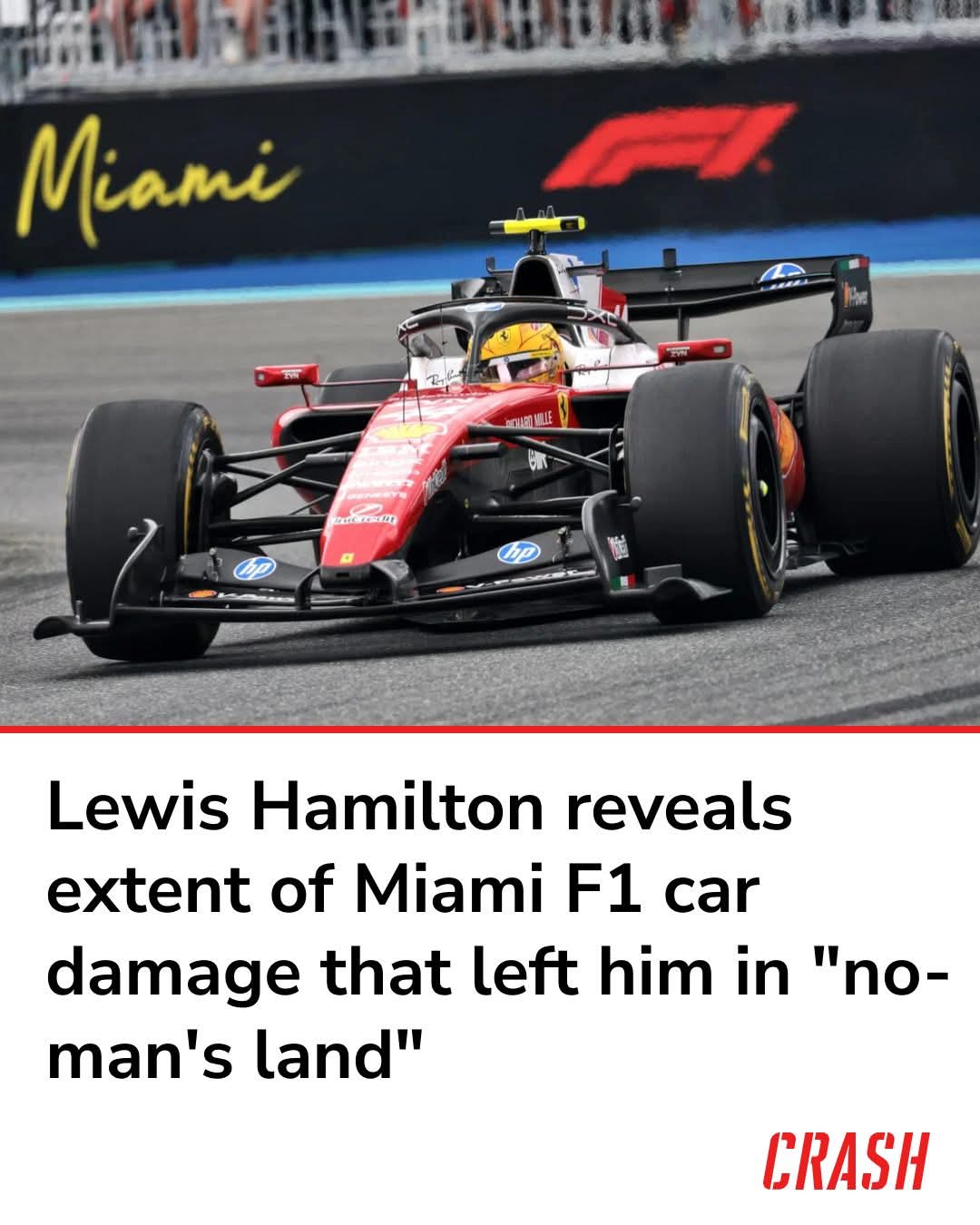
The Miami Grand Prix may have delivered chaos and drama, but for Lewis Hamilton, it became a race defined by frustration and lost potential. The seven-time world champion has now revealed the true extent of the damage that left him stranded in what he described as “no-man’s land” for much of the race.
Hamilton’s troubles began almost immediately. A first-lap incident triggered by Max Verstappen spinning at Turn 2 forced the Ferrari driver off line and into a compromised position. As he attempted to recover ground, contact with Franco Colapinto at Turn 11 caused significant damage to his car—specifically to the floor and right-hand sidepod.
The impact was far more costly than it initially appeared. Hamilton later confirmed that the damage resulted in a loss of approximately half a second of downforce per lap—an enormous deficit in modern Formula 1 terms. From that moment on, he was effectively isolated on track, unable to challenge the cars ahead or defend effectively against those behind. Despite crossing the line in seventh, later promoted to sixth following Charles Leclerc’s penalty, the result masked what could have been a far stronger performance.
What makes the situation even more frustrating is the pace Ferrari showed prior to the race. Hamilton indicated that changes made after the sprint had significantly improved the car’s balance heading into qualifying. Confidence was high, and there was genuine belief within the Ferrari camp that they could compete at the front. However, the early damage completely derailed that momentum, turning a promising race into a damage-limitation exercise.
From an analytical perspective, this incident highlights how fragile race outcomes can be in the current era. Even minor contact can have massive aerodynamic consequences, especially with ground-effect cars where floor integrity is crucial. Hamilton’s “no-man’s land” comment reflects a broader issue—once performance drops below a certain threshold, drivers are effectively removed from meaningful competition.
Looking ahead, Ferrari faces a critical window to regroup. The underlying pace appears to be improving, but consistency and race execution remain concerns. If the team can avoid early-race incidents and continue refining car balance, Hamilton could quickly re-emerge as a podium contender. With the season still young, the Miami setback may ultimately serve as a turning point—but only if Ferrari converts potential into results in the races to come.