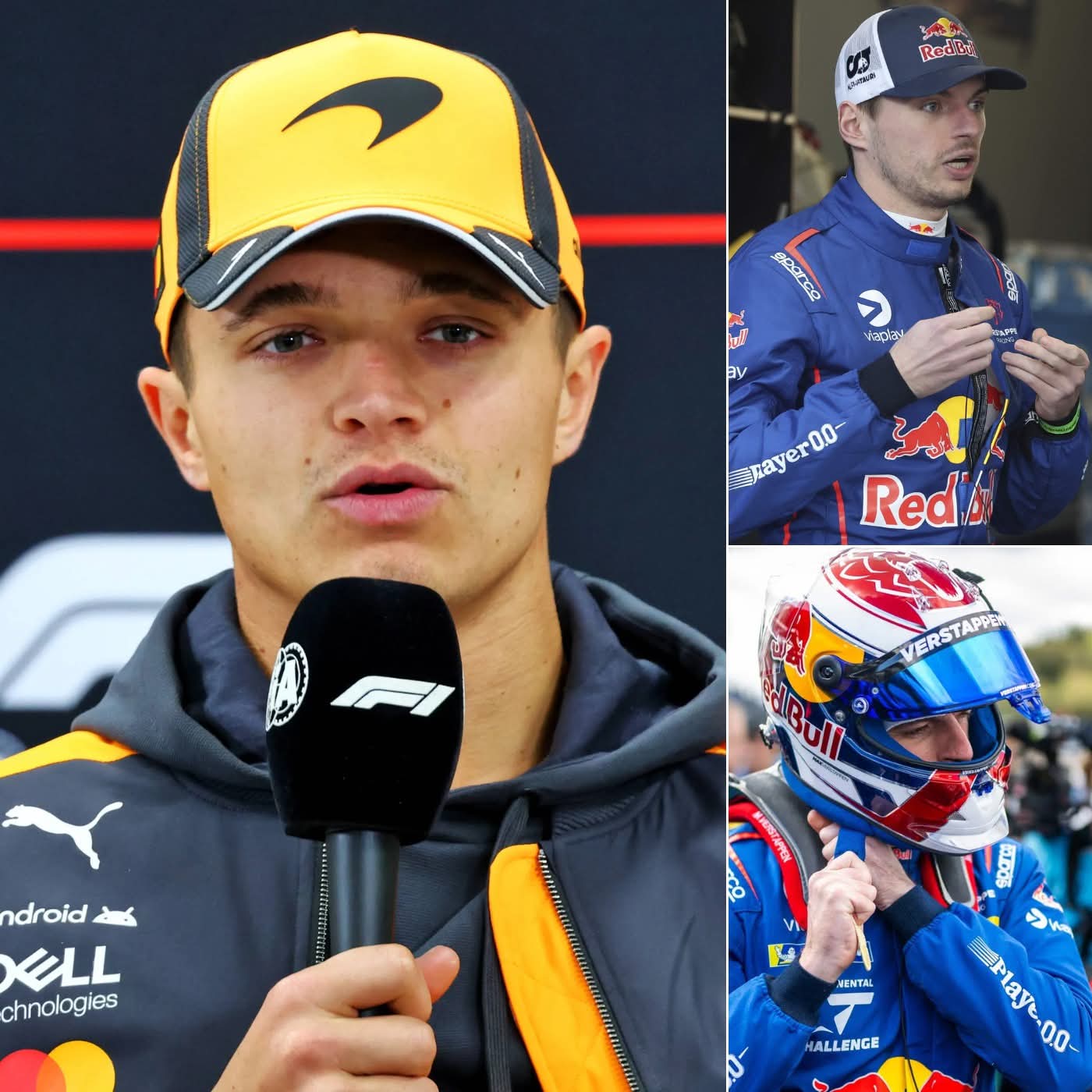
Formula 1 rivalries are often built on confidence, mind games, and carefully measured public statements. Drivers rarely reveal admiration for direct competitors, especially when championship ambitions are on the line. However, the latest developments surrounding Lando Norris and Max Verstappen have added an entirely different dimension to the ongoing competitive battle at the top of motorsport. Reports emerging from the paddock suggest Norris was left deeply fascinated by Verstappen’s work at the Nürburgring Nordschleife, with the British driver openly admitting how captivated he became by what he witnessed.
The Nürburgring Nordschleife, famously known as the “Green Hell,” is considered one of the most demanding and unforgiving circuits in racing history. Stretching through forests with blind corners, dramatic elevation changes, and almost no margin for error, the track has built a reputation for exposing weaknesses in even the most experienced drivers. Success there requires far more than pure speed; it demands concentration, precision, bravery, and complete trust in both machinery and instinct.
What reportedly drew Norris into such fascination was not merely Verstappen driving quickly around the circuit. It was the intensity and detail behind the preparation. Rather than treating the sessions as casual laps or off-season enjoyment, Verstappen approached the challenge with the mentality of someone seeking another level of performance. Elite athletes constantly search for marginal gains, but this type of commitment suggests something larger — an effort to continually expand the boundaries of what is possible.
The relationship between Formula 1 and endurance racing has become increasingly interesting in recent years. While Grand Prix racing demands explosive pace over shorter distances, endurance events require sustained focus and consistency across several hours. Drivers who successfully merge those two skill sets often emerge with stronger race awareness and improved adaptability. Verstappen’s growing interest in endurance-style driving appears to fit perfectly into that philosophy.
For Norris, the reaction itself is perhaps the most fascinating part of the story. Top drivers spend their careers studying rivals, analyzing braking points, racing lines, and onboard footage. But becoming completely immersed in another competitor’s driving style highlights genuine respect. It also demonstrates something frequently overlooked in modern Formula 1: behind the rivalries and media narratives, drivers remain students of racing itself. Even the sport’s biggest stars are constantly learning.
From an analytical perspective, the impact of this type of preparation could extend directly onto Formula 1 circuits. Endurance training develops patience, traffic management, tire understanding, and mental resilience. Spending hours navigating a difficult circuit like the Nordschleife can make traditional Grand Prix environments feel less mentally demanding. Drivers who train under extreme conditions often return to regular race weekends with sharper instincts and greater confidence.
The psychological side may prove equally important. Formula 1 championships are rarely decided by outright speed alone. Small advantages in confidence and mentality can shape entire seasons. If competitors begin viewing a rival as someone operating on another level of preparation and dedication, that perception alone can create pressure before a race weekend even starts. Motorsport history has repeatedly shown that psychological advantages can become just as powerful as mechanical ones.
Looking ahead, Verstappen’s approach may influence others throughout the paddock. Drivers are constantly searching for new methods to improve performance, and cross-discipline training could become a larger trend in the future. Teams invest millions into simulators and development programs, but there remains immense value in raw track experience gained under difficult conditions.
As the season continues, this storyline adds another fascinating chapter to one of Formula 1’s evolving rivalries. Norris may have admitted fascination, but admiration does not mean surrender. If anything, moments like these often create stronger competitors. And if the grid takes Verstappen’s Nürburgring preparation as a warning sign, the battles ahead could become even more intense.