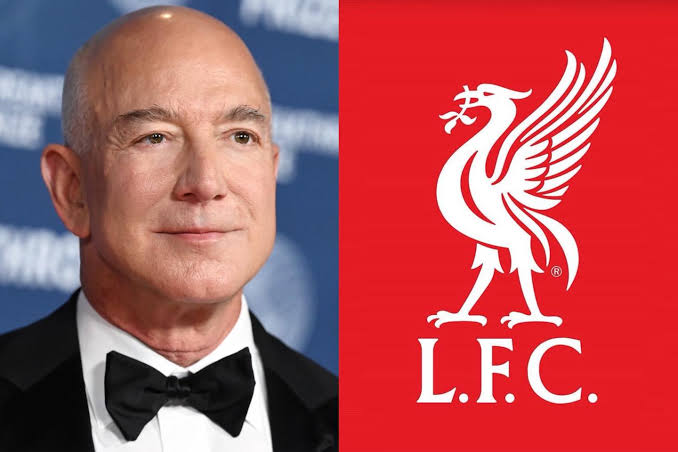
Liverpool have been hit by a major ownership development after it emerged that the consortium involving Amazon founder Jeff Bezos has acquired a stake in the club that is significantly larger than initially reported. What was first understood to be a deal for around 30 per cent or roughly one-third of Liverpool has now been revealed to be closer to 40 per cent, with the consortium reportedly holding around 38 per cent of the Premier League giants. The development has immediately raised fresh questions about the future ownership structure at Anfield and whether this investment could eventually lead to an even bigger change. ([RTÉ][1])
The news is particularly significant because the investment group is not simply taking a small minority position. A stake of around 38 per cent gives the consortium substantial influence, even though Fenway Sports Group remains the majority owner and continues to control the club. The group, known as 1892 Holdings, is led by Amit Bhatia and includes major investors such as Bezos and Facebook co-founder Eduardo Saverin. The latest revelation has therefore changed the way many observers are looking at the original agreement. ([The Guardian][2])
When the agreement was first announced, Liverpool confirmed that a significant minority stake had been sold to the consortium. Early reports suggested the figure was around 30 per cent, with the deal reportedly worth more than £1.5 billion and valuing Liverpool at approximately £5.5 billion. At that stage, supporters were told that FSG would retain majority ownership and operational control. However, the newly reported 38 per cent figure makes the investment considerably more substantial than many initially understood. ([Reuters][3])
That difference matters because ownership percentages can have enormous implications at a football club of Liverpool’s size. A 30 per cent investment is already huge, but approaching 40 per cent gives the new consortium a much stronger position. It means that the investors are now much more closely connected to the future direction of one of the biggest clubs in world football, even though they do not currently have outright control.
The biggest name attached to the deal is undoubtedly Jeff Bezos. The Amazon founder is one of the world’s wealthiest individuals, and his involvement has attracted enormous global attention. However, it is important to understand that Bezos is not personally taking over Liverpool or becoming the club’s chairman. His involvement comes through the K5 Sports fund, and he is understood to be a passive investor rather than someone who will be running the club on a day-to-day basis. ([The Guardian][2])
That distinction is important for Liverpool supporters who may have initially interpreted the headlines as meaning Bezos had personally purchased Liverpool. He has not. The investment has been made through a consortium, and Amit Bhatia is the public figure leading the group. Bhatia, who previously had involvement with Queens Park Rangers, is expected to become Liverpool’s vice-chairman and will have a more direct role within the club’s expanded board. ([The Times][4])
The consortium’s involvement also includes Eduardo Saverin, the Facebook co-founder, alongside other financial interests. This means Liverpool are now connected to an extremely wealthy group of investors with significant experience across technology, finance, global business and sport. The club has presented the investment as part of a long-term growth strategy rather than simply a way of injecting money into the playing squad. ([Reuters][3])
That point is particularly important because some supporters may assume that having Bezos involved automatically means Liverpool will suddenly spend enormous amounts of money on players. That is not necessarily how the agreement works. Reports indicate that the investment does not simply provide a giant transfer budget for Liverpool, while Premier League financial regulations also limit how clubs can use owner funding. The bigger opportunity could instead come through commercial growth, technology, international expansion and the club’s global business operations. ([AP News][5])
Nevertheless, the latest development has created a much bigger question: could this be the beginning of the end of FSG’s ownership of Liverpool?
At present, FSG remains in control. The American investment group has owned Liverpool since 2010, when it purchased the club for a fraction of its current valuation. Since then, Liverpool have experienced one of the most successful periods in their modern history, winning major domestic and European trophies and establishing themselves as one of the leading clubs in world football. ([Reuters][3])
But the new agreement reportedly contains a particularly interesting provision. The consortium has an option that could allow it to acquire a controlling stake if FSG decides to sell or reduce its ownership within the next 12 months. There is no formal commitment from FSG to do so, meaning supporters should not assume that a complete takeover is already guaranteed. However, the existence of that option means a potential path towards a change in control now exists. ([The Guardian][2])
That possibility is what makes the latest revelation so important.
A consortium controlling approximately 38 per cent of Liverpool is already in an extremely powerful position. If that group eventually increased its stake beyond 50 per cent, it would become the majority shareholder and could fundamentally change the ownership structure of the club. For now, however, FSG remains in charge and the current arrangement is being presented as a strategic partnership.
Liverpool supporters will naturally have different reactions to the news. Some will welcome the arrival of investors with enormous financial resources and global business connections. Others will be nervous about what the development could mean for the identity and future direction of the club. Liverpool has always had a passionate supporter base, and ownership issues are rarely treated as simple business transactions at Anfield.
The fact that the consortium’s stake is now understood to be around 38 per cent rather than 30 per cent is likely to intensify those conversations. A stake approaching 40 per cent is not a minor investment. It represents a substantial portion of one of the most valuable football clubs in the world.
The valuation involved is equally eye-catching. Liverpool are now valued at around £5.5 billion according to reports surrounding the transaction. That represents an extraordinary increase compared with the amount FSG paid for the club in 2010. The rise demonstrates just how dramatically the commercial value of elite football has grown over the past decade and a half. ([The Guardian][2])
For FSG, the transaction represents a major financial event. The investment allows the group to realise significant value from its ownership while retaining control. It also brings new partners into the club who can potentially help Liverpool expand into markets where there remains enormous room for growth.
For the new investors, meanwhile, Liverpool represents an opportunity to gain exposure to one of the world’s most recognisable sporting brands. The club has a global fanbase, a huge international following and significant commercial potential. A stake of nearly 40 per cent could become extremely valuable if Liverpool’s overall valuation continues to increase.
That financial logic helps explain why some of the world’s wealthiest individuals are becoming increasingly interested in football. Clubs such as Liverpool are no longer viewed simply as sporting organisations. They are global entertainment brands with broadcasting rights, sponsorship agreements, merchandising operations, digital audiences and enormous international reach.
Bezos’ involvement brings an additional technological dimension to the discussion. His business career transformed Amazon into one of the world’s most powerful companies, and his involvement with Liverpool could potentially create opportunities around digital engagement, data, global marketing and technology. However, supporters will understandably judge the investment primarily by what happens to the football team.
That is where the biggest challenge lies.
Liverpool fans will want to know whether this ownership development will help the club compete at the highest level. They will want to know whether the team will have the resources to challenge Manchester City, Arsenal, Chelsea and other major Premier League clubs. They will want to know whether the club will continue investing in world-class players and infrastructure.
The answer is unlikely to be immediate.
The investment is not being presented as a blank cheque for the manager. Instead, the new arrangement appears designed to strengthen Liverpool’s overall financial and commercial position. Over time, that could indirectly benefit the football operation if increased revenues allow the club to invest more heavily while remaining within financial regulations.
Liverpool have already shown under FSG that they can compete at the highest level without relying on unlimited owner spending. The club’s success under Jurgen Klopp demonstrated the effectiveness of combining intelligent recruitment, strong coaching and sustainable financial management. The new investment could potentially build on that model rather than completely replace it.
The biggest immediate change is likely to be at board level.
Bhatia is expected to become vice-chairman, while Elaine Saverin and Bryan Baum, who represents Bezos’ K5 Sports interests, will also join the expanded board. Bezos himself is not expected to take a direct board position. ([The Times][4])
That means the new investors will have representation within Liverpool’s leadership structure without immediately taking operational control. It is a significant change, but not yet a complete transformation.
The relationship between FSG and 1892 Holdings will therefore be closely watched.
If both sides share the same vision for Liverpool, the arrangement could work smoothly. FSG can continue providing experience in sports ownership while the new investors bring additional capital, connections and commercial expertise.
But if their visions eventually diverge, the ownership option could become much more important.
The possibility of the consortium becoming majority owner within a year is likely to remain one of the biggest talking points surrounding Liverpool. Even though no commitment has been made, the existence of such an option gives the new investors a potential route towards control.
For supporters, that creates both excitement and uncertainty.
Some may see Bezos’ involvement as the beginning of an exciting new era. Others may worry that Liverpool could become increasingly controlled by billionaires and investment groups with no historic connection to the city. Those concerns are already visible among sections of the fanbase, particularly because ownership changes at major football clubs have often resulted in significant changes to their identity and operating philosophy. ([Free Malaysia Today][6])
The reaction from supporters will therefore be important.
Liverpool have always had a strong relationship between the club and its fanbase, and major ownership decisions can affect that relationship. The new investors will need to demonstrate that they understand the expectations surrounding the club rather than treating Liverpool purely as another financial asset.
That will take time.
The first test will be how the consortium interacts with supporters, how transparent the ownership structure becomes and whether the club continues to communicate clearly about its long-term plans.
The second test will be football.
Liverpool’s new season is about to begin, and the club will be judged on what happens on the pitch. New head coach Andoni Iraola has taken over after Arne Slot’s departure, meaning the club is already entering a period of transition. The arrival of new investors adds another major storyline to an already significant period in Liverpool’s history. ([TalkSport][7])
Iraola will need to concentrate on football rather than ownership speculation. His job will be to develop his team, integrate new players and compete for trophies. The ownership group, meanwhile, will be expected to provide the structure necessary for him to succeed.
The fact that the consortium includes Bezos could also increase Liverpool’s global profile. Amazon is one of the most recognisable companies on the planet, and Bezos remains one of the most famous business figures in the world. His involvement inevitably creates international media attention that could strengthen Liverpool’s commercial appeal.
However, fame alone does not guarantee football success.
Liverpool supporters will ultimately judge the investment by results, trophies and the quality of the team.
If the club continues challenging for the Premier League and Champions League, the ownership structure may become less controversial. If performances decline or the club fails to invest adequately, supporters will inevitably question whether the new arrangement has delivered anything meaningful.
That is why the next few seasons could be crucial.
The consortium has an opportunity to demonstrate that its involvement can benefit Liverpool without undermining the club’s existing identity. FSG, meanwhile, must show that bringing in such a significant investor does not mean losing sight of what has made Liverpool successful.
There is also the question of what happens after the initial 12-month period.
If FSG remains majority owner, the current structure could continue for years. If the consortium exercises its option and takes control, Liverpool could enter an entirely new ownership era.
At this stage, neither outcome should be treated as certain.
The only confirmed development is that the consortium has acquired a much larger stake than originally understood. Reports now put the figure at approximately 38 per cent, giving 1892 Holdings a substantial interest in the club. ([RTÉ][1])
That alone represents one of the biggest ownership developments in Liverpool’s recent history.
The financial scale is difficult to ignore. More than £2 billion has reportedly been committed for the larger stake, while the club’s overall valuation sits around £5.5 billion. Such figures underline the extraordinary financial power behind modern Premier League football. ([The Guardian][2])
And this is where Jeff Bezos’ involvement becomes particularly fascinating.
The Amazon founder does not need Liverpool to become wealthy. Instead, his involvement is about gaining a position in one of the world’s most valuable sports businesses. Football offers access to global audiences, international markets and a brand that can remain valuable for generations.
Liverpool, meanwhile, gains access to investors who understand global business at an extremely high level.
The potential benefits are obvious.
But so are the questions.
Will Liverpool remain majority controlled by FSG?
Will 1892 Holdings eventually seek majority ownership?
Will Bezos become more directly involved?
Will the investment lead to greater commercial growth?
Will it have any noticeable effect on transfer spending?
And most importantly, will Liverpool supporters embrace the new ownership structure?
Those questions will not be answered overnight.
For now, Liverpool remain under FSG control, while the Bezos-backed consortium becomes one of the most influential minority shareholders in the club. The new structure represents a significant change without yet being a complete takeover.
That distinction must remain clear.
Jeff Bezos has not personally bought Liverpool.
The consortium has acquired the stake.
Bezos is one of the major investors involved through K5 Sports.
Amit Bhatia is leading the consortium and will take an important position within the club.
FSG remains the majority owner.
But the possibility of a future change in control is now firmly part of the conversation.
That alone makes this a story Liverpool supporters will be watching extremely closely.
The next chapter could involve nothing more than a successful long-term partnership between FSG and 1892 Holdings. Alternatively, the consortium could eventually become the majority shareholder and usher in a completely new era.
For Liverpool, the priority must remain the same regardless of who owns the largest percentage: maintaining the club’s competitiveness and protecting its long-term future.
The investment from Bezos and his fellow investors has certainly changed the financial landscape around Anfield.
Now the football world will be waiting to see what comes next.
Because what began as a reported 30 per cent investment has now emerged as something much bigger.
Nearly 40 per cent of Liverpool is reportedly in the hands of the Bezos-backed consortium.
And with an option that could potentially open the door to majority ownership, the latest development may be much more than a simple investment.
It could be the first major step towards another historic change at Anfield.