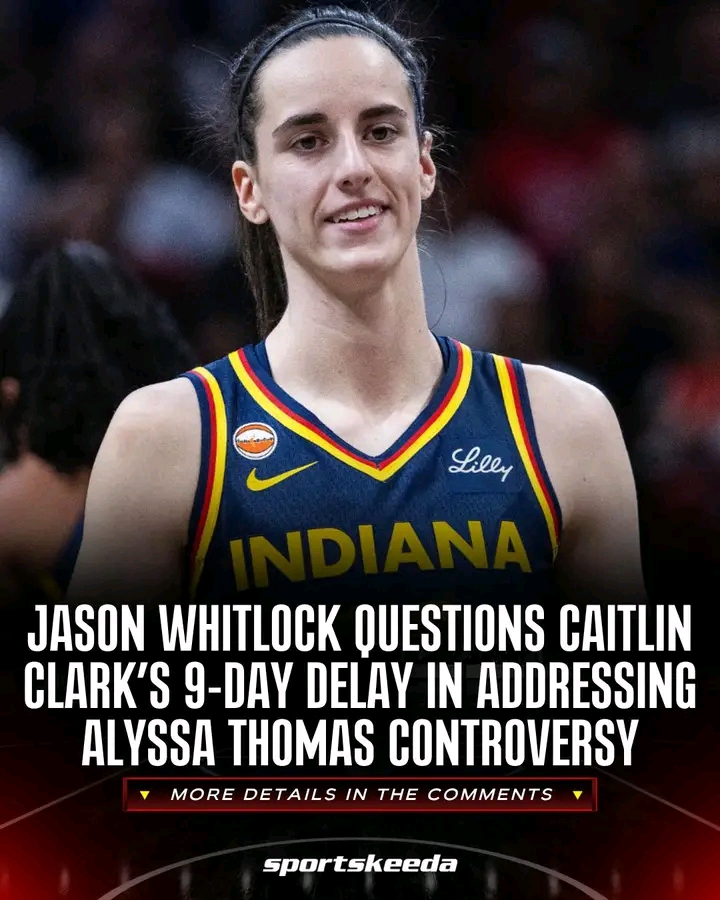
Jason Whitlock has once again entered the center of WNBA-related online discussions after reacting to the timing of Caitlin Clark’s recent public comments about the controversial incident involving Alyssa Thomas. The situation has already generated widespread attention across sports media, especially following the on-court altercation between Clark and Thomas that later resulted in disciplinary action and heavy online debate. Clark’s response, which touched on player safety, officiating standards, and the broader treatment of athletes in the league, added another layer to an already heated conversation.
Whitlock’s reaction focused less on the substance of Clark’s remarks and more on when she chose to speak. He suggested that the timing of her comments played a major role in how they were received and amplified by media outlets and social platforms. According to his perspective, statements made in the middle of ongoing controversy often get pulled into larger narratives that can distort intent, especially when emotions among fans and analysts are already running high.
The backdrop to this discussion is the highly publicized foul involving Alyssa Thomas during a matchup with the Indiana Fever, where contact against Caitlin Clark led to a retroactive Flagrant 2 ruling and suspension for Thomas after league review. The incident triggered intense scrutiny of officiating consistency and player safety protocols. In the aftermath, both players found themselves at the center of online discourse, with supporters and critics weighing in heavily on what happened and how it should have been handled.
Clark later addressed the situation publicly, emphasizing that while physical competition is part of professional basketball, personal harassment and online abuse directed at players has become a serious concern. Her remarks were also interpreted as a call for stronger protections for athletes and improved standards within the league. This broader message shifted the conversation beyond a single foul and into ongoing issues around sportsmanship, media narratives, and fan behavior in the modern WNBA landscape.
Whitlock, however, framed the discussion through a media lens, arguing that timing can influence how such statements are interpreted and circulated. In his view, commentary released during peak controversy tends to get absorbed into pre-existing debates rather than being evaluated on its own merit. This perspective added another layer to the already divided reactions surrounding both Clark’s comments and the original incident.
The controversy itself has continued to draw attention because it sits at the intersection of competitive intensity and rising popularity for women’s basketball. As Clark’s presence has significantly boosted viewership and media coverage of the WNBA, every major incident involving her naturally becomes amplified, often sparking broader cultural and sports media discussions that extend beyond the court.
At the same time, Alyssa Thomas has also faced significant public backlash and reported harassment following the incident, raising concerns about the impact of online fan culture on athletes. These overlapping narratives have made the situation more complex, with each new comment from players, analysts, or commentators feeding into an ongoing cycle of debate.
Ultimately, Whitlock’s reaction to the timing of Clark’s comments highlights how modern sports controversies are shaped not just by what is said, but when and how it enters the public conversation.