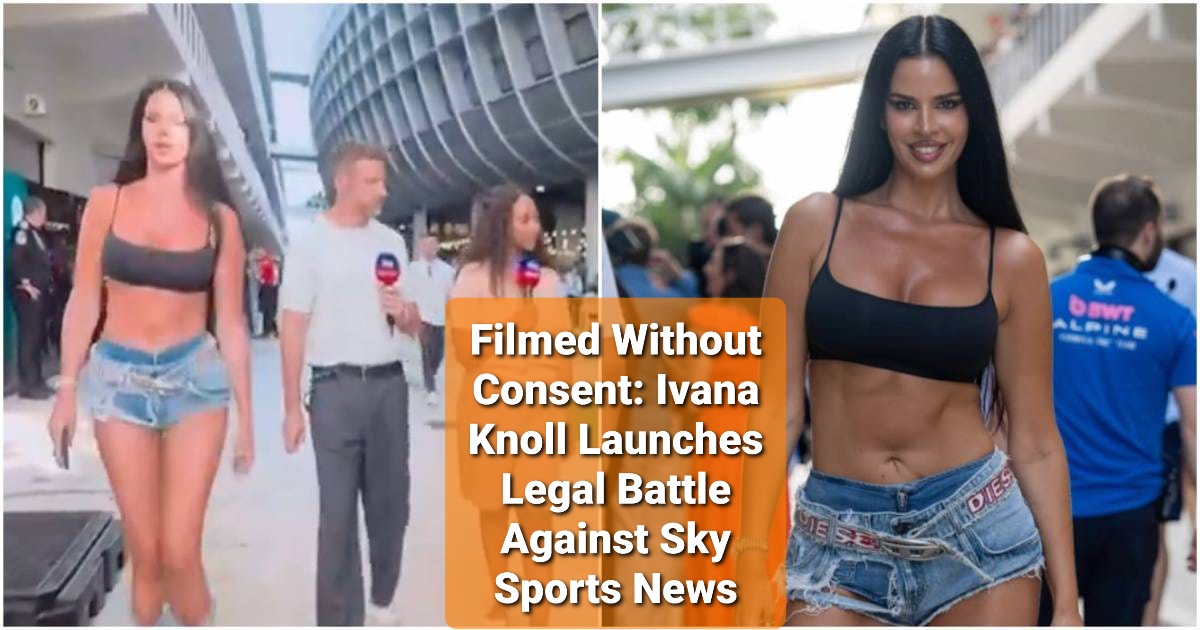
The fallout from the Miami Grand Prix continues to intensify, with Croatian model and influencer Ivana Knoll now reportedly launching legal action against Sky Sports over footage she claims was filmed and broadcast without her consent. The incident, which quickly went viral across social media platforms, has evolved from a light-hearted moment into a serious conversation about media boundaries, athlete environments, and personal rights within Formula 1’s global spotlight.
The controversy stems from a widely shared broadcast clip during Miami Grand Prix coverage, where a camera operator appeared to focus on Knoll as she walked through the paddock. While the moment was initially treated humorously online—with fans joking about the cameraman being “distracted”—the narrative has shifted significantly. Knoll’s response suggests the situation crossed a line, particularly given the scale of distribution and the commercial nature of the broadcast.
From a legal standpoint, this case could test how media rights intersect with public appearances at major sporting events like Formula 1. While paddocks are high-profile, semi-public environments, they are also controlled spaces with restricted access. This creates a grey area: attendees are visible, but not necessarily consenting to targeted filming or prolonged focus for broadcast purposes. If Knoll’s legal challenge gains traction, it could force broadcasters to reassess how they capture and use incidental footage—especially when individuals become the unintended focal point.
There’s also a broader reputational angle at play. Formula 1 has spent years refining its global image, positioning itself as a premium, modern sport with strong commercial appeal. Incidents like this, even if unintended, risk undermining that image by raising questions about professionalism and respect within its media ecosystem. For broadcasters like Sky Sports, which play a central role in shaping the sport’s narrative, the outcome of this dispute could influence future production guidelines and editorial judgment during live events.
Looking ahead, this situation could have lasting implications beyond one viral clip. If legal action proceeds and results in a ruling or settlement, we may see stricter broadcast protocols introduced across Formula 1 coverage—particularly around consent, framing, and the use of non-participant individuals in live feeds. In an era where viral moments can quickly spiral into legal battles, the Miami Grand Prix controversy may ultimately become a defining case in how modern sports balance entertainment, exposure, and personal rights.