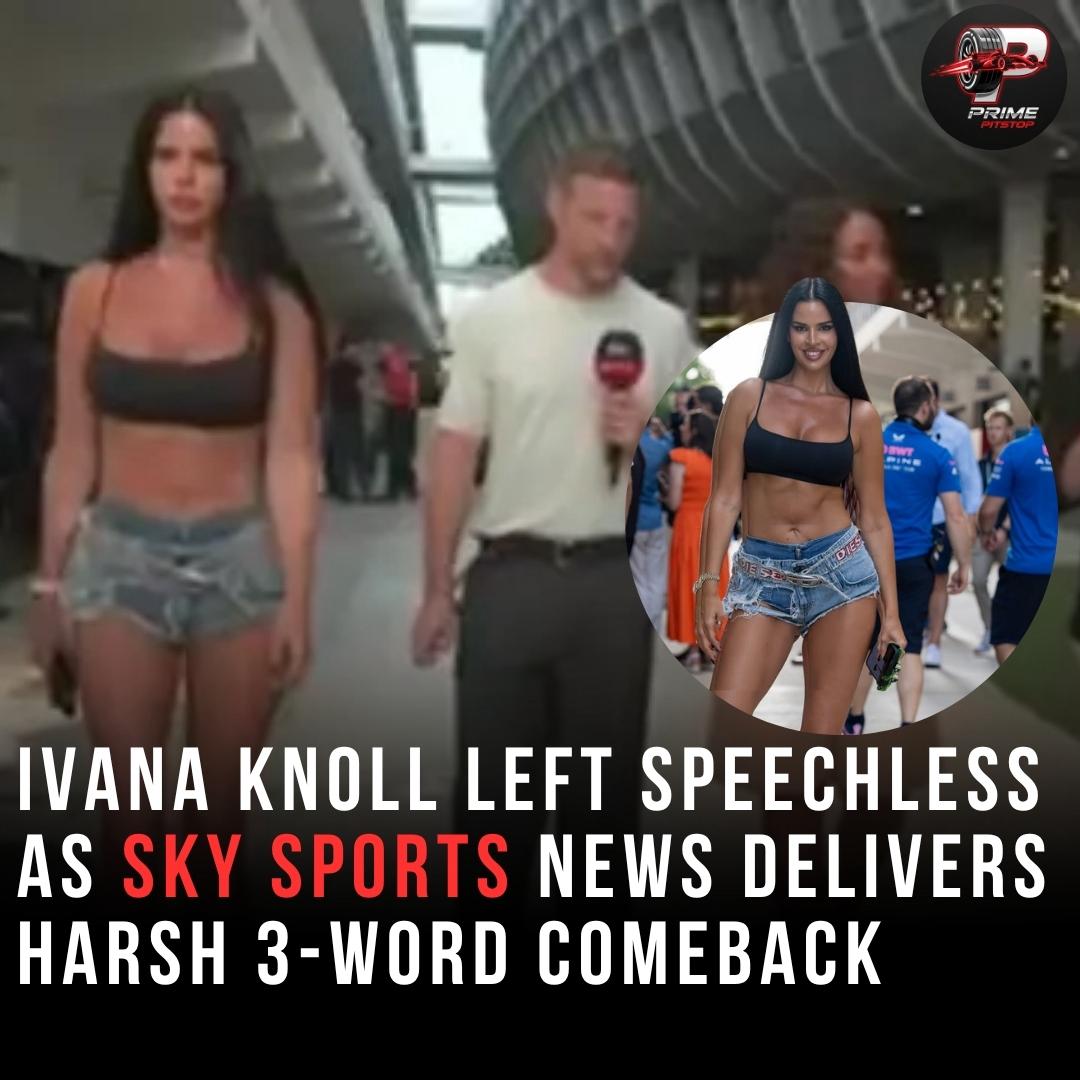
A fresh controversy has erupted following the Miami Grand Prix, with Ivana Knoll reportedly left speechless after Sky Sports issued a blunt response to her legal stance over being filmed without consent. The situation, which began as a viral paddock moment, has now escalated into a broader debate about media rights, privacy, and public exposure at global sporting events.
The incident traces back to a widely circulated broadcast clip where Knoll appeared on camera during live coverage, quickly becoming a trending topic across social media. While many viewers treated the moment as lighthearted, Knoll’s reaction suggests a deeper concern about how the footage was captured and distributed. Her position centers on consent, raising questions about whether individuals in public sporting environments have control over how their image is used—especially when it goes viral beyond the original broadcast.
Sky Sports, however, has reportedly pushed back firmly, emphasizing the nature of live event coverage. Their response—described as a sharp three-word comeback—reflects a long-standing industry stance: large-scale sporting events are public spaces where filming is standard practice. Broadcasters operate under strict rights agreements, and cameras routinely capture crowd reactions, paddock activity, and spontaneous moments without requiring individual permissions. This legal and operational framework places Knoll’s argument in a challenging position.
From an analytical standpoint, this clash highlights a growing tension in modern sports media. The rise of social platforms has amplified the reach of broadcast content far beyond its original intent, turning fleeting moments into global talking points. Figures like Knoll, who already command significant online followings, exist at the intersection of public persona and personal privacy—making disputes like this increasingly common in high-profile events such as Formula 1.
Looking ahead, the outcome of this situation could influence how broadcasters and event organizers approach fan and celebrity visibility. If Knoll’s challenge gains traction, it may prompt clearer guidelines or disclaimers around filming in public sporting venues. However, if the current norms hold, it will reinforce the idea that visibility comes with attendance at globally televised events. Either way, the controversy adds another layer to Formula 1’s evolving relationship with media, fame, and digital culture.