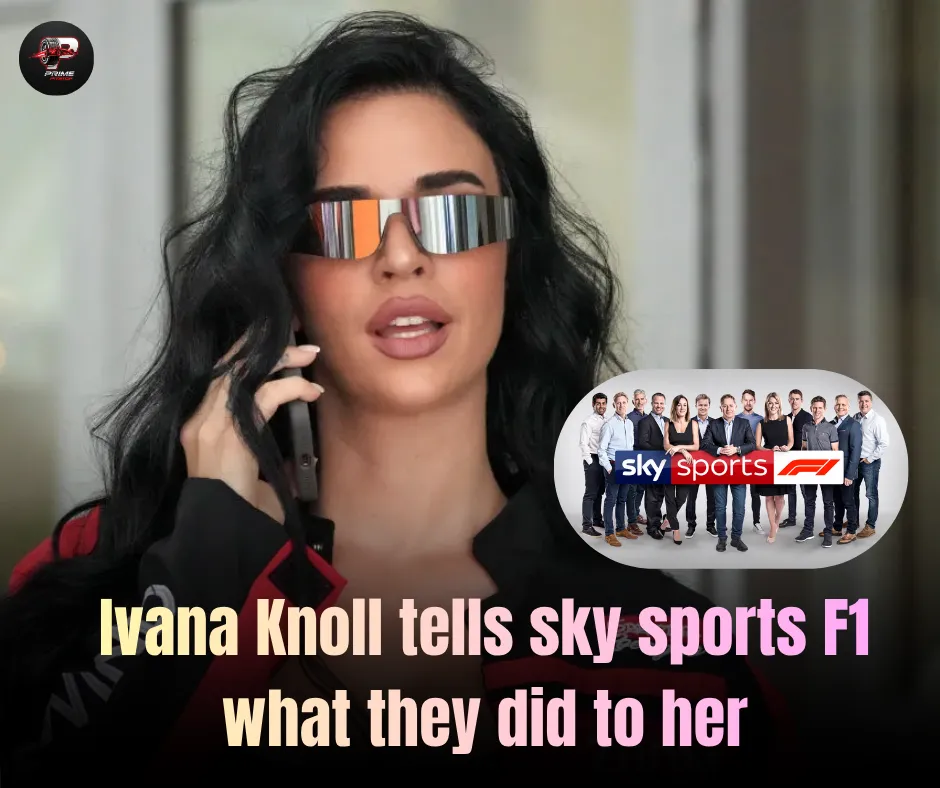
The aftermath of the Miami Grand Prix continues to spark debate, and this time the spotlight has shifted off the track. Ivana Knoll has made headlines after delivering a blunt response to her viral appearance during the race weekend, insisting that Sky Sports F1 “never gave me fame” and adding that “they’re not so great either.”
Knoll, who briefly became the focus of a live broadcast segment when a camera tracked her walk through the paddock, quickly went viral across social media platforms. While the moment was initially treated as humorous by viewers, it has since evolved into a broader conversation about media exposure, consent, and the role of broadcasters in shaping narratives around public figures at major sporting events.
Her comments suggest a clear attempt to reclaim control over that narrative. Knoll, already a well-established influencer with a significant global following, appears keen to emphasize that her popularity was not built on a fleeting television moment. Instead, her response positions the incident as incidental rather than career-defining—an important distinction in an era where viral clips can often overshadow long-term personal branding.
From an analytical perspective, this situation highlights the increasingly complex relationship between Formula 1’s media coverage and the personalities it features. As the sport grows—particularly in high-profile markets like the United States—broadcasts are blending racing action with lifestyle and celebrity culture. While this approach broadens appeal, it also raises questions about boundaries and representation, especially when individuals become unexpected focal points.
There is also a reputational element at play. Public criticism of a major broadcaster like Sky Sports F1 introduces tension that could influence how similar moments are handled in future broadcasts. Networks may become more cautious about prolonged focus on non-racing figures, particularly when such attention leads to backlash or controversy.
Looking ahead, this incident could mark a subtle shift in how Formula 1 balances entertainment with professionalism. Knoll’s reaction signals that not all viral exposure is welcomed, and as the sport continues to expand its global reach, managing these dynamics will be crucial. One thing is certain: the conversation sparked in Miami is far from over, and its ripple effects may shape how F1 presents itself both on and off the track.