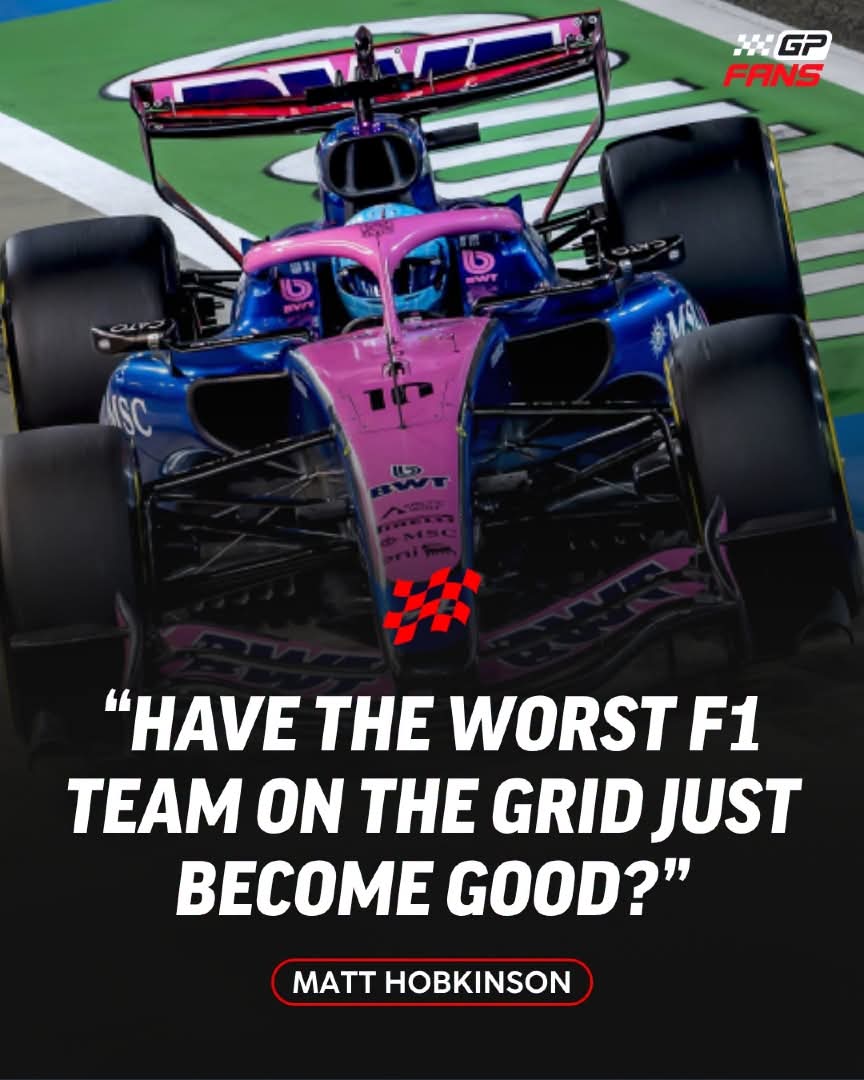
Alpine entered the 2026 Formula 1 season carrying the unwanted label of being the grid’s weakest team. Their 2025 campaign was a disaster from start to finish, yielding just 22 points and a last-place finish in the Constructors’ Championship. The situation was made even more painful by the fact that every single point came from Pierre Gasly, leaving the Frenchman to carry the entire team on his shoulders while Alpine struggled with performance, reliability, and consistency.
Fast forward five races into the 2026 season, and the narrative has changed dramatically. Alpine currently sits fifth in the Constructors’ Championship with 35 points, already surpassing last season’s total by 13 points. In a sport where progress often takes years, Alpine’s sudden rise has become one of the biggest surprises of the year. While they remain far from challenging the dominant forces of Mercedes, Ferrari, McLaren, and Red Bull, they have firmly established themselves as genuine midfield contenders.
A major factor behind Alpine’s resurgence has been the emergence of Franco Colapinto alongside Pierre Gasly. Last season, Gasly was effectively fighting a one-man battle, often extracting results that the car had no right to achieve. This year, however, Colapinto has provided the support every competitive team needs. Gasly has contributed 20 points while Colapinto has added 15, creating the type of balanced driver pairing that allows teams to climb the standings rather than simply survive. Colapinto’s impressive sixth-place finish in Canada, combined with Gasly’s eighth-place result, demonstrated that Alpine can now score heavily with both cars on a regular basis.
The improvement extends beyond the drivers. Alpine’s 2026 challenger appears significantly better suited to Formula 1’s new regulations. The car has shown stronger pace in qualifying, improved race consistency, and enough competitiveness to regularly challenge for Q3 appearances. Unlike last season, when the team frequently looked lost in the development race, Alpine now appears to have found a clearer direction. Their car no longer seems like an outsider merely participating in races—it is actively fighting for meaningful championship points.
Perhaps the most encouraging aspect of Alpine’s progress is that it does not appear to be purely the result of rivals underperforming. Aston Martin’s struggles have certainly opened opportunities in the midfield, but Alpine has earned its position through genuine improvement. They currently hold a comfortable advantage over several direct competitors and have become a team capable of capitalizing whenever the leading four teams encounter problems. That is often the hallmark of a strong midfield operation.
Looking ahead, the next phase of Alpine’s season could prove crucial. Reports suggest the team is preparing further upgrades that could strengthen its position even more. While Monaco’s unique layout is not always the best indicator of outright car performance, continued Q3 appearances and regular points finishes would reinforce the belief that this progress is sustainable. If Alpine can maintain development momentum throughout the year, they could emerge as the undisputed “best of the rest” behind Formula 1’s traditional powerhouses.
However, caution remains necessary. Alpine has generated optimism before, only to fall backward when expectations rose. The team’s recent history is filled with false dawns, management changes, and inconsistent performance swings. Sustaining success over an entire season requires stability, effective development, and strong operational execution—areas where Alpine has previously struggled.
Even so, the numbers are impossible to ignore. Fifth place in the Constructors’ Championship after five races, 35 points already on the board, and two drivers contributing consistently represent tangible evidence of progress. The team that finished last just one year ago now finds itself ahead of several established rivals and increasingly difficult to overlook.
Whether Alpine has truly become a “good” Formula 1 team will ultimately be determined over the remaining races of the season. But based on current form, they are no longer the grid’s weakest outfit. They have transformed from a team fighting merely to survive into one capable of influencing the midfield battle every weekend. That alone marks a remarkable turnaround—and if their development trajectory continues, Alpine may be only at the beginning of a much larger revival.