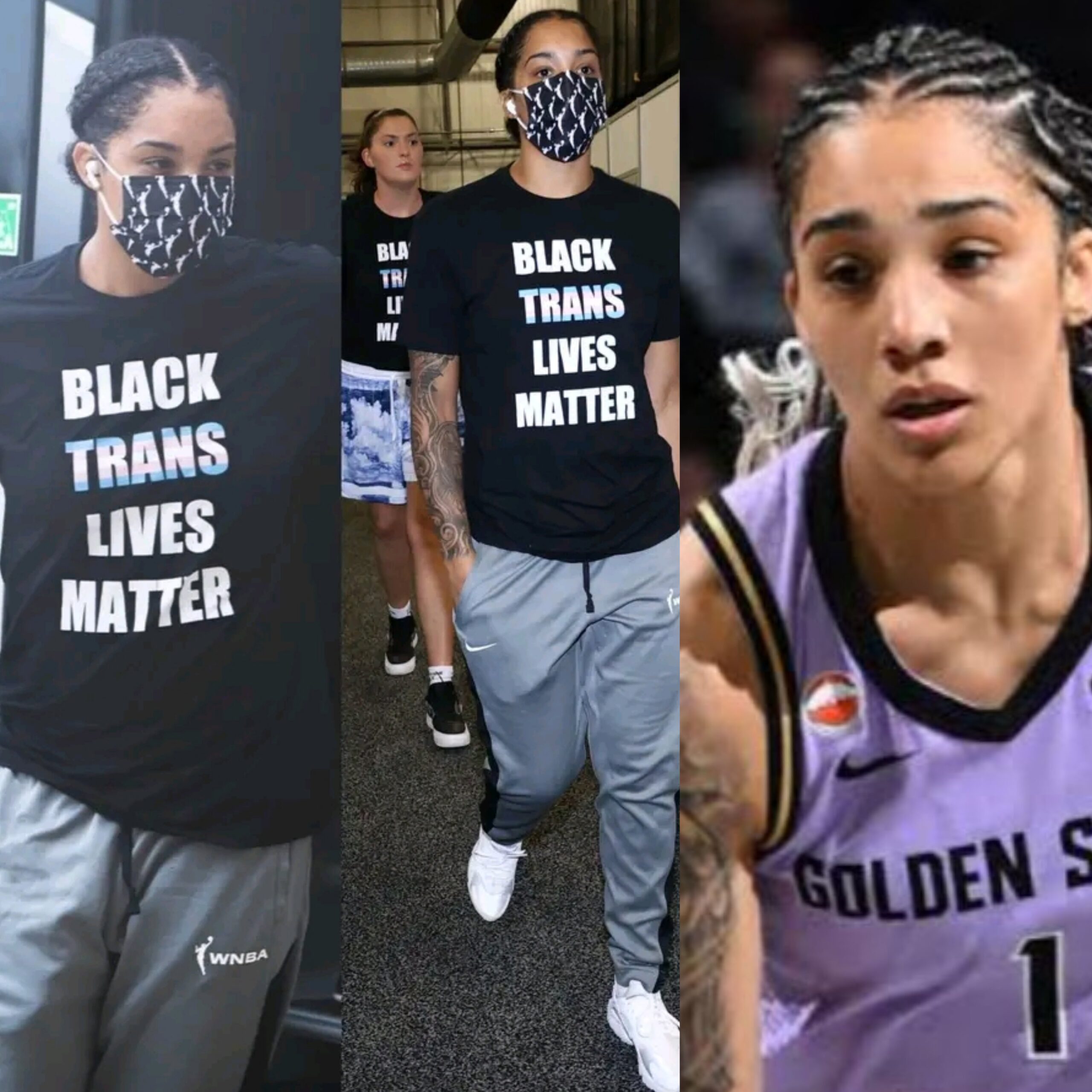
In a decision that has sent shockwaves through the WNBA and the broader sports world, the Golden State Valkyries have suspended star forward Gabby Williams for 10 games without pay. The penalty stems from her decision to wear a custom-made T-shirt during post-game media availability that read, in bold lettering, “Black Trans Lives Matter.”
The suspension, announced Friday afternoon by the league, cites a violation of the WNBA’s uniform and on-court attire policy, which strictly prohibits any political, social, or personal messaging not pre-approved by the league office. While the league has a long history of supporting social justice causes—including the recent “Reproductive Rights” and “Black Lives Matter” initiatives—Williams’ shirt, worn off-court but during a sanctioned media appearance, crossed a line that the league says was “clearly outlined in the collective bargaining agreement.”
Williams, a two-time All-Star and one of the Valkyries’ most vocal leaders, released a statement through her agent on Friday. “I wear my identity and my beliefs on my sleeve, literally,” she wrote. “Black trans women are disproportionately targeted by violence, and as a Black woman in a position of visibility, I refuse to stay silent. I accept the consequences of my convictions, but I do not accept a policy that silences the most vulnerable among us.”
The suspension has ignited a sharp divide. Valkyries head coach Natalie Nakase expressed disappointment over the league’s action, stating, “Gabby is a leader on and off the floor. We support her, and we hope the league will engage in a more nuanced conversation about personal expression.” However, team ownership issued a terse statement supporting the league’s decision, emphasizing the need for “consistent standards.”
The WNBA Players Association has announced it will file a grievance on Williams’ behalf, arguing that the policy violates free-expression provisions historically respected during non-game hours. Legal experts suggest the case could set a precedent for how leagues balance commercial uniformity with social advocacy.
As Williams sits out the next ten games—a substantial blow to the Valkyries’ playoff hopes—the incident has reignited a national debate: Where is the line between an athlete’s platform and a league’s brand? For Williams, the answer seems clear. For the league, the matter is far from closed.