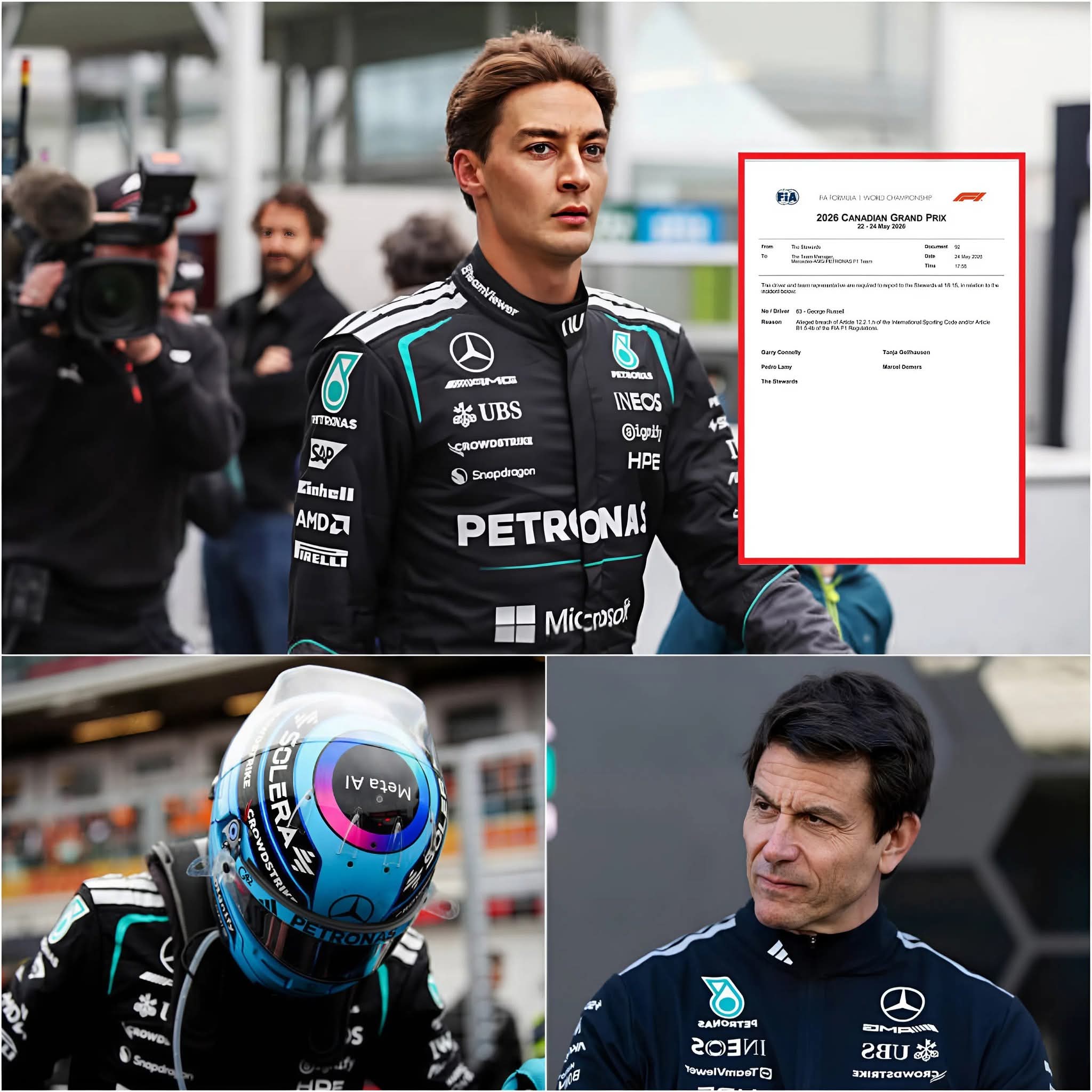
Formula 1 thrives on drama, rivalries, pressure, and emotional moments. But after the Canadian Grand Prix weekend, social media and several unofficial websites pushed sensational reports suggesting George Russell had launched an internal war against Mercedes and threatened to expose shocking secrets involving favoritism toward teammate Kimi Antonelli.
The story quickly spread across motorsport communities and triggered intense debate among fans. Claims of heated confrontations, hidden evidence, internal betrayal, and a supposed Mercedes “civil war” flooded online discussions. Yet beneath the eye-catching headlines sits an important question: how much of this story is actually supported by evidence?
Canadian Grand Prix Frustration Added Fuel To The Rumor Storm
The timing of the rumors was not random.
George Russell had every reason to feel devastated after Canada. The British driver looked set for one of the strongest weekends of his season. He had shown impressive pace, fought aggressively at the front, and was locked in an intense battle with teammate Kimi Antonelli.
Then disaster struck.
A sudden power-unit issue ended Russell’s race and instantly transformed what looked like a major championship opportunity into heartbreak. Losing valuable points under such circumstances naturally creates frustration, especially in a season where every result matters.
Television cameras captured Russell’s emotional reaction after retirement, and fans immediately began analyzing every gesture, facial expression, and interview clip. In Formula 1, emotions often become headlines within minutes.
That environment created ideal conditions for speculation to spread rapidly.
The George Russell–Kimi Antonelli Dynamic Is Under Heavy Scrutiny
There is no denying that Kimi Antonelli has become one of the biggest stories in Formula 1.
The young Italian’s rise has been rapid, and Mercedes has invested enormous attention in his development. Team principal Toto Wolff has repeatedly spoken positively about Antonelli’s long-term potential, leading many observers to label him as a future cornerstone of the team.
For Russell, however, this creates an interesting internal situation.
For years, Russell himself represented Mercedes’ future project. He endured difficult seasons and remained part of the team’s rebuilding process following the end of its dominant era.
Now the arrival of another highly rated young driver naturally changes internal dynamics.
That does not automatically indicate conflict or favoritism. Formula 1 teams routinely develop multiple talents simultaneously. However, whenever one driver begins attracting more headlines, fans often interpret it as evidence of changing power structures.
The Claims About Secret Threats Remain Unverified
The most dramatic element of the circulating reports involved claims that Russell supposedly warned Mercedes leadership that he possessed damaging internal information and would eventually reveal hidden truths.
At this stage, there is no confirmed evidence supporting those allegations.
No official statement from Russell has backed these claims. Mercedes has not acknowledged such incidents, and no verified audio, documents, or direct sources have publicly emerged.
This distinction matters.
Formula 1 is a sport where rumors travel at extraordinary speed. Team radio snippets, body language during interviews, and paddock whispers frequently become exaggerated narratives.
A frustrated expression after a difficult race weekend can rapidly evolve online into theories about major internal crises.
Why Mercedes Must Handle This Carefully
Even if many of the dramatic claims remain unsupported, Mercedes still faces a challenge.
Championship-caliber teams depend heavily on internal trust. History has shown that when relationships between drivers and management begin deteriorating, performance can suffer quickly.
Formula 1 has seen examples before where teammate rivalries evolved into major distractions that damaged campaigns.
Mercedes therefore faces a delicate balancing act:
Supporting Russell after a painful setback
Continuing Antonelli’s development
Maintaining equal treatment inside the garage
Preventing outside narratives from creating unnecessary pressure
The team will likely want to avoid allowing speculation to become larger than the racing itself.
Analysis: Pressure Creates Stories Before It Creates Answers
One reality of modern Formula 1 is that controversy generates enormous attention.
Fans no longer watch only races; they watch interviews, social media posts, paddock reactions, and every visible interaction between drivers and teams. Every emotional moment becomes material for endless interpretation.
Russell’s retirement disappointment combined with Antonelli’s growing success created a perfect recipe for speculation.
But there is a major difference between tension and evidence.
Competitive frustration is normal inside elite motorsport environments. Drivers fighting for championships are expected to care deeply about results.
Prediction: Mercedes Could Face Bigger Questions Later In The Season
Even if the explosive rumors fade away, Mercedes may eventually face genuine questions regarding long-term team structure.
If Antonelli continues delivering major performances and Russell remains in title contention, difficult decisions could emerge naturally.
Who becomes the long-term centerpiece?
Can both drivers coexist comfortably if championship stakes rise?
Will Mercedes eventually need to introduce stronger team management to avoid internal friction?
Those questions may become some of Formula 1’s biggest talking points later this season.
For now, however, the evidence points toward frustration after a difficult race weekend rather than a confirmed internal war.
And in Formula 1, those two things are very different.