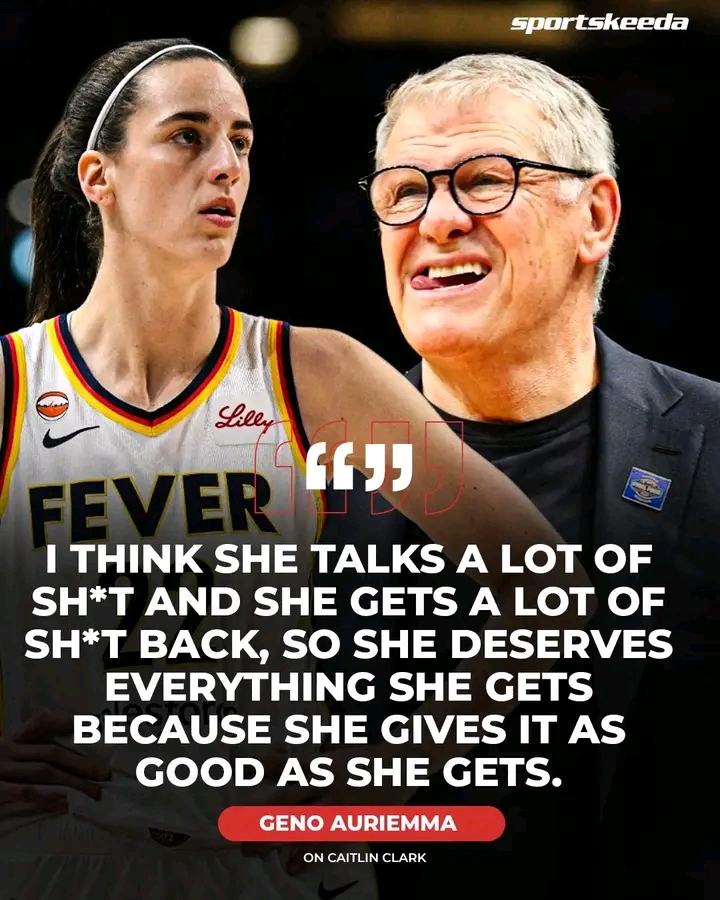
In a fiery take that’s sending shockwaves through the WNBA world, legendary UConn coach Geno Auriemma didn’t hold back when addressing the latest on-court drama involving Indiana Fever superstar Caitlin Clark and Phoenix Mercury veteran Alyssa Thomas. The incident, which occurred during a heated matchup, saw Thomas deliver what many viewed as reckless contact—including a fist to Clark’s throat area and a knee in a scramble on the floor—leading to a retroactive flagrant foul, a one-game suspension for Thomas, and a storm of online backlash, including death threats directed at the Mercury forward.
Auriemma, known for his no-nonsense style and deep knowledge of the women’s game, weighed in bluntly. While acknowledging the physical toll on Clark, the Hall of Fame coach pointed to Clark’s own competitive fire as part of the equation. “I think she talks a lot of s—, and she gets a lot of s— back. She deserves everything she gets because she gives it as good as she gets it,” Auriemma stated in comments resurfacing amid the controversy. He emphasized that while rookies face hardships, Clark’s trash-talking style invites physical responses in a league known for its grit.
The play in question unfolded in the second quarter of a tight game, with Clark on the ground after a loose ball. Thomas, battling for position, made contact that officials initially missed but the league later reviewed and punished. Clark, dealing with back issues that sidelined her shortly after, has been at the center of targeting debates since entering the league. Thomas later described the contact as unintentional and expressed frustration over the league’s handling and the personal abuse she received, including racial slurs.
Auriemma’s perspective adds nuance to the narrative. Earlier, he had defended Clark as being “targeted” due to her massive hype and star power, comparing it to high-profile rookies drawing extra physical attention. Yet in this instance, he appeared to push back against portraying Clark solely as a victim, highlighting her physical limitations and quickness in navigating the WNBA’s physical brand of play. “She’s just not built for the physicality of this league,” he once noted, a remark that has aged in light of ongoing incidents.
Fans and analysts are divided. Some praise Auriemma for his honesty, arguing the league’s physicality is “not conducive to great basketball” and that stars like Clark must adapt. Others see it as harsh criticism of the player who’s transformed the sport’s visibility. Clark has elevated attendance and viewership dramatically, but the scrutiny—and physical play—has intensified.
As the WNBA grapples with protecting its biggest draw while maintaining competitive integrity, Auriemma’s blast serves as a reality check: superstar status brings both glory and battles. Clark, ever resilient, continues to shine, but the coach’s words underscore that in this league, you reap what you sow on the court. The question remains—will the league step up to shield its phenom, or will the hard knocks define her rookie journey?