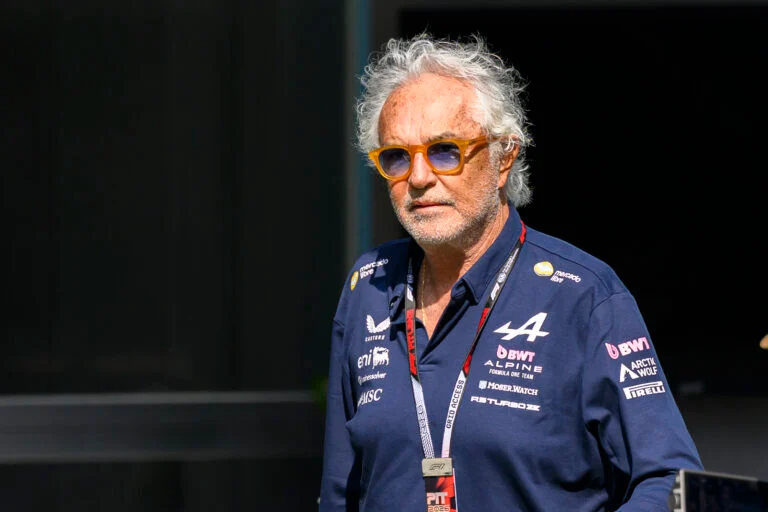
The internal dynamics at Alpine F1 Team have once again come under the spotlight following fresh reports that Flavio Briatore played a decisive role in shaping the team’s recent driver strategy. According to paddock sources, Briatore allegedly pushed the French outfit to consider replacing rising talent Franco Colapinto just before the team moved to extend his contract—a twist that has sparked intrigue across the Formula One grid.
 The situation appears contradictory on the surface. Colapinto, widely regarded as one of the most promising young drivers to emerge from South America in recent years, had been building momentum within Alpine’s development system. His performances in junior categories, coupled with his adaptability during simulator and test sessions, had reportedly impressed engineers and senior management alike. Yet behind the scenes, there were evidently differing opinions about his readiness for a long-term commitment.
Briatore’s involvement adds another layer of complexity. The former team boss, known for his influential roles at both Benetton Formula and Renault F1 Team, has never been shy about making bold decisions when it comes to driver line-ups. His reputation was built on spotting talent early—but also on making ruthless calls when he felt performance targets were not being met. Sources suggest that his recent input at Alpine echoed that same philosophy.
Reports indicate that Briatore encouraged the team to explore alternative options, possibly assessing drivers with more immediate experience or commercial value. In a highly competitive environment like Formula One, where results can dictate financial backing and long-term stability, such considerations are far from unusual. However, the timing of his push—coming just before Colapinto’s contract extension—has raised eyebrows.
Despite the alleged pressure, Alpine ultimately chose to reaffirm their faith in Colapinto by extending his deal. This decision signals a commitment to long-term development rather than short-term gains. It also reflects the influence of other key figures within the team who reportedly backed the Argentine driver, emphasizing his growth trajectory and potential to become a future star.
For Colapinto, the situation presents both a challenge and an opportunity. On one hand, the knowledge that his position was under scrutiny could serve as motivation to elevate his performances even further. On the other, it highlights the precarious nature of a career in Formula One, where even promising drivers must continually prove their worth amid intense competition and political maneuvering.
Within Alpine, the episode may point to broader strategic tensions. The team has been striving to re-establish itself as a consistent front-runner, yet progress has been uneven. Decisions regarding drivers are often a reflection of larger questions about direction, leadership, and ambition. Briatore’s reported intervention suggests that external voices still carry significant weight in shaping those decisions.
Looking ahead, all eyes will be on how Colapinto responds both on and off the track. If he can translate his potential into consistent results, the debate surrounding his place in the team could quickly fade. Conversely, any struggles may reignite discussions about whether Alpine should have pursued a different path.
Ultimately, this unfolding story underscores the high-stakes nature of Formula One, where talent, timing, and internal politics intersect. The involvement of a figure like Briatore only amplifies the drama, reminding fans that in this sport, decisions are rarely straightforward—and the consequences can shape careers and teams for years to come.