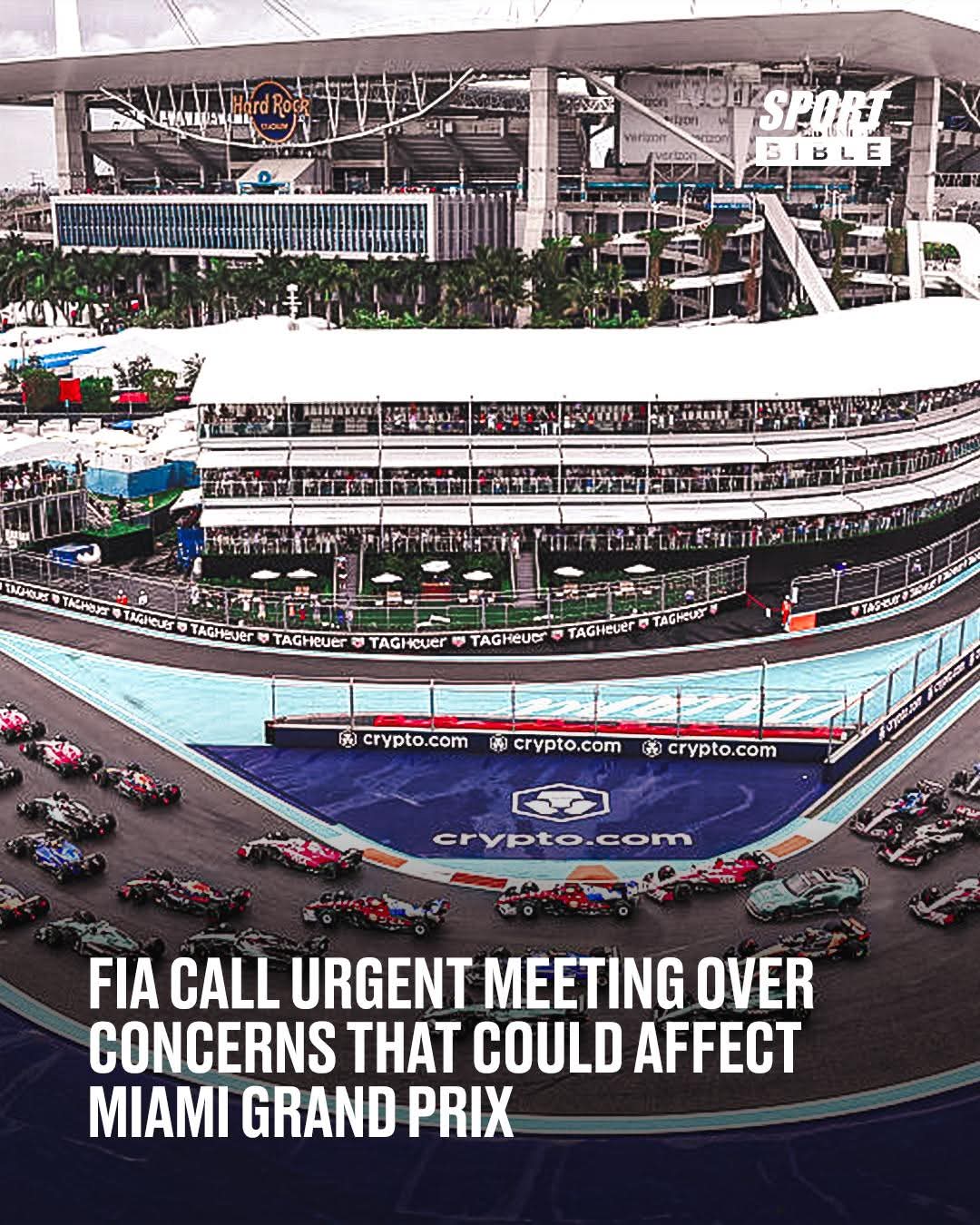
Formula 1 is facing growing uncertainty ahead of the Miami Grand Prix, with the FIA calling an urgent meeting following qualifying to address escalating concerns over extreme weather. With thunderstorms now forecast to hit during race conditions, officials are under pressure to ensure both safety and continuity in what could become one of the most disrupted race weekends of the 2026 season.
The race, set to take place at the Miami International Autodrome surrounding the Hard Rock Stadium, had already been under scrutiny due to shifting weather patterns. Initial forecasts suggested storms would arrive after the race, but updated projections indicate lightning and heavy rain could strike during the event itself. This development has forced the FIA to reassess its operational plans in real time.
Safety protocols in motorsport leave little room for risk when it comes to lightning. Standard procedures require a minimum 30-minute delay after the last lightning strike before racing can resume, while spectators must be evacuated and critical services such as medical helicopters grounded. If conditions worsen mid-race, a red flag scenario would be triggered, bringing the race to an immediate halt and sending drivers back to the pit lane until it is deemed safe to continue.
One of the key topics in the FIA’s emergency discussions is the possibility of adjusting race timings. While the Grand Prix is currently scheduled for a 16:00 local start, flexibility may be required to avoid the worst of the weather. However, such decisions are complex, involving coordination between race officials, meteorological experts, and circuit safety teams. Any delay or rescheduling could have ripple effects on broadcasting, logistics, and fan experience.
From a competitive standpoint, unpredictable weather introduces a major wildcard. Wet conditions often lead to chaotic races, unexpected results, and bold strategic gambles. Drivers like Max Verstappen and Lando Norris could benefit from such unpredictability, while others may struggle to adapt. In a season already shaped by disruptions, another weather-affected race could significantly influence championship momentum.
Looking ahead, this situation highlights a broader challenge for Formula 1 as it continues to expand into regions with volatile climates. The need for adaptable scheduling, improved forecasting integration, and enhanced safety infrastructure is becoming increasingly urgent. For now, all eyes remain on the FIA’s next move—and the skies above Miami—as the sport braces for a potentially dramatic and unpredictable Grand Prix.