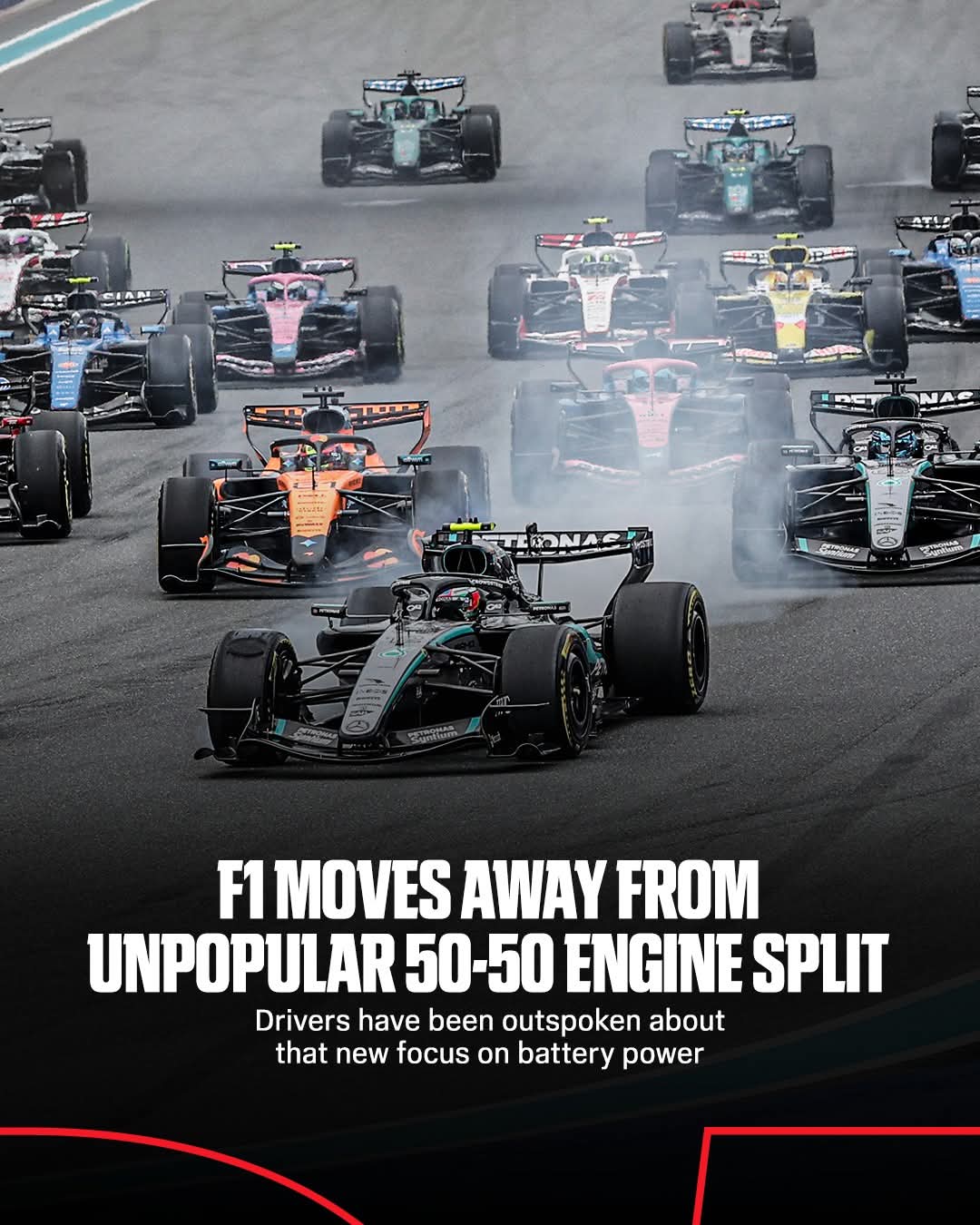
Formula 1 has officially taken another major step toward reshaping the future of the sport after agreeing in principle to alter the controversial engine regulations introduced for the 2026 era. Following months of criticism from drivers, teams, and fans, Formula 1 bosses and manufacturers have now moved to reduce the heavy dependence on electrical power by adjusting the engine balance toward internal combustion from the 2027 season onward.
The current regulations, which introduced a near 50-50 split between electrical energy and traditional combustion power, have sparked widespread frustration throughout the paddock. Drivers have repeatedly complained that the cars no longer allow them to push flat-out consistently, with excessive battery harvesting and energy management becoming a dominant feature of races and qualifying sessions. The FIA’s latest proposal aims to ease those concerns by shifting the balance closer to a 60-40 split in favour of the internal combustion engine (ICE), while still maintaining Formula 1’s commitment to hybrid technology and sustainable innovation.
Several high-profile drivers have openly criticized the current generation of cars. Max Verstappen compared the racing style to “Mario Kart,” arguing that battery-assisted overtakes feel artificial and “anti-racing.” Fernando Alonso went even further by sarcastically referring to Formula 1 as the “battery world championship.” Even reigning world champion Lando Norris admitted during the Miami Grand Prix weekend that many drivers still struggle to enjoy the current package despite recent technical tweaks aimed at improving racing quality.
The Miami Grand Prix marked the first race weekend where smaller modifications to energy deployment systems were introduced, but insiders within the sport acknowledged that those changes only provided limited improvement. Miami’s circuit layout naturally favors energy recovery, meaning the true test for Formula 1’s revised systems may come at power-sensitive tracks later in the calendar, including Canada, Monza, and Spa. The FIA’s willingness to already discuss further changes for 2027 shows how seriously concerns inside the paddock are being taken.
Formula 1’s leadership now finds itself trying to balance two very different priorities. On one side is the push for technological relevance, sustainability, and electrification — key factors that attracted major manufacturers like Audi and strengthened commitments from Mercedes, Honda, and Red Bull Powertrains. On the other side is the growing fear that the sport could lose part of its traditional identity if racing becomes too dependent on battery management instead of outright speed and driver aggression.
The proposed 2027 adjustments are therefore being viewed as a compromise rather than a complete reversal. Formula 1 is not abandoning hybrid technology, but it is clearly acknowledging that the current balance may have gone too far toward electrification. By increasing the importance of the combustion engine again, the FIA hopes to restore more natural wheel-to-wheel racing while still keeping manufacturers satisfied with the sport’s modern direction.
There is also a competitive factor behind the discussions. Teams have already invested enormous resources into developing the current power units, meaning any major change carries financial and technical consequences. Manufacturers will now need to reassess fuel-flow limits, battery deployment strategies, and overall engine architecture before the final regulations are approved by the World Motorsport Council later this year. That process could create another intense political battle behind the scenes as different manufacturers push for regulations that best suit their existing development programs.
Looking ahead, these changes could dramatically influence Formula 1’s competitive order over the next several seasons. Teams that designed their cars heavily around electrical efficiency may need to rethink their long-term concepts, while manufacturers with stronger combustion-engine performance could gain a major advantage. More importantly, Formula 1 appears determined to avoid alienating its drivers and fanbase at a time when the sport’s global popularity continues to grow rapidly. If the FIA successfully finds the right balance between innovation and pure racing, the 2027 rule changes could become one of the most important turning points of Formula 1’s modern era.