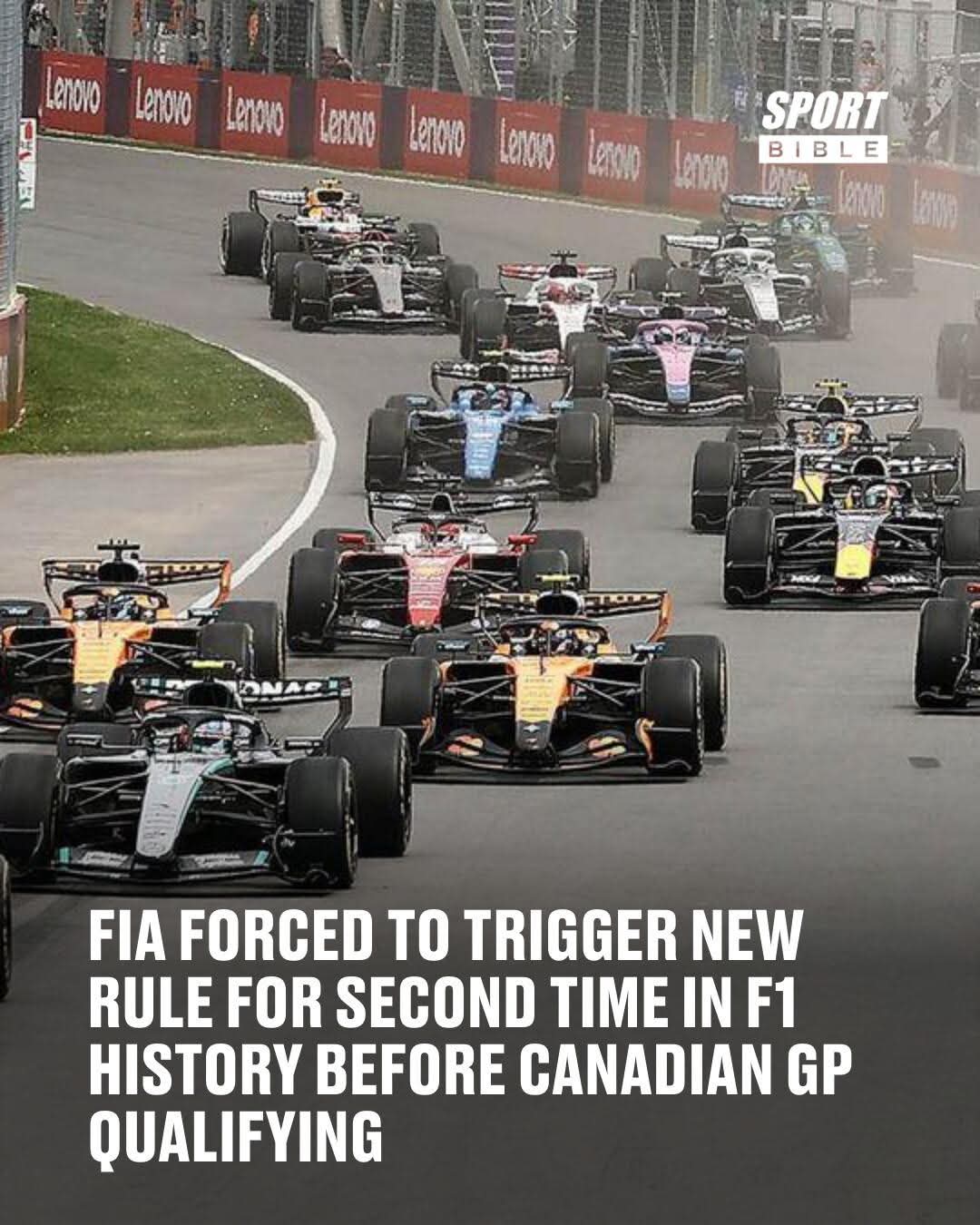
Formula 1 witnessed another major development ahead of the Canadian Grand Prix after the FIA officially activated one of its newest regulations for only the second time in history. Hours before qualifying began in Montreal, the governing body issued a statement confirming that a “rain hazard” had been declared due to weather forecasts predicting a significant chance of precipitation during the race weekend. While it may appear to be a minor procedural update on the surface, the decision could carry serious consequences for teams fighting for grid position and championship momentum.
The announcement arrived shortly after a dramatic Sprint race where Mercedes enjoyed a strong afternoon. George Russell claimed victory ahead of McLaren’s Lando Norris and teammate Kimi Antonelli, although much of the conversation centered around the controversial wheel-to-wheel clash between the Mercedes drivers. However, as attention shifted toward the main qualifying session, the weather quickly became the dominant storyline. In modern Formula 1, rapidly changing conditions can transform an entire weekend in a matter of minutes.
The rain hazard regulation was introduced as part of Formula 1’s wider 2026 rule changes and was designed to solve a long-standing strategic problem faced by teams. Under standard parc fermé regulations, teams are heavily restricted from making setup adjustments once qualifying begins. Historically, this created major headaches during weekends with unpredictable weather because teams often had to gamble between configuring the car for wet conditions or dry conditions, with one wrong decision potentially destroying an entire race weekend.
The newly introduced system changes that approach significantly. If the official weather service predicts more than a 40 percent probability of rain, teams are given greater flexibility to modify certain elements of their cars despite parc fermé restrictions. That flexibility could prove critical because modern Formula 1 machinery operates within incredibly narrow performance windows. Small adjustments in ride height, aerodynamic balance, or suspension behavior can dramatically influence tire performance and overall pace.
From a technical perspective, one of the biggest advantages involves protecting the underfloor plank, an area that has become increasingly important under current regulations. Excessive wear on the plank can result in immediate post-race disqualification, something teams desperately want to avoid. By allowing setup adjustments in anticipated wet conditions, teams can raise ride heights and adapt aerodynamic settings without compromising competitiveness or risking technical penalties.
The first use of this regulation came during the Miami Grand Prix weekend earlier this season when forecasts predicted severe thunderstorms and heavy rain. Ironically, those conditions never fully arrived, leaving teams operating under mostly stable weather despite preparing for chaos. Montreal presents a different challenge entirely. The Circuit Gilles Villeneuve has developed a reputation over the years for delivering unpredictable weather patterns, and sudden rain showers have repeatedly produced some of Formula 1’s most memorable races.
Looking ahead, the activation of the rule could play directly into the hands of teams and drivers capable of adapting quickly. Drivers like Max Verstappen, George Russell, and Lando Norris have repeatedly shown their ability to thrive in mixed conditions, while strategic teams can gain enormous advantages through faster decision-making. In championship battles where margins continue shrinking, even small regulatory changes may influence race outcomes.
The FIA originally planned to trial the rain hazard rule during the opening nine races of the season before evaluating its effectiveness. If weekends like Canada continue to demonstrate its value, the rule could become a permanent feature moving forward. Formula 1 has always evolved through balancing innovation, safety, and competition, and this latest adjustment could become one of the most influential changes of the current era. As qualifying approaches in Montreal, teams now face another challenge beyond outright speed — adapting faster than everyone else when uncertainty arrives.