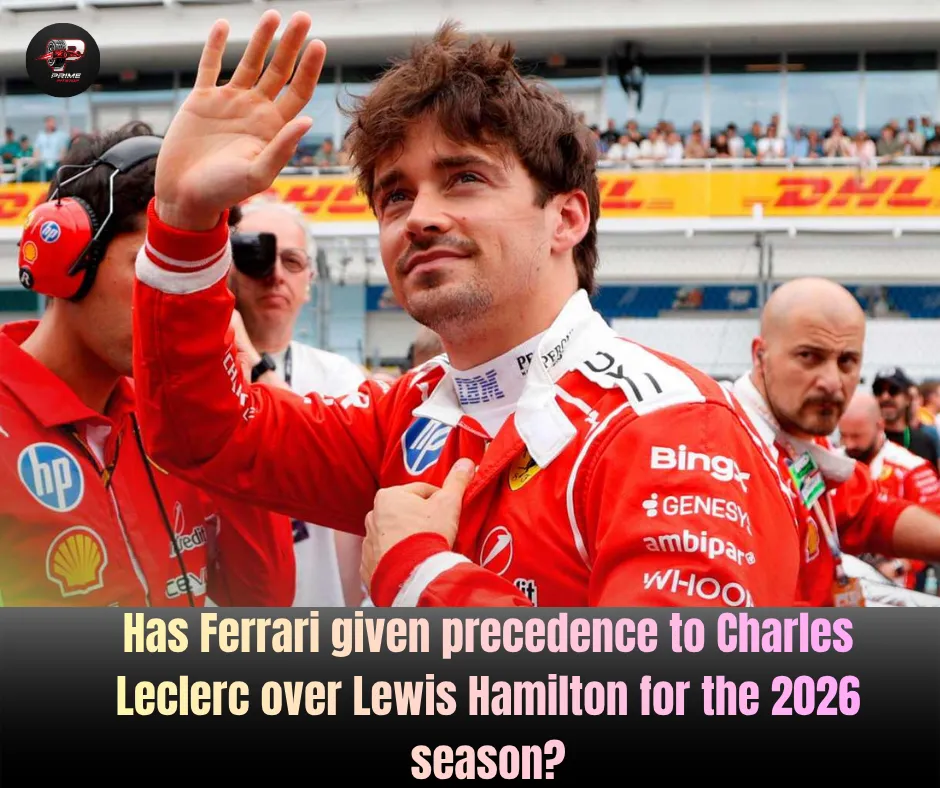
The 2026 Formula 1 season has ignited a growing debate within the paddock and among fans: has Charles Leclerc been given precedence over Lewis Hamilton at Ferrari? While no official confirmation suggests a structured hierarchy, recent races—especially the Miami Grand Prix—have fueled speculation that the Scuderia may be leaning more toward its long-term driver.
Ferrari entered the season with enormous expectations after pairing Hamilton’s experience with Leclerc’s raw pace. On paper, the combination promised a balanced assault on both championships. However, early race dynamics suggest a subtle tilt. Leclerc has often been in stronger track positions, particularly in qualifying and opening stints, allowing him to dictate Ferrari’s race strategy more frequently. In Miami, for instance, he led early and was firmly in podium contention before his costly late-race error unraveled everything.
Hamilton’s situation paints a different picture. Despite flashes of competitiveness, his races have been compromised by incidents, car balance issues, and damage—such as the Miami Grand Prix, where early contact left him struggling with significant downforce loss. While Ferrari has not deliberately disadvantaged him, the combination of misfortune and setup inconsistencies has limited his ability to match Leclerc’s influence within the team’s race execution.
From a strategic standpoint, Ferrari’s approach appears less about favoritism and more about momentum. Leclerc, already embedded within the team’s structure and development philosophy, naturally becomes the reference point when performance margins are tight. In contrast, Hamilton is still adapting to Ferrari’s systems, car characteristics, and operational rhythm. In Formula 1, even marginal differences in familiarity can translate into noticeable gaps on track.
There’s also a broader, long-term lens to consider. At 28, Leclerc represents Ferrari’s future, while Hamilton—despite his legendary status—is in the latter stage of his career. Teams often, consciously or not, invest more heavily in drivers they see as long-term title leaders. This doesn’t necessarily mean sidelining the other driver, but it can influence decision-making in split-second strategic calls, upgrades, and race priorities.
Looking ahead, this perceived imbalance could become a defining storyline of the 2026 season. If Ferrari resolves its performance inconsistencies and closes the gap to leaders like Mercedes, internal competition may intensify. Hamilton will be eager to assert himself and prove he remains a championship contender, while Leclerc will aim to solidify his position as Ferrari’s cornerstone.
Ultimately, the question isn’t just whether Ferrari has favored Leclerc—it’s whether Hamilton can shift that narrative through results. If he begins to consistently outperform or match his teammate, the team’s internal dynamics could evolve rapidly. Until then, the perception of Leclerc as Ferrari’s focal point will continue to shape discussions around the Scuderia’s championship ambitions.