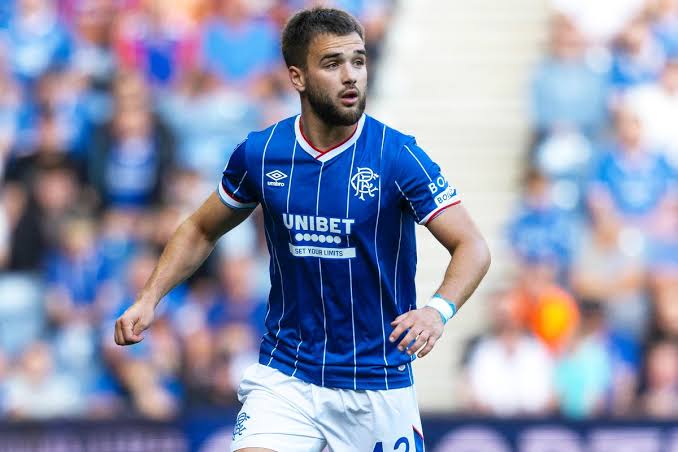
Nico Raskin’s situation at Rangers right now is one of the most fascinating subplots of the entire summer, and if you’ve been trying to keep up with the twists and turns, it’s genuinely understandable if you’ve lost track. One minute he’s being talked about as good as gone, the next he’s wearing the captain’s armband in a five-goal thrashing. So let’s actually untangle what’s going on here, because the real story is more interesting than any single headline can capture, and it says a lot about where Rangers are right now as a club trying to balance ambition, finances, and a genuinely talented player who everyone knows is probably not long for Ibrox.
Start with the basics. Raskin arrived at Rangers from Standard Liege back in 2023, and by last season he’d established himself as arguably the best player in the building, a box-to-box midfielder with the kind of quality that regularly drew eyes from clubs well outside Scotland. That form carried him into the Belgium squad, and then, crucially, into the 2026 World Cup, where his performances on the biggest stage in football did exactly what everyone at Ibrox feared and hoped for in equal measure — it made the rest of Europe sit up and take notice. It felt inevitable that the Belgium international would leave Rangers in this transfer window after impressing at the World Cup, and that inevitability has hung over the entire summer like a cloud that just won’t clear.
And yet here we are, deep into August, and Raskin is still a Rangers player. Despite being heavily linked with an exit, he’s continued to be part of Derek McInnes’s plans, starting in the 2-1 loss to Hibernian, and he’s featured prominently since. That’s the central tension of this whole saga — everyone, including seemingly the club itself, has operated on the assumption he’ll be gone before the window shuts, and yet the deal that actually gets it done hasn’t materialised. Rangers Review journalist Chris Jack said on the 13th of August that he’d expected Raskin not to be a Rangers player by this stage of the season, but that there was nothing concrete suggesting a move was imminent. When your own club’s most plugged-in reporters are surprised he’s still around, you know the situation has taken longer to resolve than anyone at Ibrox originally planned for.
Money is obviously a huge part of why this has dragged on. Rangers’ ownership wants more than £20million for Raskin’s sale, and that’s not a figure being pulled out of thin air — it reflects both his quality and the leverage a World Cup midfielder with two years left on his contract gives the club at the negotiating table. But wanting £20 million and getting £20 million are two very different things, especially in a market where, as one report from just a couple of days ago put it, a number of clubs across Europe have been keeping a close eye on his situation but could only be tempted to move if they believe it can be done for a reasonable fee. That’s the classic transfer standoff — Rangers know what they think he’s worth, suitors think they can get him cheaper, and nobody wants to blink first, especially not this close to deadline day when leverage can shift dramatically depending on who needs a deal done more.
The list of clubs credited with interest is genuinely eye-catching too, and it tells you everything about how highly Raskin is rated outside of Scotland. European clubs including Porto, Fenerbahce and Atalanta have all been linked, alongside a host of Premier League clubs monitoring his situation. That’s not a list of also-rans. That’s a spread of clubs across three or four different major footballing markets, all watching the same player, all presumably waiting to see whether Rangers’ valuation softens as the window edges closer to its close. And there are signs that’s exactly what might happen. There’s a suggestion Rangers may have to slash their asking price in these closing stages, with the thinking being that if they don’t compromise now, they risk losing him for far less value next year as his contract situation becomes more pressing. That’s the classic asset-management dilemma any selling club faces with a player entering the business end of his deal — sell now for a smaller fee with certainty, or hold and risk a much bigger financial hit down the line if the player’s value depreciates or he simply runs his contract down.
Here’s where it gets tactically and financially complicated for McInnes, though, because Rangers haven’t exactly been sitting on their hands waiting to see what happens with Raskin. The club appears to have been preparing for his eventual departure by bringing in Dan Neil, Cammy Devlin and Vanja Dragojevic to strengthen the midfield, and with all of those bodies now in the building, McInnes arguably finds himself with a squad that’s a little top-heavy in that area of the pitch, at least for as long as Raskin himself remains part of the group. It’s a genuinely tricky balancing act for a manager: you can’t simply not play arguably your most talented midfielder just because he might leave in a fortnight, but you also can’t build your entire system around a player who could vanish from the group at any point between now and the closing whistle of the transfer window.
And that brings us to what might be the single most quotable, most talked-about moment in this entire saga — McInnes’s now well-known comments on Raskin as a “flight risk.” Asked directly about the situation, McInnes didn’t dodge the question or give the sort of diplomatic non-answer managers usually reach for when a prized asset’s future is uncertain. Instead, he was candid, acknowledging that his eyes are wide open to the reality that every player has his price and his moment, that Raskin has been an absolute pleasure to work with since he arrived, and that there have been plenty of honest, direct conversations between the two of them about exactly where things stand. That kind of transparency is rare from a manager in his position, and it’s exactly the sort of comment that gets picked up, repeated, and turned into headlines — because it confirms, in the manager’s own words, what everyone already suspected: Rangers know he’s going, they just don’t know when, and they’re being upfront with their supporters about that uncertainty rather than pretending it doesn’t exist.
It’s also worth remembering that this isn’t actually the first time Raskin has lived through a version of this exact storyline at Ibrox. Under the previous regime, well before McInnes arrived, Raskin went through a genuinely difficult stretch where he fell out of favour entirely, dropped from matchday squads including an Old Firm derby, with the manager at the time suggesting the decision had the backing of senior players in the group and accusing Raskin of having his head turned by transfer speculation. Raskin himself later opened up about how tough that period was, admitting it was a genuinely difficult time for him both physically and mentally, that he felt a version of events had been unfairly pinned on him that didn’t reflect what was actually happening behind the scenes, and that he’d had to stay quiet and simply focus on working his way back into the team rather than fighting his corner publicly. It’s a useful reminder that the emotional weight of constant transfer speculation isn’t just a storyline for pundits and headline writers — it’s something the player has had to live through before, and by his own admission it took a real toll on him the last time round.
That history makes the current chapter under McInnes feel notably different in tone. Whereas the Martin era saw Raskin actively frozen out of matchday squads at the peak of the uncertainty, McInnes has gone the opposite direction — starting him regularly, handing him the captaincy in one of the best attacking performances of the season so far, and speaking about him with what sounds like genuine warmth and respect rather than frustration. In earlier comments about Raskin, McInnes described him as a player he’d always admired and always wanted to manage, the kind of player certain managers naturally gravitate toward, someone with a level of standard that stands out even in a talented dressing room. That’s not the language of a manager trying to move a problem player on as quickly as possible — it’s the language of someone who’d genuinely like to keep hold of him if the financial reality allowed for it, but who understands the business of football well enough to know that isn’t realistic given the money being talked about and the interest circling from four or five leagues at once.
There’s a broader context worth sitting with here too, because Raskin’s situation isn’t happening in isolation — it’s tangled up with Rangers’ wider financial picture this summer. The scale of investment already made in the midfield, combined with the financial pressures the club has faced following their struggles in Europe, means player sales are likely to play a real role in funding the rest of this window’s business. Raskin, as the most saleable, most in-demand asset in the squad, sits right at the centre of that equation whether he likes it or not. Every conversation about signing a new striker to replace the injured Youssef Chermiti, every conversation about further defensive reinforcements, arguably runs through what happens with Raskin’s future, because the money his sale generates could be the difference between McInnes getting the two extra attacking bodies he’s said he’s still chasing, or having to make do with what’s already in the building.
So where does that leave things as the window edges toward its close? Genuinely unresolved, and that’s not a cop-out answer — it’s the honest state of play. Raskin remains a Rangers player, he remains in and around the first team, he’s captained the side in their best performance of the season, and McInnes continues to speak about him like a manager who rates him extremely highly. At the same time, the valuation Rangers have set, the list of major European and English clubs monitoring the situation, and the club’s own apparent preparations in the transfer market all point toward an exit that simply hasn’t been finalised yet rather than one that isn’t coming. The suggestion that Rangers might have to compromise on their asking price in these final stages of the window feels like the most telling detail of all — it suggests a club that wants to get a deal done before the deadline rather than risk the messier, more damaging scenario of running his value down over the next twelve months.
For Rangers fans, that leaves a strange kind of limbo to sit with. You’re watching one of your best players every week, knowing there’s a real chance he plays his final game for the club at almost any point between now and deadline day, without anyone being able to tell you exactly when or if that moment arrives. It’s uncomfortable, but it’s also honest, and honestly, honesty is more than fans got the last time this exact situation played out at Ibrox. Whatever happens with Nico Raskin between now and the end of the window, one thing seems certain: however it resolves, it’ll say a lot about the financial tightrope Rangers are currently walking, and about a manager who, for all his caution about the club’s asset, clearly wishes circumstances allowed him to build his midfield around a player he’s openly said he’s always wanted to manage.