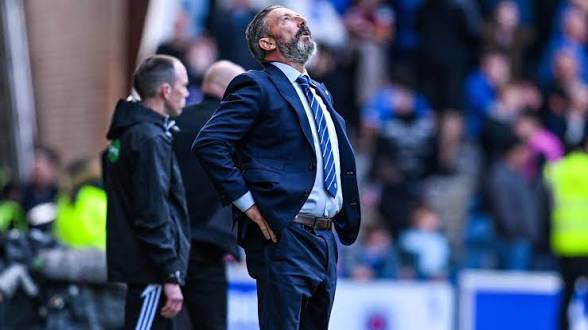
Derek McInnes has responded to intensifying pressure on his position at Ibrox by delivering a pointed message both to his own players and to the doubters questioning his future, insisting he remains fully convinced he can turn Rangers’ fortunes around despite a turbulent start to life in the Ibrox hotseat.
The comments came in the aftermath of Rangers’ exit from the Europa League at the hands of Jagiellonia Bialystok, a result that intensified questions over McInnes’ position just weeks into his tenure. Having gone into the second leg trailing 2-1, Rangers were unable to find a way past their Polish opponents at Ibrox, managing only a 1-1 draw that left them beaten 3-2 on aggregate. The exit means Rangers bowed out of the competition earlier than they have done since 2017, a genuinely striking statistic for a club with the European pedigree Rangers carry, and one that provoked an angry response from the home support, with boos ringing around Ibrox at the final whistle.
That result extended McInnes’ winless start in charge to four matches, a run that has left him under considerable scrutiny less than two months into the job.
Rather than deflecting the criticism, McInnes chose to accept it directly, before delivering a pointed assessment of his own squad’s shortcomings. Addressing the reaction from supporters after the game, he acknowledged that the anger was entirely justified, admitting that the performance — particularly in the second half — simply hadn’t been good enough. It was a rare moment of a manager publicly siding with an angry fanbase over his own players, a sign of just how far short of expectations he felt his team had fallen on the night.
Beyond his comments on the atmosphere inside the stadium, McInnes also questioned specific aspects of his players’ performance, pointing to shortcomings in quality, composure and decision-making as key factors behind the disappointing result. That kind of direct, public criticism of a squad is a notable departure from the more measured tone many managers strike in the immediate aftermath of a difficult result, and it suggests McInnes is prepared to hold his players publicly accountable as he tries to arrest the club’s difficult start to the season.
The defeat came despite McInnes making five changes to his starting lineup following the previous weekend’s loss to Hibernian, as he continued to search for a settled and effective XI. His preparations were further complicated by fresh injury concerns, with left-back Tuur Rommens and striker Youssef Chermiti both unavailable heading into the tie — losses that added to an already difficult defensive picture the manager has had to navigate in his opening weeks.
In an attempt to find a solution, McInnes opted to switch his side into a back three for the visit of Jagiellonia, deploying Djeidi Gassama and Metehan Yakota in demanding wing-back roles. That change did bring some early promise, with Rangers threatening during the opening period of the match, but the switch in system ultimately wasn’t enough to prevent another inconsistent overall display, and the Polish visitors made their quality tell as the game progressed.
Despite the mounting external pressure and increasingly vocal supporter frustration, there is no indication that Rangers’ hierarchy is currently considering a change in the dugout. Understanding from within the club is that there are no plans to dismiss McInnes just four games into the new campaign, notwithstanding what has been described as considerable chaos behind the scenes at Ibrox during this period.
That patience appears to be rooted in the scale of investment already made in backing McInnes since his appointment. The manager has been supported with nine new signings so far this summer, with potentially as many as five further additions still to come before the transfer window closes, alongside being given the financial resources to bring in quality reinforcements across multiple positions. The challenge for McInnes now is that results simply haven’t caught up with that level of squad investment — most of the summer’s new arrivals are yet to demonstrate why they were brought to the club in the first place, and the disconnect between spending and results is a large part of why external pressure has built so quickly.
There are also indications that McInnes retains genuine support at boardroom level. At the club’s recent AGM, there was reportedly widespread backing for the manager among those present, suggesting that even a disappointing result in Sunday’s League Cup tie against St Mirren would be unlikely to trigger an immediate change, however much it might further dent confidence among the wider fanbase.
Supporter opinion on McInnes’ position appears to be genuinely divided rather than uniformly hostile. In a poll conducted in the aftermath of the Jagiellonia defeat, 22 per cent of respondents indicated they believed the manager was the core problem and should be dismissed immediately. A further 28 per cent placed a degree of blame on McInnes personally, without going so far as to call for his sacking outright. That leaves a majority of respondents either not blaming the manager directly, or unwilling to advocate for his removal at this early stage — evidence that, while frustration is real and growing, outright calls for dismissal remain very much a minority position among the club’s supporters at this point.
For now, the immediate focus for McInnes centres on Sunday’s Premier Sports Cup tie against St Mirren at Ibrox. A win in that fixture would go some way toward relieving the pressure that’s built up over recent weeks, offering the first tangible piece of good news since his appointment. However, there’s also broad recognition that cup form alone won’t be enough to settle the situation long term — results in the Scottish Premiership will need to improve significantly and soon if McInnes is to fully quiet the growing chorus of concern surrounding his position.
Despite everything that’s gone wrong so far — the winless run, the humiliating European exit, the pointed criticism of his own players, and the swirling speculation over his long-term future — McInnes has been clear in his own conviction that he remains capable of turning things around at Ibrox. That self-belief, combined with the backing he continues to receive from the club’s hierarchy and at least a section of the supporter base, gives him a platform to try to stabilise the situation. Whether that conviction translates into results on the pitch, starting with Sunday’s cup tie and continuing into the next round of league fixtures, will likely determine how much longer that patience from within the club is able to hold.