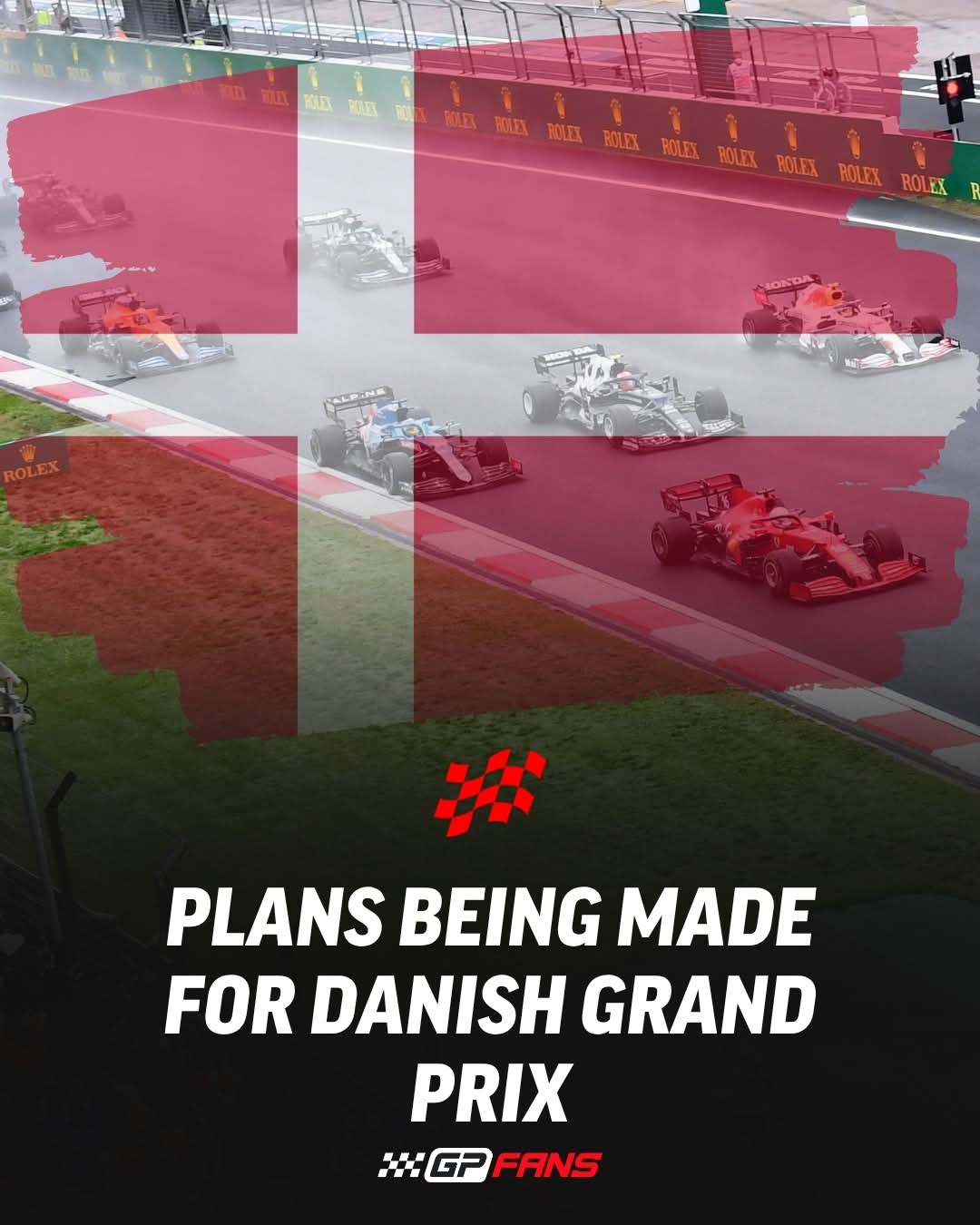
Formula 1’s global expansion may soon take another dramatic turn after shocking new plans emerged for a potential Danish Grand Prix. A massive motorsport development project titled “Circuit of Denmark” is now being pushed forward by wealthy Danish investors, with ambitions of bringing Formula 1 to the Scandinavian nation for the very first time.
The proposed venue, which would be built around the existing Padborg Park circuit in southern Denmark, is already generating major buzz across the motorsport world. Backed by a staggering investment of 3.8 billion Danish kroner — approximately €510 million — the project signals one of the most ambitious racing infrastructure developments Europe has seen in years.
At a time when Formula 1 continues to balance historic European venues with lucrative international expansion, Denmark’s sudden emergence as a candidate has added another fascinating layer to the future of the sport.
Denmark’s F1 Ambition Gains Serious Momentum
The project is being spearheaded by Danish investors Henrik Lyngbye Pedersen and Mathias Lyngbye Villadsen, heirs connected to the Novo Nordisk fortune. Their vision goes far beyond creating a traditional racing circuit. Instead, they aim to build a complete motorsport and entertainment destination capable of attracting global attention year-round.
According to the revealed plans, the revamped “Circuit of Denmark” would stretch across 6.006 kilometres, instantly making it the longest racing circuit in Northern Europe. Designed by Wurz Design — the architectural company led by former Formula 1 driver Alexander Wurz — the venue would also include:
- A 100,000-seat capacity
- Hotels and conference centers
- Karting facilities
- Motocross tracks
- Large-scale entertainment infrastructure
The sheer scale of the proposal highlights how modern Formula 1 venues are no longer just racetracks. They are now multi-purpose business hubs designed to generate tourism, commercial partnerships, and international prestige.
Why Formula 1 Could Seriously Consider Denmark
Formula 1 has aggressively expanded into new territories over the past decade, with races added in Las Vegas, Miami, Qatar, Saudi Arabia, and several other emerging markets. However, Europe still remains the spiritual home of the sport, and Denmark could offer F1 something unique.
The proposed circuit’s location near the German border could prove strategically important. The Netherlands has become one of Formula 1’s biggest fan markets thanks to Max Verstappen’s enormous popularity, while Germany still maintains a passionate motorsport audience despite currently lacking a permanent race on the calendar.
Being just a five-hour drive from the Netherlands potentially creates a huge regional audience that could make a Danish Grand Prix commercially attractive.
Danish F1 commentator Jens Hansen even compared the potential impact of the project to iconic entertainment venues like Royal Arena and Jyske Bank Boxen, suggesting it could completely reshape Danish motorsport culture.
That comparison may not be exaggerated. Formula 1’s popularity in Scandinavia has quietly grown over recent years, fueled by Netflix’s Drive to Survive, rising interest among younger fans, and increasing digital engagement across the region.
The Alexander Wurz Factor Adds Credibility
One major reason the project is already being taken seriously is the involvement of Alexander Wurz. The former Formula 1 driver has built a respected reputation in circuit design through Wurz Design, contributing to modern safety-focused racing infrastructure projects around the world.
Having someone with deep Formula 1 experience attached to the project gives the proposal added legitimacy. Designing a Grade 1 FIA circuit is an incredibly difficult task, requiring strict compliance with safety regulations, runoff standards, pit facilities, and spectator infrastructure.
Project director Rebecca Palmberg Steele confirmed the venue is specifically being designed to satisfy FIA Grade 1 certification requirements — the mandatory standard for hosting Formula 1 races.
That statement alone indicates the developers are not merely creating a fantasy proposal. They appear genuinely serious about entering Formula 1’s long-term plans.
The Biggest Obstacle Could Be Formula 1’s Crowded Calendar
Despite the excitement surrounding the project, securing a Formula 1 race remains incredibly difficult. The current F1 calendar is already packed with over 24 races, and teams have repeatedly raised concerns about scheduling pressure, travel demands, and staff burnout.
This means Denmark would likely need either:
- An existing European race to disappear
- A rotational agreement
- Or Formula 1 to expand the calendar even further
That could create resistance from traditional venues already fighting to keep their place on the schedule.
Historic tracks like Spa-Francorchamps, Imola, and Barcelona have all faced uncertainty in recent years due to Formula 1’s evolving business strategy. A new Danish venue entering the conversation could intensify the battle for calendar survival.
At the same time, Formula 1 CEO Stefano Domenicali has shown interest in balancing modern expansion with maintaining European heritage. A Scandinavian race could potentially fit into that strategy if the commercial package is strong enough.
Could Denmark Become Formula 1’s Next Surprise Success Story?
While many ambitious circuit projects never fully materialize, Denmark’s proposal feels different because of the financial backing, location, and scale of planning already underway.
If completed successfully, Circuit of Denmark could become one of the most technologically advanced racing venues in Europe. The combination of motorsport, entertainment, hospitality, and tourism infrastructure mirrors the direction Formula 1 has increasingly moved toward in recent years.
The project could also inspire greater Scandinavian involvement in elite motorsport, potentially creating new opportunities for drivers, engineers, sponsors, and racing academies across the region.
For now, Formula 1 has not officially confirmed any discussions regarding a Danish Grand Prix. However, with zoning processes already underway and investor interest growing, the motorsport world is watching closely.
One thing is clear: Denmark is no longer sitting quietly on the sidelines. The country has officially entered the Formula 1 conversation — and if these ambitious plans succeed, the European racing landscape could look very different by the end of the decade.
Prediction: Will Denmark Join the F1 Calendar?
At this stage, a Danish Grand Prix still feels like a long-term project rather than an immediate reality. However, the combination of strong funding, strategic positioning, and modern circuit planning gives it a legitimate chance of becoming one of Formula 1’s future destinations.
If Formula 1 continues prioritizing fan experience, regional accessibility, and commercial growth in Europe, Denmark could emerge as one of the strongest new candidates on the grid.
And with Formula 1 constantly searching for the next blockbuster destination, Circuit of Denmark may have arrived at exactly the right moment.
Formula 1’s global expansion may soon take another dramatic turn after shocking new plans emerged for a potential Danish Grand Prix. A massive motorsport development project titled “Circuit of Denmark” is now being pushed forward by wealthy Danish investors, with ambitions of bringing Formula 1 to the Scandinavian nation for the very first time.
The proposed venue, which would be built around the existing Padborg Park circuit in southern Denmark, is already generating major buzz across the motorsport world. Backed by a staggering investment of 3.8 billion Danish kroner — approximately €510 million — the project signals one of the most ambitious racing infrastructure developments Europe has seen in years.
At a time when Formula 1 continues to balance historic European venues with lucrative international expansion, Denmark’s sudden emergence as a candidate has added another fascinating layer to the future of the sport.
Denmark’s F1 Ambition Gains Serious Momentum
The project is being spearheaded by Danish investors Henrik Lyngbye Pedersen and Mathias Lyngbye Villadsen, heirs connected to the Novo Nordisk fortune. Their vision goes far beyond creating a traditional racing circuit. Instead, they aim to build a complete motorsport and entertainment destination capable of attracting global attention year-round.
According to the revealed plans, the revamped “Circuit of Denmark” would stretch across 6.006 kilometres, instantly making it the longest racing circuit in Northern Europe. Designed by Wurz Design — the architectural company led by former Formula 1 driver Alexander Wurz — the venue would also include:
A 100,000-seat capacity
Hotels and conference centers
Karting facilities
Motocross tracks
Large-scale entertainment infrastructure
The sheer scale of the proposal highlights how modern Formula 1 venues are no longer just racetracks. They are now multi-purpose business hubs designed to generate tourism, commercial partnerships, and international prestige.
Why Formula 1 Could Seriously Consider Denmark
Formula 1 has aggressively expanded into new territories over the past decade, with races added in Las Vegas, Miami, Qatar, Saudi Arabia, and several other emerging markets. However, Europe still remains the spiritual home of the sport, and Denmark could offer F1 something unique.
The proposed circuit’s location near the German border could prove strategically important. The Netherlands has become one of Formula 1’s biggest fan markets thanks to Max Verstappen’s enormous popularity, while Germany still maintains a passionate motorsport audience despite currently lacking a permanent race on the calendar.
Being just a five-hour drive from the Netherlands potentially creates a huge regional audience that could make a Danish Grand Prix commercially attractive.
Danish F1 commentator Jens Hansen even compared the potential impact of the project to iconic entertainment venues like Royal Arena and Jyske Bank Boxen, suggesting it could completely reshape Danish motorsport culture.
That comparison may not be exaggerated. Formula 1’s popularity in Scandinavia has quietly grown over recent years, fueled by Netflix’s Drive to Survive, rising interest among younger fans, and increasing digital engagement across the region.
The Alexander Wurz Factor Adds Credibility
One major reason the project is already being taken seriously is the involvement of Alexander Wurz. The former Formula 1 driver has built a respected reputation in circuit design through Wurz Design, contributing to modern safety-focused racing infrastructure projects around the world.
Having someone with deep Formula 1 experience attached to the project gives the proposal added legitimacy. Designing a Grade 1 FIA circuit is an incredibly difficult task, requiring strict compliance with safety regulations, runoff standards, pit facilities, and spectator infrastructure.
Project director Rebecca Palmberg Steele confirmed the venue is specifically being designed to satisfy FIA Grade 1 certification requirements — the mandatory standard for hosting Formula 1 races.
That statement alone indicates the developers are not merely creating a fantasy proposal. They appear genuinely serious about entering Formula 1’s long-term plans.
The Biggest Obstacle Could Be Formula 1’s Crowded Calendar
Despite the excitement surrounding the project, securing a Formula 1 race remains incredibly difficult. The current F1 calendar is already packed with over 24 races, and teams have repeatedly raised concerns about scheduling pressure, travel demands, and staff burnout.
This means Denmark would likely need either:
An existing European race to disappear
A rotational agreement
Or Formula 1 to expand the calendar even further
That could create resistance from traditional venues already fighting to keep their place on the schedule.
Historic tracks like Spa-Francorchamps, Imola, and Barcelona have all faced uncertainty in recent years due to Formula 1’s evolving business strategy. A new Danish venue entering the conversation could intensify the battle for calendar survival.
At the same time, Formula 1 CEO Stefano Domenicali has shown interest in balancing modern expansion with maintaining European heritage. A Scandinavian race could potentially fit into that strategy if the commercial package is strong enough.
Could Denmark Become Formula 1’s Next Surprise Success Story?
While many ambitious circuit projects never fully materialize, Denmark’s proposal feels different because of the financial backing, location, and scale of planning already underway.
If completed successfully, Circuit of Denmark could become one of the most technologically advanced racing venues in Europe. The combination of motorsport, entertainment, hospitality, and tourism infrastructure mirrors the direction Formula 1 has increasingly moved toward in recent years.
The project could also inspire greater Scandinavian involvement in elite motorsport, potentially creating new opportunities for drivers, engineers, sponsors, and racing academies across the region.
For now, Formula 1 has not officially confirmed any discussions regarding a Danish Grand Prix. However, with zoning processes already underway and investor interest growing, the motorsport world is watching closely.
One thing is clear: Denmark is no longer sitting quietly on the sidelines. The country has officially entered the Formula 1 conversation — and if these ambitious plans succeed, the European racing landscape could look very different by the end of the decade.
Prediction: Will Denmark Join the F1 Calendar?
At this stage, a Danish Grand Prix still feels like a long-term project rather than an immediate reality. However, the combination of strong funding, strategic positioning, and modern circuit planning gives it a legitimate chance of becoming one of Formula 1’s future destinations.
If Formula 1 continues prioritizing fan experience, regional accessibility, and commercial growth in Europe, Denmark could emerge as one of the strongest new candidates on the grid.
And with Formula 1 constantly searching for the next blockbuster destination, Circuit of Denmark may have arrived at exactly the right moment.