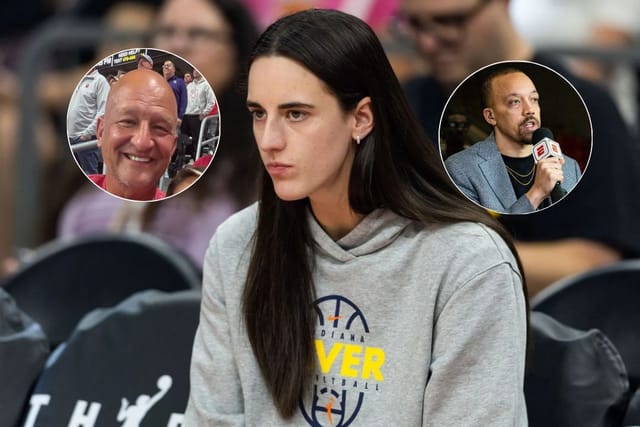
The debate surrounding Indiana Fever superstar Caitlin Clark continues to dominate the WNBA conversation, and this time former college basketball coach and broadcaster Dan Dakich has entered the spotlight with a passionate defense of the league’s biggest attraction. His criticism of ESPN writer David Dennis Jr. has reignited discussions about Clark’s treatment by fellow players, media members, and fans, adding another chapter to one of the most closely watched storylines in women’s basketball.
As the WNBA season moves toward its most important stretch, every conversation involving Clark seems to generate national attention. Whether the topic is her on-court performances, physical treatment from opponents, or All-Star voting, the Fever rookie remains the center of the league’s biggest debates.
THE COMMENT THAT STARTED THE LATEST FIRESTORM
The latest controversy began after ESPN’s David Dennis Jr. discussed Caitlin Clark’s placement in the WNBA All-Star player voting. Dennis argued that Clark’s ranking reflected how veteran players often respond when a highly celebrated rookie enters a professional league.
According to Dennis, history shows that established stars frequently challenge newcomers who arrive with enormous expectations. He suggested Clark’s experience is not unique but rather part of a pattern seen across professional sports, where respected veterans expect young stars to earn their place through performance instead of hype.
His comments immediately divided basketball fans, particularly those who believe Clark has faced treatment unlike that of any recent rookie.
DAN DAKICH STRONGLY PUSHES BACK
Dan Dakich wasted little time responding during his “Don’t @ Me” program, rejecting Dennis’ argument in emphatic fashion.
Dakich questioned whether other high-profile rookies, including Paige Bueckers, have experienced the same level of physical play, verbal hostility, and public criticism that Clark has encountered throughout her first professional season.
He argued that Clark’s situation extends beyond the normal challenges every rookie faces and pointed to several highly publicized incidents involving hard fouls and hostile interactions on the court. Dakich believes those examples separate Clark’s experience from the standard rookie adjustment period.
His comments quickly spread across social media, where supporters and critics once again found themselves debating whether Clark receives unusually harsh treatment or simply the attention that accompanies becoming the face of a growing league.
WHY THE ALL-STAR VOTING CONTINUES TO GENERATE DEBATE
One of the biggest talking points remains Clark’s ranking in the player portion of the All-Star voting. While fans overwhelmingly supported the Indiana Fever guard, the votes submitted by fellow WNBA players painted a different picture.
That contrast has fueled speculation for weeks.
Some observers believe veteran players simply evaluated performance without considering popularity. Others argue that Clark’s enormous media attention naturally creates resentment among competitors who have spent years helping build the WNBA before her arrival.
Regardless of which interpretation proves more accurate, the voting results have become another example of how every Clark-related discussion quickly turns into a league-wide debate.
ESPN’S COVERAGE BECOMES PART OF THE STORY
Dakich also expanded his criticism beyond Dennis’ comments, accusing ESPN of consistently portraying Clark in a negative light despite her enormous impact on women’s basketball.
He argued that Clark has helped drive record-breaking television ratings, increased attendance across the league, and brought unprecedented national attention to the WNBA. From his perspective, that influence deserves greater recognition rather than constant controversy.
Those claims, however, remain part of a broader public debate. ESPN has regularly covered Clark’s achievements alongside reporting on the physical play and controversies surrounding her, but critics and supporters continue to disagree over whether that coverage has been balanced.
WHAT THIS MEANS FOR THE INDIANA FEVER
For the Indiana Fever, the ongoing discussions highlight just how transformative Clark has become for the franchise.
Nearly every Fever game attracts national interest, sold-out arenas, and intense media scrutiny. While the constant attention creates distractions, it has also elevated the organization into one of the WNBA’s premier attractions.
Inside the locker room, the focus remains on winning games and building chemistry for a postseason push. Clark has consistently emphasized basketball over outside noise, allowing her playmaking, scoring, and leadership to speak louder than the debates surrounding her.
WHY THIS STORY MATTERS MOVING FORWARD
The latest exchange between Dan Dakich and David Dennis Jr. illustrates how Caitlin Clark has become much more than a basketball player. She now sits at the center of conversations about media narratives, player relationships, league growth, and the future direction of women’s basketball.
As the regular season progresses, the spotlight is unlikely to fade. Every outstanding performance, controversial foul, or public comment will continue to generate headlines.
For the Indiana Fever, that attention comes with pressure—but also opportunity. If Clark continues developing at her current pace and leads the Fever on a deep playoff run, much of today’s debate could eventually give way to discussions focused on championships rather than controversy.
One thing is already clear: Caitlin Clark remains the most influential figure in the WNBA, and every major conversation surrounding the league continues to orbit around her.