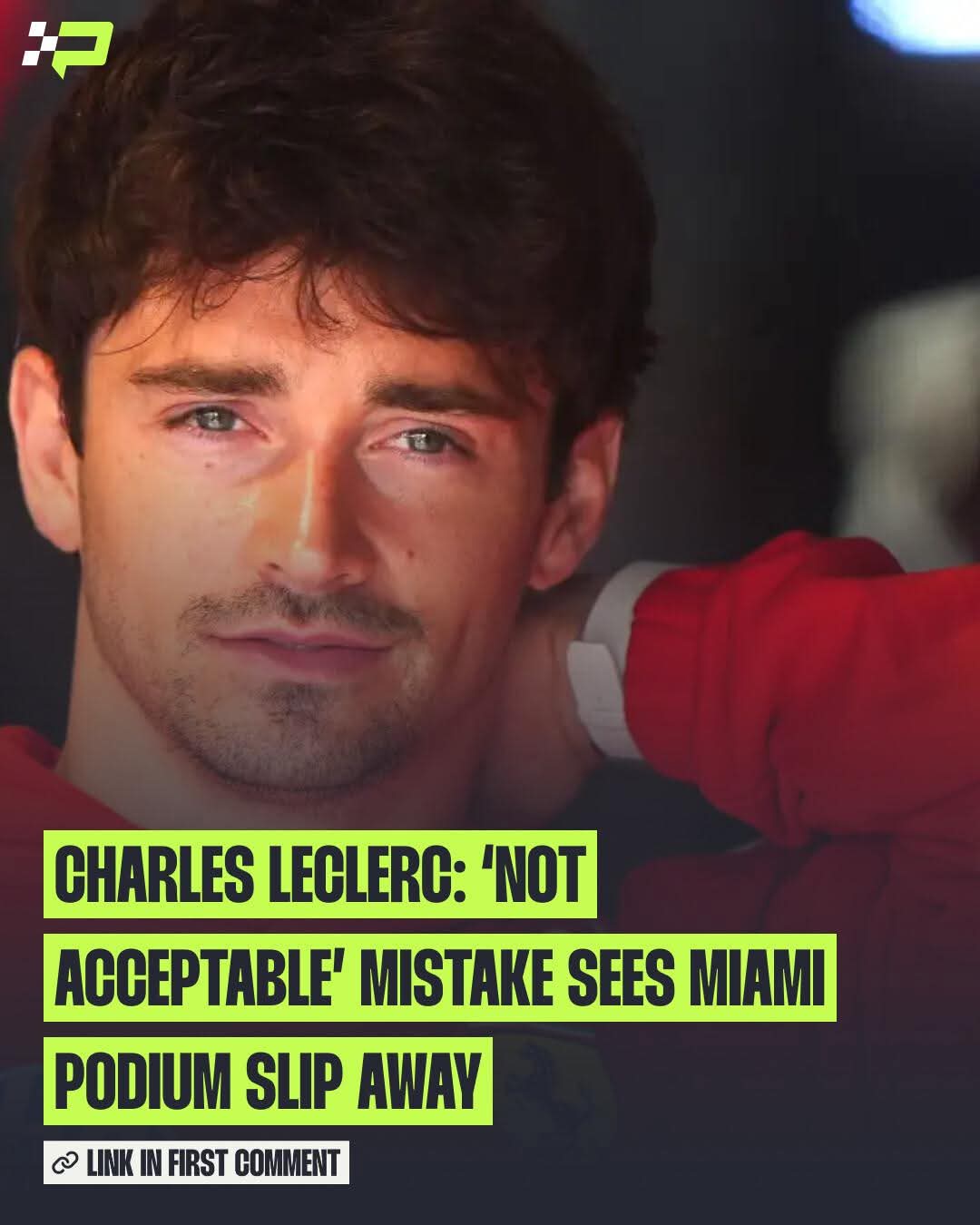
Charles Leclerc has openly admitted that a decisive late-race mistake—not strategy—denied him a podium finish at the Miami Grand Prix, calling his error “not acceptable” in a brutally honest post-race assessment. The Ferrari driver’s candid reflection highlights both his competitive mindset and the fine margins currently defining the 2026 Formula 1 season.
Starting third on the grid at the Miami International Autodrome, Leclerc once again showcased Ferrari’s trademark launch advantage, surging into the lead ahead of Lando Norris and championship leader Kimi Antonelli. Despite regulatory tweaks from the FIA aimed at balancing race starts through modified energy deployment systems, Ferrari’s early-race explosiveness remained a defining strength. However, as the race evolved, strategy calls and tire management complexities began to shape the outcome.
Leclerc’s frustration briefly surfaced when Ferrari opted for an early pit stop amid looming rain threats that ultimately never materialized. Questioning the call over team radio, he hinted at a disconnect in decision-making. Yet as the race unfolded, the Monégasque driver worked his way back into podium contention, engaging in a tense battle with Oscar Piastri for third place. The duel reached its peak in the closing laps, with Piastri executing a decisive move before the final lap showdown.
The turning point came at Turn 3 on the final lap, where Leclerc, pushing to reclaim position, lost control and spun into the barrier. The impact damaged his car significantly, compromising handling and forcing him into a desperate struggle to finish the race. In the aftermath, he lost multiple positions and was later handed a 20-second penalty for repeatedly exceeding track limits while attempting to manage the damaged car—dropping him further down the classification.
From an analytical perspective, Leclerc’s admission underscores a critical theme in modern Formula 1: execution under pressure often outweighs raw pace or strategy. Ferrari had the speed to secure a podium, but the inability to close out races cleanly continues to cost them valuable points. With Leclerc now trailing Antonelli by a significant margin in the championship standings—and Norris closing in rapidly—the pressure is mounting on both driver and team to deliver consistency.
Looking ahead, Ferrari’s title hopes hinge on minimizing such high-impact errors. While Leclerc’s accountability is commendable, the broader challenge lies in aligning strategy, car performance, and racecraft into a cohesive package. If Ferrari can refine those elements, they remain a genuine threat. But if mistakes like Miami persist, the 2026 championship could slip further out of reach, leaving rivals to capitalize on every missed opportunity.