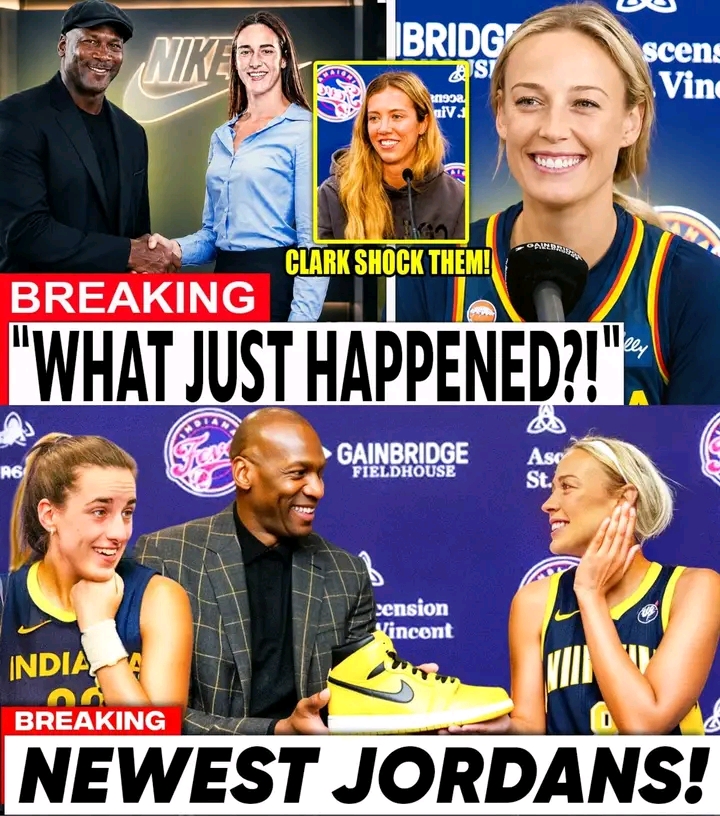
The excitement surrounding Caitlin Clark continues to fuel countless conversations across the basketball world, but it has also opened the door to an endless stream of exaggerated online stories. In recent days, social media platforms and video-sharing sites have been flooded with dramatic headlines claiming that Clark signed a groundbreaking Jordan deal before making a surprise gesture for teammates Sophie Cunningham and Lexie Hull that supposedly stunned the entire league. Many of these stories have quickly gained traction because of Clark’s enormous popularity, despite offering little or no verified evidence to support their extraordinary claims. As a result, fans have found themselves sorting through fact, speculation, and outright fiction while trying to understand what is really happening behind the scenes.
Much of the confusion appears to stem from genuine news regarding Clark’s growing influence in women’s basketball. Her historic partnership with Wilson Sporting Goods, which made her the first basketball player since Michael Jordan to receive a signature basketball collection from the company, represented a major milestone for both her career and the sport itself. That achievement alone attracted widespread media coverage and highlighted the commercial impact Clark has already made during the early stages of her professional career. However, as often happens in today’s digital media environment, legitimate news quickly became mixed with sensational storytelling designed to maximize clicks, views, and engagement rather than accurately inform basketball fans.
Among the most widely circulated rumors was the extraordinary claim that Michael Jordan had personally offered Clark ownership of a future WNBA franchise as part of a revolutionary business partnership. The story spread rapidly across social media, with many posts presenting the allegation as though it had already been confirmed. In reality, there has been no credible evidence or official announcement supporting such a claim. Nevertheless, the rumor illustrates how quickly online narratives can evolve when they involve two of basketball’s biggest names. By combining Jordan’s legendary reputation with Clark’s rapidly growing popularity, content creators created a headline that generated massive attention even without verified facts.
At the same time, separate rumors suggested that Clark had quietly done something remarkable for teammates Sophie Cunningham and Lexie Hull shortly after her reported endorsement success. These stories portrayed her as making an unexpected gesture that allegedly surprised everyone inside the Indiana Fever organization. While the specific details varied from one version to another, none of the widely shared accounts were backed by official statements from the team or the players involved. Even so, the speculation sparked widespread discussion among fans, many of whom praised Clark’s leadership qualities based solely on the circulating reports, while others urged caution until reliable information became available.
The rapid spread of these stories demonstrates how dramatically the WNBA’s media landscape has changed. Every accomplishment by Clark now generates national headlines, attracting attention from sports networks, content creators, and millions of fans around the world. That level of visibility has undoubtedly benefited the league by increasing television ratings, attendance, sponsorship opportunities, and public interest. However, it has also created an environment where almost every rumor can gain momentum before journalists have an opportunity to verify its accuracy. In many cases, emotional reactions spread far more quickly than confirmed reporting.
Clark’s influence extends beyond her performances on the court because she has become one of the most recognizable figures in modern basketball. Companies view her as an athlete capable of connecting with audiences across multiple generations, while fans continue to follow every development in her professional journey. This remarkable level of popularity naturally attracts both legitimate business opportunities and exaggerated speculation. As her profile continues to grow, it becomes increasingly important for supporters to distinguish between official announcements and stories created primarily to capitalize on public curiosity.
The broader conversation also highlights the evolving relationship between athletes, brands, and digital media. Major endorsement deals have become significant milestones that symbolize an athlete’s marketability and long-term value, but they also provide fertile ground for sensational headlines that stretch reality far beyond the available facts. The combination of celebrity status, commercial success, and constant online engagement means that even ordinary business developments can quickly transform into elaborate narratives filled with dramatic twists that were never part of the original story.
Ultimately, the attention surrounding Caitlin Clark reflects the extraordinary impact she has already made on professional basketball. Whether discussing legitimate endorsement milestones or debunking viral rumors, her name continues to dominate sports conversations across the country. As fans look ahead to the remainder of the WNBA season, the focus will likely remain on her achievements on the court and the genuine milestones that shape her career rather than the sensational claims that frequently circulate online. Her growing legacy is already significant on its own, without the need for fictional stories designed to create unnecessary controversy or unrealistic expectations.