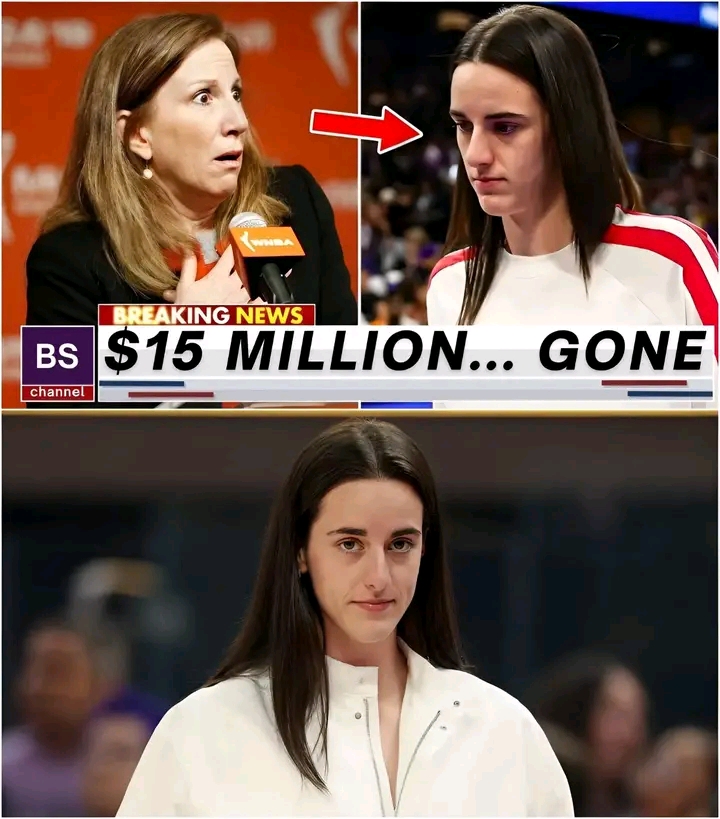
The reported $15 million offer connected to Caitlin Clark has created a wave of conversation across the basketball world, but the reaction goes far beyond the size of the number itself. What began as a shocking financial rumor quickly evolved into a much larger discussion about the future of the WNBA and the growing influence of its brightest young superstar. Fans, analysts, and even casual sports followers have started asking difficult questions about player value, league economics, and how much impact one athlete can truly have on an entire sport. Whether the reported amount is completely accurate or not, the attention surrounding it has already changed the conversation around women’s basketball in a significant way.
At the center of the discussion is Caitlin Clark’s undeniable ability to attract attention unlike almost anyone else in modern sports. Since entering the professional stage, Clark has consistently turned ordinary regular-season games into nationally discussed events. Every appearance generates headlines, social media trends, and increased television interest. Arenas that once struggled to fill seats are now seeing massive crowds whenever Indiana travels to town. Fans are not only tuning in to support Clark, but also to witness the atmosphere and excitement that follows her presence. In many ways, her impact has become larger than basketball itself, crossing into mainstream entertainment and popular culture.
The reported $15 million figure resonated so strongly because it symbolized something much bigger than a contract offer. It represented the growing belief that Caitlin Clark’s market value may already extend beyond the traditional financial structure of the WNBA. That possibility creates an uncomfortable situation for the league because it highlights the gap between the revenue-generating power of a superstar athlete and the existing system designed around player salaries. Even if the number itself is debated, the fact that such a discussion can realistically exist says a great deal about Clark’s rising influence and the changing business landscape surrounding women’s sports.
One of the most remarkable aspects of the situation is that Clark has not publicly demanded special treatment or attempted to position herself above the league. Instead, her influence speaks through results. Television ratings increase dramatically when she plays. Merchandise sales continue to surge. Ticket demand skyrockets in opposing cities. Media outlets dedicate constant coverage to her games, comments, and performances. Sponsors recognize the attention she brings, while networks understand the ratings advantage attached to her name. Without directly challenging the league structure, Clark’s popularity alone has already created pressure for the WNBA to reconsider how it values elite talent in this new era.
The conversation has also exposed how rapidly women’s basketball is evolving commercially. For years, leagues and organizations searched for a player capable of attracting mainstream attention on a consistent basis. Caitlin Clark appears to have accomplished exactly that in an incredibly short amount of time. Her arrival has introduced millions of new viewers to the WNBA, many of whom previously paid little attention to the sport. This growth has helped expand conversations around sponsorship opportunities, broadcasting rights, ticket pricing, and player marketing potential. As a result, Clark’s influence now represents not only personal success but also a major turning point for the business side of women’s basketball.
At the same time, the growing attention surrounding Clark has created a complicated challenge for the league itself. Once fans begin publicly discussing whether a player may be worth dramatically more than the system currently allows, it becomes difficult to ignore those conversations moving forward. The WNBA now faces increased pressure to balance financial realities with rising expectations from players, fans, and sponsors alike. Many supporters believe Clark’s popularity has exposed a larger issue regarding how transformational athletes are compensated compared to the revenue and visibility they generate for their leagues. That debate is unlikely to disappear anytime soon.
Another reason this story continues gaining momentum is because it touches on the idea of leverage in professional sports. True leverage comes when an athlete’s presence becomes so valuable that entire organizations feel its impact financially, culturally, and commercially. Caitlin Clark appears to be reaching that level at an incredibly fast pace. Her games influence ticket markets, television scheduling, sponsorship activity, and media coverage across the league. Even discussions about possible outside offers create additional pressure because they remind everyone that global sports entertainment has become far more competitive than before. Star athletes now have more opportunities and visibility than ever, making their influence increasingly powerful.
Ultimately, the reported $15 million controversy may end up symbolizing a defining moment for the WNBA rather than just another sports headline. The league succeeded in finding a superstar capable of drawing unprecedented attention to women’s basketball, but that success also brings difficult financial and structural questions that can no longer be quietly avoided. Caitlin Clark’s rise has forced a larger conversation about value, power, and the future direction of professional women’s sports. Regardless of how the situation develops, one thing has become very clear: the impact Clark is having on the game extends far beyond the basketball court, and the WNBA may now be entering a completely different era because of it.