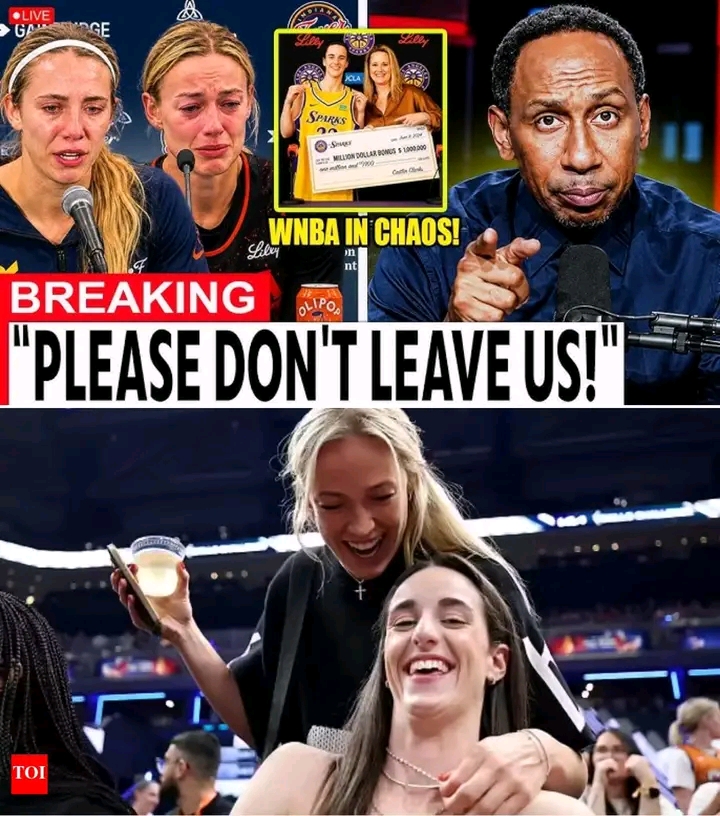
The world of professional sports has always revolved around one central truth: fans follow players who inspire excitement, create unforgettable moments, and give people a reason to tune in every night. Throughout history, leagues have risen to new heights when they embraced their biggest stars and built opportunities around their popularity rather than resisting it. That reality makes the recent discussions surrounding Caitlin Clark’s absence and changing role in the spotlight particularly fascinating. As one of the most recognizable figures to enter women’s basketball in years, Clark quickly became more than just another rookie player. She became a major talking point across sports media, social platforms, and mainstream entertainment, bringing unprecedented attention to the WNBA and introducing countless new viewers to the league.
Clark’s impact on the league was impossible to ignore from the moment she entered professional basketball. Television ratings climbed, arenas experienced larger crowds, merchandise sales surged, and conversations about women’s basketball expanded beyond traditional audiences. Many observers viewed her arrival as a turning point for the sport, believing her presence represented a unique opportunity for long-term growth. Because of that influence, any sudden absence from games or reduced visibility naturally creates speculation among fans who have become accustomed to seeing her at the center of headlines. In today’s sports environment, information travels instantly, and supporters expect transparency whenever a major star is unavailable or missing from the action for an extended period.
The reaction from fans has demonstrated just how significant Clark’s presence has become within the basketball community. Supporters closely monitor every update involving her health, availability, and future plans, often interpreting even minor developments as signs of larger issues behind the scenes. Social media discussions have intensified with theories and debates emerging from every corner of the internet, illustrating the level of passion surrounding her career. Whether those conversations are justified or not, they reveal the enormous expectations that now follow one of the league’s most recognizable names. Few athletes in recent memory have generated this level of engagement so early in their professional careers.
At the same time, the situation highlights the challenges leagues face when managing players whose popularity extends beyond the sport itself. Modern superstars do not simply compete on the court; they become brands, cultural figures, and ambassadors for entire organizations. Their influence affects television contracts, sponsorship opportunities, ticket demand, and media attention. Because of that reality, decisions involving those athletes often receive scrutiny that would never exist for ordinary roster moves or injury updates. Fans increasingly expect organizations to communicate openly and clearly whenever circumstances involving major stars change unexpectedly.
The conversation has also reignited broader debates regarding how leagues balance individual star power with collective growth. Some believe no player should ever become larger than the league itself, while others argue that embracing generational talent is one of the fastest ways to elevate an entire sport. Basketball history offers examples supporting both perspectives, as legendary players have frequently served as catalysts for periods of extraordinary growth and popularity. Clark’s rapid rise has pushed those discussions back into the spotlight, with many observers wondering how the league can best capitalize on the momentum she has helped create.
Meanwhile, attention has inevitably shifted toward Clark’s teammates and the environment surrounding the Indiana Fever organization. Players such as Sophie Cunningham and Lexie Hull have become part of the wider conversation simply because of their close association with one of the league’s biggest stars. While dramatic narratives often dominate online discussions, the reality inside professional sports organizations is usually far more complex than headlines suggest. Teams face difficult decisions involving injuries, rotations, long-term planning, and player development, many of which remain hidden from public view.
Regardless of the circumstances, one fact remains undeniable: Caitlin Clark’s influence on women’s basketball is already substantial. Few athletes have managed to capture public imagination so quickly or attract such widespread attention to their sport. Her games have become must-watch events for many casual viewers who previously had little connection to the WNBA, and her performances continue to serve as entry points for new fans discovering the league for the first time. That level of impact creates expectations that are difficult for any organization or league to manage perfectly.
As the season continues, interest surrounding Clark and the Indiana Fever is unlikely to fade anytime soon. Every update will be examined, every appearance analyzed, and every decision debated by a fanbase that remains deeply invested in her journey. Whether the recent conversation proves temporary or develops into something more significant, it has once again highlighted the powerful relationship between superstar athletes and the leagues they represent. In an era defined by constant visibility and instant reaction, managing that relationship may be one of the most important challenges facing modern sports organizations.